Cobalt Carboxylate Patent Landscape
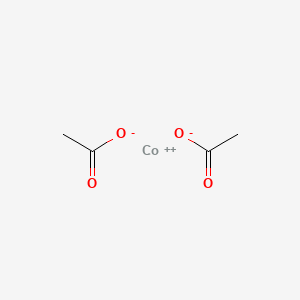
Identifiers
Hazards


Which organizations and claims shape current development around cobalt carboxylate?
Allnex Belgium SA and Plastipak Packaging Inc are the key organizations. Allnex claims a thermo-curable gel coat composition where cobalt carboxylate accelerates cure, with specific metal loadings and cure time targets. Plastipak claims an oxygen scavenging master batch with cobalt carboxylate as the cobalt source, at >500 ppm, without a polymer carrier. These claims focus on performance metrics (cure time, tack-free state, oxygen scavenging) and compositional limits, indicating a trend toward quantifiable, application-driven patent claims.
How is Cobalt carboxylate innovation changing?
Monthly patent filings
Which technical problems do recent patents address with cobalt carboxylate?
Recent patents use cobalt carboxylate to solve two distinct technical problems: accelerating thermoset cure without tackiness, and enabling oxygen scavenging in packaging. In EP4762107A1, the problem is achieving a tack-free gel coat after curing at 100°C within 25 minutes or less, using a specific cobalt carboxylate loading (0.003–0.01 phr cobalt metal) with methyl isobutyl ketone peroxide. In EP3183292B1, the problem is creating an oxygen scavenging master batch without a polymer carrier, where cobalt carboxylate (e.g., neodecanoate) acts as a transition metal source at >500 ppm to manage oxidation in articles.
How do recent patents change the role or application of cobalt carboxylate?
Cobalt carboxylate's role shifts from a general cure accelerator to a precisely dosed performance additive and a primary active oxygen scavenger. In gel coats, it is a secondary accelerator co-formulated with a peroxide, with its metal content tightly controlled to achieve fast tack-free cure. In packaging, it becomes the primary functional ingredient, sourced as cobalt carboxylate or neodecanoate, at high concentrations (>500 ppm) to drive oxygen scavenging. This indicates a move toward application-specific roles where cobalt carboxylate's metal content and chemical form are critical to performance.
Which product categories and formulation strategies emerge in recent work on cobalt carboxylate?
Emerging strategies include high-performance industrial coatings and active packaging. In coatings, the formulation strategy pairs cobalt carboxylate with polyether-functional urethane (meth)acrylates and methyl isobutyl ketone peroxide to achieve rapid cure at low temperatures (100°C) with tack-free surfaces. In packaging, the strategy is a carrier-free master batch with cobalt carboxylate as the transition metal source, enabling oxygen scavenging without a polymer carrier. These approaches emphasize precise metal dosing and co-ingredient synergy to meet performance targets.
Where is the evidence-backed white space for further development of cobalt carboxylate?
Evidence-backed white space exists in combining cobalt carboxylate's dual roles—cure acceleration and oxygen scavenging—into multi-functional formulations. For example, a coating that also scavenges oxygen could serve packaging or protective applications. Additionally, the patents show precise metal dosing (0.003–0.01 phr in coatings, >500 ppm in packaging), suggesting unexplored intermediate concentrations for other performance balances. However, no patent in the evidence claims such hybrid uses, indicating a potential innovation gap.