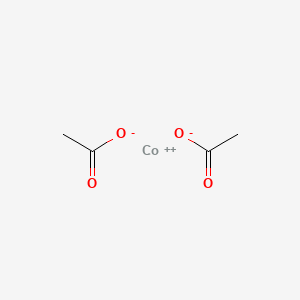
Regulations of Cobalt Carboxylate

Cobalt Acetate

Identifiers

FormulaC4H6CoO4·CAS71-48-7·EC200-755-8

Hazards

Health HazardEnvironmental Hazard

How does the regulatory treatment of cobalt carboxylate differ by market or product category?

Regulatory treatment varies significantly by market and product category. In the EU, cobalt(II) diacetate is a REACH-registered substance and listed as a Substance of Very High Concern (SVHC). In the US, it is an active TSCA commercial substance subject to Chemical Data Reporting, a Clean Air Act hazardous air pollutant, and an FDA-regulated indirect food additive for adhesives and a generally recognized as safe trace mineral in animal feed. Australia lists it on AICIS, while New Zealand allows use only under a group standard. California's CSCP requires reporting due to carcinogenicity, reproductive toxicity, and respiratory toxicity.

Which United States federal regulations apply to Cobalt carboxylate?

4 regulations

EPA TSCA Regulatory Flag

Acetic acid, cobalt(2+) salt (2:1) is listed on the EPA's Chemical Data Reporting (CDR) system. Manufacturers and importers of Acetic acid, cobalt(2+) salt (2:1) are required to report information about their production and use of this chemical to the EPA under the Toxic Substances Control Act (TSCA). (40 eCFR Part 711)

FDA Direct Food Additives

Cobaltous acetate is an indirect food additive for use only as a component of adhesives.

FDA Food Contact Notifications

Food contact notifications

NotificationManufacturer / supplierIntended useLimitationsEffectiveStatus
902
IIndorama Ventures USA Inc. and its stewarded affiliates around the world Mitsubishi Gas Chemical Company, Inc.
The FCS will be used as a modifier of polyethylene terephthalate copolyesters described in FCN 72 and FCN 498.Nylon MXD-6 may be used at a level not to exceed 5 weight percent of the finished food-contact article in conjunction with either cobalt stearate or cobalt acetate used at a level not to exceed 0.015 weight percent (measured as cobalt) of the finished food-contact article. The finished food contact article may be used in contact with food types I, II, IV-B, VI-A, VI-B, VI-C (up to 15 percent alcohol), VII-B, and VIII, except for carbonated soft drinks, under Conditions of Use C through G.09 Sept 2009active
967
IIndorama Ventures USA Inc. and its stewarded affiliates around the world.
As a modifier for polyethylene terephthalate (PET) complying with an applicable food additive regulation or food contact notification.The FCS is intended for use at levels up to 3 percent by weight of the finished food-contact article, in conjunction with up to 0.015 percent by weight of either cobalt stearate (measured as cobalt) or cobalt acetate (measured as cobalt) of the finished food-contact article, in contact with Food Types I, II, IV-B, VI-A, VI-B, and VI-C (up to 15 percent alcohol), VII-B and VIII, except for carbonated soft drinks and under Conditions of Use C-G, as described in Tables 1 and 2.03 Jun 2010active
1045
IIndorama Ventures USA Inc. and its stewarded affiliates around the world.
As a modifier for polyethylene terephthalate (PET) complying with an applicable food additive regulation or food contact notification.The FCS is intended for use at levels up to 3 percent by weight of the finished food-contact article, in conjunction with up to 0.015 percent by weight of either cobalt stearate (measured as cobalt) or cobalt acetate (measured as cobalt) of the finished food-contact article, in contact with all Food Types under Conditions of Use C through H, as described in Tables 1 and 2.18 Feb 2011active
1147
IIndorama Ventures USA LLC and its Steward Affiliates Around the World
The FCS will be used as a modifier for polyethylene terephthalate (PET), including copolyesters.The FCS may be used at a level not to exceed 5 weight percent of the finished food-contact article in conjunction with either cobalt stearate or cobalt acetate used at a level not to exceed 0.015 weight percent (measured as cobalt) of the finished food-contact article. The finished food-contact article may be used in contact with food types I, II, IV-B, VI-A, VI-B, VI-C (up to 15 percent alcohol), VII-B, and VIII, except for carbonated soft drinks, under Conditions of Use C through G, as described in Tables 1 and 2.11 Apr 2012active
1263
GGraham Packaging Company, L.P.
As a modifier of ethylene phthalate/naphthalate polymers and copolymers excluding those modified with organic anhydrides.The FCS will be used at a level not to exceed 3 weight percent of the finished food-contact article in conjunction with cobalt neodecanoate, cobalt acetate, or cobalt stearate used at a level not to exceed 0.0075 weight percent (measured as cobalt) of the finished food contact article. Finished food-contact articles containing the FCS may be used in contact with food types I, II, VI-A, VI-B (except carbonated beverages and water), VI-C (up to 15 percent alcohol) and VIII under Conditions of Use C through G, as described in Tables 1 and 2.15 May 2013active

Atmospheric Standards

Listed as a hazardous air pollutant (HAP) generally known or suspected to cause serious health problems. The Clean Air Act, as amended in 1990, directs EPA to set standards requiring major sources to sharply reduce routine emissions of toxic pollutants. EPA is required to establish and phase in specific performance based standards for all air emission sources that emit one or more of the listed pollutants. Cobaltous acetate is included on this list.

What EU regulatory requirements apply to Cobalt carboxylate?

2 regulations

REACH Registered Substance

Status: Active Update: 21-10-2021 https://echa.europa.eu/registration-dossier/-/registered-dossier/14769

REACH Substances of Very High Concern (SVHC)

Substance: Cobalt(II) diacetate

What regulations apply to Cobalt carboxylate in Canada?

1 regulation

DSL / NDSL

Published
04 May 1994
Effective
04 May 1994

Regulatory records

EntryRegulationTypeStatus
71-48-7SOR/94-311DSLauthorized

Conditions

This substance is on the Domestic Substances List (DSL). This substance was added to the DSL as an “Existing Substance” given that it meets the criteria set out in CEPA for substances that were in commerce in Canada between 1984 and 1986.

Record details

SOR/94-311

professional use only
No

What regulations apply to Cobalt carboxylate in Australia?

1 regulation

The Australian Inventory of Industrial Chemicals

Chemical: Acetic acid, cobalt(2+) salt

What regulations apply to Cobalt carboxylate in New Zealand?

1 regulation

New Zealand EPA Inventory of Chemical Status

Cobalt (II) acetate: Does not have an individual approval but may be used under an appropriate group standard

Which United States federal regulations apply to Cobalt carboxylate?

1 regulation

California Safe Cosmetics Program (CSCP)

Hazard Traits - Carcinogenicity; Reproductive Toxicity; Respiratory Toxicity

Which conditions, limits, and use contexts most affect a compliance assessment for cobalt carboxylate?

Key compliance drivers are GHS hazard classifications and occupational exposure limits. The substance is classified with hazards including skin and respiratory sensitization, germ cell mutagenicity, carcinogenicity by inhalation, reproductive toxicity, and aquatic toxicity. ACGIH sets a TLV of 0.02 mg/m³ as cobalt (8-hour TWA) with a biological exposure index of 15 µg/L cobalt in urine. Handling requires separation from strong oxidants and closed containers. These factors affect formulation, labeling, and workplace safety assessments.

What should be in place before a product containing cobalt carboxylate is assessed for launch?

Before launch, confirm the specific cobalt carboxylate salt is listed on relevant inventories (e.g., TSCA active, AICIS, REACH registered) and verify any SVHC status. For US EPA, determine if Chemical Data Reporting obligations apply. For FDA, check if the intended use matches approved categories—adhesives or animal feed. For California, assess if the product triggers CSCP reporting. Also prepare GHS-compliant labeling and safety data sheets reflecting the hazard classifications, and ensure occupational exposure controls meet the 0.02 mg/m³ TLV.

Where does the available regulatory position stop short of supporting a decision on cobalt carboxylate?

The available evidence does not specify concentration limits, use restrictions, or authorization requirements under REACH SVHC listing. It also lacks details on FDA food-contact clearances beyond adhesives and animal feed, and does not define what constitutes a 'group standard' in New Zealand. The GHS classifications are aggregated from company notifications and may not reflect a definitive regulatory classification. Therefore, a full compliance decision requires additional jurisdiction-specific and product-category-specific data.

Which recent regulatory changes or effective dates are material for cobalt carboxylate?

The most material regulatory change is the EU REACH SVHC listing for cobalt(II) diacetate, which imposes supply chain communication and potential authorization obligations. The REACH registration dossier was last updated in October 2021, indicating ongoing regulatory attention. In the US, TSCA Chemical Data Reporting requirements apply to manufacturers and importers, with production volumes reported annually (e.g., 2023 data). These changes affect market access and compliance documentation for EU and US operations.