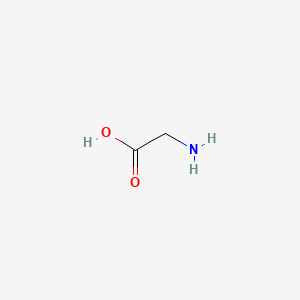
Regulations of Collagen Peptides

HYDROLYZED COLLAGEN

Identifiers

FormulaC2H5NO2·CAS56-40-6·EC200-272-2·HS2922.49

Functions

AntistaticSKIN Conditioning - Emollient +4 more

Which United States federal regulations apply to Collagen peptides?

7 regulations

EPA TSCA Regulatory Flag

Glycine is listed on the EPA's Chemical Data Reporting (CDR) system. Manufacturers and importers of Glycine are required to report information about their production and use of this chemical to the EPA under the Toxic Substances Control Act (TSCA). (40 eCFR Part 711)

FDA Direct Food Additives

Glycine is a food additive permitted for direct addition to food for human consumption, as long as 1) the quantity of the substance added to food does not exceed the amount reasonably required to accomplish its intended physical, nutritive, or other technical effect in food, and 2) any substance intended for use in or on food is of appropriate food grade and is prepared and handled as a food ingredient.

Federal Register Actions

Regulatory records

RegulationStatus
Federal Registerauthorized

Record details

Federal Register

product types
raw material for color additive

FDA 21 CFR Indirect Food Additives

Regulatory records

EntryRegulationTypeStatusSource
172.32021 CFR 172.320Food AdditiveauthorizedView
172.81221 CFR 172.812Food AdditiveauthorizedView

FDA GRAS Notices

A non-essential amino acid that is an inhibitory neurotransmitter; Used as a buffer and reagent in organic chemistry; [Merck Index] Used in biochemical research, as a chicken feed additive, to retard rancidity in animal and vegetable oils, as a medication, and nutrient; [HSDB] Used as a flavoring agent and nutritional supplement; [FDA]

FDA Technical Effects

Regulatory records

RegulationStatus
FDA Technical Effect: FLAVOR ENHANCERauthorized
FDA Technical Effect: FLAVORING AGENT OR ADJUVANTauthorized
FDA Technical Effect: NUTRIENT SUPPLEMENTauthorized

Atmospheric Standards

This action promulgates standards of performance for equipment leaks of Volatile Organic Compounds (VOC) in the Synthetic Organic Chemical Manufacturing Industry (SOCMI). The intended effect of these standards is to require all newly constructed, modified, and reconstructed SOCMI process units to use the best demonstrated system of continuous emission reduction for equipment leaks of VOC, considering costs, non air quality health and environmental impact and energy requirements. Glycine is produced, as an intermediate or a final product, by process units covered under this subpart.

What EU regulatory requirements apply to Collagen peptides?

3 regulations

REACH Registered Substance

Status: Active Update: 23-03-2023 https://echa.europa.eu/registration-dossier/-/registered-dossier/14889

EFSA Legal Basis

Regulation (EC) No 1334/2008 (amended)

Status Regulation (EC)

Regulation (EC) No 1334/2008 (amended)

What regulations apply to Collagen peptides in Canada?

1 regulation

DSL / NDSL

Published
04 May 1994
Effective
04 May 1994

Regulatory records

EntryRegulationTypeStatus
56-40-6SOR/94-311DSLauthorized

Conditions

This substance is on the Domestic Substances List (DSL). This substance was added to the DSL as an “Existing Substance” given that it meets the criteria set out in CEPA for substances that were in commerce in Canada between 1984 and 1986.

Record details

SOR/94-311

professional use only
No

What regulations apply to Collagen peptides in China?

1 regulation

IECIC Listed Ingredients (List I)

Published
24 Jun 2025
Effective
24 Jun 2025

Regulatory records

EntryRegulationTypeStatus
6315Inventory of Existing Cosmetic Ingredients in China (IECIC) IList Iauthorized

Record details

Inventory of Existing Cosmetic Ingredients in China (IECIC) I

professional use only
No

What regulations apply to Collagen peptides in Australia?

1 regulation

The Australian Inventory of Industrial Chemicals

Chemical: Glycine

What regulations apply to Collagen peptides in New Zealand?

1 regulation

New Zealand EPA Inventory of Chemical Status

Glycine: Non hazardous