Dicaprylyl Ether Environmental Fate & Ecotoxicity
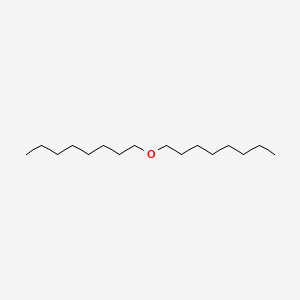
Identifiers
Functions
Where is DICAPRYLYL ETHER used, and what role does it play in each application?
Dicaprylyl ether is used primarily in personal care and cosmetics as a skin-conditioning emollient and solvent. It appears in hand and body lotions, face creams, shampoos, conditioners, foundations, baby lotions, makeup removers, body oils, and hair styling products. In makeup removers, it functions as a solvent to dissolve long-wear and waterproof cosmetics. In body and facial oils, it acts as a lightweight emollient and carrier base. Patent filings also describe its use as an emollient in hair treatments, water-in-oil emulsions, biphasic compositions, and oil-in-water emulsions, where it contributes to product texture and stability.
Which product or formulation problem does DICAPRYLYL ETHER address?
Dicaprylyl ether addresses formulation problems related to achieving emollient and solvent functions without relying on silicones or surfactants. Patent applications claim its use in silicone-free hair care compositions, where it serves as an emollient to replace silicone. It also enables surfactant-free biphasic compositions by helping maintain a stable interface between aqueous and oily phases. In makeup removers, it helps dissolve waterproof cosmetics. Its presence in baby products suggests it supports gentle cleansing and moisturizing formulations requiring mildness. These roles solve texture, stability, and cleansing challenges in leave-on and rinse-off products.
What supports the main commercial or clinical uses of DICAPRYLYL ETHER?
Evidence for dicaprylyl ether's main uses comes from its regulatory listing as a skin-conditioning emollient and solvent, its presence in over 400 consumer products across 67 brands, and its inclusion in multiple patent applications. The Cosmetic Ingredient Review has found it safe in present practices of use and concentration. Product data show its use in hand/body lotions, face creams, shampoos, conditioners, foundations, baby lotions, and makeup removers. Patent filings support its roles in silicone replacement, stable biphasic systems, and makeup removal. However, no clinical efficacy data or concentration thresholds are provided in the available evidence.
Which formulation trade-offs should researchers consider for DICAPRYLYL ETHER?
Researchers should consider that dicaprylyl ether functions as an emollient and solvent, which may influence product feel and stability. In biphasic compositions, it is used at concentrations around 13-17% of the oil phase to help maintain a stable interface, but its effectiveness depends on co-ingredients like squalane and alkanes. In oil-in-water emulsions, it is claimed at 1-15% to contribute to lamellar phase structure. Its use in anhydrous makeup removers suggests it can replace or complement other esters and carbonates. However, no specific performance trade-offs such as greasiness, spreadability, or compatibility limits are documented in the available evidence.
What are the physicochemical properties of Dicaprylyl ether?
| Property | Value | Category |
|---|---|---|
| Physical Description | Di-n-octyl ether is a liquid, CBI; Liquid, Liquid; Clear colorless liquid; [MSDSonline] | Appearance |
| Boiling Point | 572 °F at 760 mmHg | Handling Relevant Properties |
| Flash Point | greater than 212 °F | Handling Relevant Properties |
| Density | 0.82 - Less dense than water; will float | Handling Relevant Properties |
| Vapor Density | 8.36 - Heavier than air; will sink (Relative to Air) | Handling Relevant Properties |
| Standard non-polar | 1657, 1660 | Analytical Properties |
| Standard polar | 1760, 1761, 1763 | Analytical Properties |
| XLogP3 | 6.9 | Computed Molecular Properties |
| Exact Mass | 242.260965704 | Computed Molecular Properties |
| Monoisotopic Mass | 242.260965704 | Computed Molecular Properties |
Which formulation benchmark best contextualizes DICAPRYLYL ETHER, and what differs?
A relevant formulation benchmark is dicaprylyl carbonate, which appears alongside dicaprylyl ether in patent applications for water-in-oil emulsions and makeup removers. Both are oleochemical emollients, but dicaprylyl ether is also used as a solvent and in biphasic systems with squalane and alkanes. In contrast, dicaprylyl carbonate is paired with dicaprylyl ether in specific emulsion compositions. The key difference is that dicaprylyl ether's solvent function supports makeup removal and surfactant-free biphasic stability, while dicaprylyl carbonate may serve a more straightforward emollient role. This distinction helps formulators choose based on desired texture and cleansing performance.