Ectoin
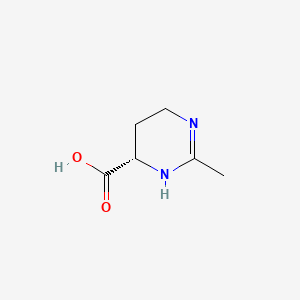
Identifiers
Functions
Where is ECTOIN used, and what role does it play in each application?
Ectoine is used in cosmetics and pharmaceuticals as a skin conditioning agent and skin barrier strengthening active. In cosmetics, it is listed with the function of skin conditioning, indicating its role in maintaining skin health. In pharmaceutical and cosmetic compositions, it is claimed to strengthen the skin barrier and promote skin regeneration, often combined with exosomes and growth factors. It also functions as an osmolyte, protecting cells from osmotic stress, and has been studied in clinical trials for allergic conjunctivitis, suggesting potential ophthalmic applications.
Which product or formulation problem does ECTOIN address?
Ectoine addresses the problem of skin barrier weakness and impaired skin regeneration. In a patent application, it is used to strengthen the skin barrier and promote regeneration, which is relevant for products targeting sensitive or damaged skin. As an osmolyte, it also helps cells cope with osmotic stress, which can be a formulation challenge in environments with varying salt concentrations. In ophthalmic products, it is being evaluated for allergic conjunctivitis, addressing symptoms related to ocular inflammation and allergy.
What supports the main commercial or clinical uses of ECTOIN?
Evidence includes its listing in the EU cosmetic ingredient database with an active status and skin conditioning function, indicating regulatory acceptance for cosmetic use. A patent application claims a method for preparing a composition with ectoine for skin barrier strengthening and regeneration, providing a specific formulation approach. Additionally, ectoine is under investigation in a clinical trial for seasonal allergic conjunctivitis, supporting its potential clinical use. Its role as an osmolyte is well-documented in scientific literature, underpinning its biological function.
Which formulation trade-offs should researchers consider for ECTOIN?
Researchers should consider ectoine's solubility and processing conditions. In a patent, ectoine is dissolved in purified water at 5–25°C for 30–120 minutes, and the pH is adjusted to 5.0–7.5 when combining with exosomes. This suggests that ectoine requires controlled temperature and pH for stability in complex formulations. It is also used at 0.1–5 parts by weight in a composition, indicating a dose range that may affect efficacy and cost. No restrictions or maximum concentrations are listed in cosmetic regulations, but formulators should verify compatibility with other actives.
What are the physicochemical properties of Ectoin?
| Property | Value | Category |
|---|---|---|
| XLogP3 | -0.8 | Computed Molecular Properties |
| Exact Mass | 142.074227566 | Computed Molecular Properties |
| Monoisotopic Mass | 142.074227566 | Computed Molecular Properties |
| Topological Polar Surface Area | 61.7 | Computed Molecular Properties |
| Complexity | 177.0 | Computed Molecular Properties |
| Hydrogen Bond Donor Count | 2 | Computed Molecular Properties |
| Hydrogen Bond Acceptor Count | 3 | Computed Molecular Properties |
| Rotatable Bond Count | 1 | Computed Molecular Properties |
| Heavy Atom Count | 10 | Computed Molecular Properties |
| Formal Charge | 0 | Computed Molecular Properties |
Which formulation benchmark best contextualizes ECTOIN, and what differs?
A relevant benchmark is a skin regeneration composition combining ectoine with exosomes and growth factors, as described in a patent. This benchmark uses ectoine as a base active dissolved in water, then sequentially mixed with exosomes and growth factors, followed by addition of AFA extract, cell-penetrating peptide, and hyaluronic acid. What differs from typical skin conditioning formulations is the multi-step complexation process and the inclusion of biological actives, which may require specialized manufacturing and stability considerations. This benchmark is useful for advanced skincare products targeting barrier repair.