Hypochlorous Acid Environmental Fate & Ecotoxicity
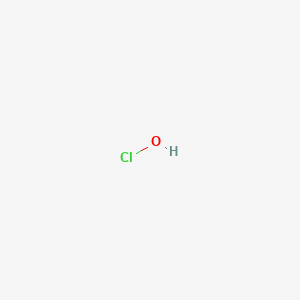
Identifiers
Functions
Where is Hypochlorous Acid used, and what role does it play in each application?
Hypochlorous acid functions primarily as an antimicrobial and oxidizing agent across diverse applications. In consumer products, it appears as a surface cleaner and disinfectant, as seen in a commercial product. In cosmetics and pharmaceuticals, it serves as an active antimicrobial in hand disinfectants, eyelid cleansers, wound care formulations, and antibacterial gels. It also acts as a deodorant and anti-sebum agent in cosmetic ingredient listings. Beyond these, it is used as an oxidizing agent in industrial processes like pulp and paper processing and textile manufacturing, and as a surface treatment agent for vulcanized rubber adhesion. Its role is consistently tied to its oxidative and antimicrobial properties.
Which product or formulation problem does Hypochlorous Acid address?
Hypochlorous acid addresses the need for effective antimicrobial action in formulations where safety and compatibility are critical. It solves the problem of microbial contamination and infection in products ranging from surface cleaners to sensitive applications like eyelid cleansers and wound care. In specific cases, it is claimed to treat skin with eczema and remove biofilms, and to provide antimicrobial cleansing for eyelids. It also functions as a deodorant, addressing odor-causing microbes. Its role as an oxidizing agent is leveraged in industrial processes to modify surfaces for adhesion. The core problem it solves is providing biocidal efficacy across a wide pH and concentration range.
What supports the main commercial or clinical uses of Hypochlorous Acid?
Evidence for its main uses comes from its regulatory status as an active disinfectant and its inclusion in commercial products. It is listed as an active ingredient in a commercial surface cleaner. Patent applications support its use as a primary antimicrobial agent in hand disinfectants, eyelid cleansers, and wound care, with specific claims for treating eczema and biofilms. Its function as an antimicrobial, anti-sebum, deodorant, and oxidizing agent is recognized in cosmetic ingredient databases. Industrial use is supported by its classification in manufacturing categories for pulp, paper, and textiles. However, direct clinical efficacy data is not provided in the available evidence.
Which formulation trade-offs should researchers consider for Hypochlorous Acid?
The primary formulation trade-off is its inherent instability, as it is described as a weak, unstable acid that decomposes exothermically. This requires stabilization strategies, such as maintaining a high hypochlorous acid-to-hypochlorite ratio (greater than 7.5:1) and using pH adjusters like acetic acid or phosphoric acid to keep pH in a specific range (e.g., 3.0-6.5). Packaging is also critical, with claims for light-impermeable bottles and bag-on-valve systems to prevent degradation. Formulators must balance concentration (ranging from 10 ppm to 13,000 ppm depending on application) with stability and safety, as higher concentrations may require more robust stabilization and packaging.
What are the physicochemical properties of Hypochlorous acid?
| Property | Value | Category |
|---|---|---|
| Physical Description | Liquid, Found only in aqueous solution; Greenish-yellow liquid; [Merck Index] Very unstable; [Hawley] Decomposes exothermically to HCl and O2; [Ullmann], Solid | Appearance |
| XLogP3 | 0.3 | Computed Molecular Properties |
| Exact Mass | 51.9715923 | Computed Molecular Properties |
| Monoisotopic Mass | 51.9715923 | Computed Molecular Properties |
| Topological Polar Surface Area | 20.2 | Computed Molecular Properties |
| Complexity | 2.0 | Computed Molecular Properties |
| Hydrogen Bond Donor Count | 1 | Computed Molecular Properties |
| Hydrogen Bond Acceptor Count | 1 | Computed Molecular Properties |
| Rotatable Bond Count | 0 | Computed Molecular Properties |
| Heavy Atom Count | 2 | Computed Molecular Properties |
Which formulation benchmark best contextualizes Hypochlorous Acid, and what differs?
The most relevant benchmark is a stabilized hypochlorous acid solution, as described in patent applications, which specifies a total chlorine concentration of 300 ppm or less and a hypochlorous acid-dominant species. This differs from other applications by prioritizing long-term stability through stoichiometric control and specific packaging. In contrast, disinfectant compositions for hard surfaces may use higher concentrations (725-1200 ppm) with metal salt synergists, accepting a shorter shelf life. Eyelid cleansers use much lower concentrations (0.005-0.05 wt%) with a free available chlorine of 10-300 ppm, focusing on mildness. The key differentiator is the balance between concentration, stability, and the target application's safety profile.