L Theanine
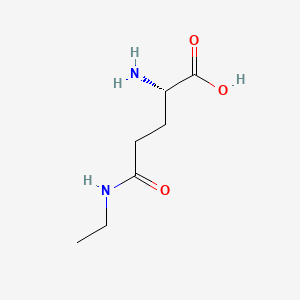
Identifiers
Functions
Hazards

Where is L-theanine used, and what role does it play in each application?
L-theanine is used in food, beverages, and cosmetics. In food and beverages, it functions as a relaxing, neuroprotective, and cognitive-enhancing amino acid, often combined with caffeine to improve attention. In cosmetics, it acts as a skin-conditioning agent, humectant, and emollient. Its roles span from mental relaxation without drowsiness to skin hydration and conditioning, supported by its presence in green tea and its water-soluble amino acid nature.
Which product or formulation problem does L-theanine address?
L-theanine addresses the formulation problem of delivering relaxation and cognitive benefits without sedation. It solves the need for a non-drowsy calming ingredient, as it relaxes the mind while potentially improving alertness and attention. In cosmetics, it solves skin dryness and conditioning needs by acting as a humectant and emollient. Its water solubility and amino acid structure also facilitate incorporation into aqueous formulations.
What supports the main commercial or clinical uses of L-theanine?
Evidence for L-theanine's main uses comes from animal neurochemistry studies showing increased brain serotonin, dopamine, and GABA, and micromolar affinities for AMPA, kainate, and NMDA receptors, suggesting neuroprotective and cognitive-enhancing potential. Human studies indicate that 100 mg L-theanine combined with 50 mg caffeine improves attention-switching speed and accuracy, and reduces distractibility. Clinical trials are exploring its effects in ADHD. Cosmetic use is supported by its regulatory listing as a skin-conditioning agent and humectant.
How is L theanine used clinically?
EXPL THER Recent neuropharmacological research has suggested that certain constituents of tea may have modulatory effects on brain state. The bulk of this research has focused on either L-theanine or caffeine ingested alone (mostly the latter) and has been limited to behavioral testing, subjective rating, or neurophysiological assessments during resting. Here, we investigated the effects of both L-theanine and caffeine, ingested separately or together, on behavioral and electrophysiological indices of tonic (background) and phasic (event-related) visuospatial attentional deployment. Subjects underwent 4 d of testing, ingesting either placebo, 100 mg of L-theanine, 50 mg of caffeine, or these treatments combined. The task involved cued shifts of attention to the left or right visual hemifield in anticipation of an imperative stimulus requiring discrimination. In addition to behavioral measures, we examined overall, tonic attentional focus as well as phasic, cue-dependent anticipatory attentional biasing, as indexed by scalp-recorded alpha-band (8-14 Hz) activity. We found an increase in hit rate and target discriminability (d') for the combined treatment relative to placebo, and an increase in d' but not hit rate for caffeine alone, whereas no effects were detected for L-theanine alone. Electrophysiological results did not show increased differential biasing in phasic alpha across hemifields but showed lower overall tonic alpha power in the combined treatment, similar to previous findings at a larger dosage of L-theanine alone. This may signify a more generalized tonic deployment of attentional resources to the visual modality and may underlie the facilitated behavioral performance on the combined ingestion of these 2 major constituents of tea
Which formulation trade-offs should researchers consider for L-theanine?
Key formulation trade-offs include the need to balance L-theanine's relaxing effects with potential interactions with other active ingredients, such as caffeine, which can modulate its cognitive benefits. Its absorption is via sodium-coupled active transport, and the D-enantiomer may reduce L-theanine absorption, so enantiomeric purity is critical. In cosmetics, its humectant properties may affect water activity and preservative efficacy, requiring careful formulation. Regulatory limits in food (up to 250 mg per serving) must be respected.
What are the physicochemical properties of L theanine?
| Property | Value | Category |
|---|---|---|
| Physical Description | Solid | Appearance |
| Color/Form | White crystals from ethanol + water | Appearance |
| Odor | None (no odor) | Appearance |
| Taste | Astringent, sweet, Slightly sweet | Appearance |
| Solubility | Soluble in 2.6 parts water at 0 °C; soluble in 1.8 parts water at 100 °C, Insoluble in ethanol and ether | Formulation Relevant Properties |
| pH | pH of 5-6 (1% solution) | Formulation Relevant Properties |
| Boiling Point | 214-216 °C | Handling Relevant Properties |
| Melting Point | 174.20, 217 - 218 °C | Handling Relevant Properties |
| Stability/Shelf Life | Product is considered stable and hazardous polymerization will not occur | Handling Relevant Properties |
| Polymerization | Product is considered stable and hazardous polymerization will not occur | Analytical Properties |
Which formulation benchmark best contextualizes L-theanine, and what differs?
A relevant formulation benchmark is the combination of L-theanine with caffeine, as studied in human trials. The benchmark uses 100 mg L-theanine with 50 mg caffeine, which improved attention-switching speed and accuracy compared to caffeine alone. This combination is distinct because L-theanine alone may not produce the same cognitive performance benefits; the synergy with caffeine is a key differentiator. For cosmetic applications, the benchmark is its function as a humectant and skin-conditioning agent, similar to other amino acid-based moisturizers.