L Theanine Environmental Fate & Ecotoxicity
Identifiers
Functions
Hazards

What is known about the environmental fate of L-theanine?
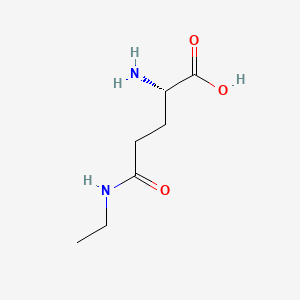
L-theanine is expected to be highly mobile in soil and water, with minimal volatilization, hydrolysis, or direct photolysis. Its estimated Koc of 10 indicates very high soil mobility and low adsorption to sediment. The compound exists as a zwitterion at environmental pH, which may enhance soil adsorption relative to neutral forms. Atmospheric degradation by hydroxyl radicals is estimated at a half-life of 7.3 hours. Biodegradation is likely an important fate process, based on structural analogy to glutamine, which is readily biodegradable. These fate characteristics suggest L-theanine will partition primarily into water and degrade biologically rather than persist or volatilize.
What do biodegradation, bioaccumulation, and ecotoxicity findings indicate for L-theanine?
Biodegradation is likely significant, while bioaccumulation potential is low. An estimated BCF of 3, derived from a log Kow of -3.54, indicates low bioconcentration in aquatic organisms. By analogy to glutamine, which achieved 77% theoretical BOD in 28 days and is classified as readily biodegradable, L-theanine may also be readily biodegradable. No direct ecotoxicity data are available for L-theanine. The low bioaccumulation potential and likely biodegradability suggest reduced persistence-related hazards, but the absence of direct ecotoxicity measurements limits definitive hazard characterization.
Which environmental exposure pathways or concentrations are reported for L-theanine?
Reported exposure pathways are primarily indirect: release to the environment may occur through waste streams from production and use as a dietary supplement and food additive. General population exposure is noted via ingestion of foods and drinks containing L-theanine, such as tea and sports beverages, and dermal contact with consumer products. No measured environmental concentrations in air, water, or soil are reported. Occupational dermal exposure is possible at production or use sites. Quantitative environmental release levels or concentration data are absent, limiting exposure assessment.
How might use context or formulation affect the environmental profile of L-theanine?
Use as a dietary supplement and food additive is the primary release context, with potential entry via waste streams. Theanine's high water solubility and low volatility suggest that aqueous release pathways (e.g., wastewater) are most relevant. Its zwitterionic form may influence soil adsorption depending on organic carbon and clay content. Formulation in beverages or solid supplements could affect the timing and form of release, but no specific formulation-dependent environmental data are available. The lack of hydrolysis and photolysis suggests that environmental persistence will depend largely on biodegradation rates in receiving media.
Which evidence gaps must be resolved before making sustainability claims about L-theanine?
Direct measurements of L-theanine biodegradation, bioaccumulation, and ecotoxicity are needed before any sustainability claims can be made. Current evidence relies on structural analogy to glutamine and estimated physicochemical properties. No empirical data exist for soil or aquatic degradation rates, toxicity to aquatic or terrestrial organisms, or environmental concentrations. Without these data, claims of environmental safety or low impact are not substantiated. Additionally, release quantities from production and use are unquantified, preventing exposure or risk assessment.