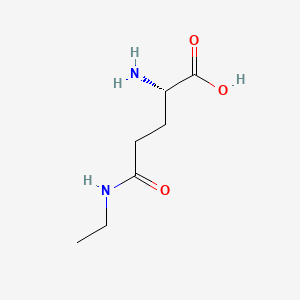
Regulations of L Theanine

THEANINE

Identifiers

FormulaC7H14N2O3·CAS3081-61-6·EC221-379-0

Functions

SKIN Conditioning - EmollientHumectant +1 more

Hazards

Irritant

How does the regulatory treatment of L-theanine differ by market or product category?

Regulatory treatment of L-theanine varies by market and product category. In the US, it has been the subject of FDA food additive notifications for use in foods up to 250 mg per serving, with no questions raised, for both naturally derived and chemically synthesized forms. In the EU, it appears in the ECHA C&L Inventory with aggregated GHS classifications, indicating hazard communication obligations. For cosmetics, the INCI name THEANINE is listed as active with functions like skin conditioning and humectant, but no specific restrictions or maximum concentrations are provided. These differences mean compliance requirements differ significantly between food, cosmetic, and general chemical contexts.

Which United States federal regulations apply to L theanine?

1 regulation

FDA GRAS Notices

GRAS notices

NoticeNotifierIntended useBasisFiledClosedFDA responseStatus
209
TTaiyo International, Inc.
Ingredient in several food categories up to 250 milligrams per servingScientific procedures09 Aug 200605 Feb 2007FDA has no questionsauthorized
501
ZZhejiang Tianrui Chemical Co., Ltd.
As an ingredient in foodsScientific Procedures18 Feb 201430 Jul 2014FDA has no questionsauthorized
1311
ZZhejiang Zhenyuan Biotech Co., Ltd
Intended for use as an ingredient at maximum levels ranging from 1 to 125 mg/g in fruit flavored drinks, juices and nectars; fruit juice bars; non-herbal teas; sports drinks, energy drinks; enhanced and flavored water; carbonated and tonic water; mints; chewing gum; hard candy and cough drops; chocolate covered nuts; and soft candy, excluding use in infant formula and products under the jurisdiction of the United States Department of Agriculture.Scientific procedures  Pendingauthorized

What regulations apply to L theanine in China?

1 regulation

IECIC Listed Ingredients (List I)

Published
24 Jun 2025
Effective
24 Jun 2025

Regulatory records

EntryRegulationTypeStatus
1609Inventory of Existing Cosmetic Ingredients in China (IECIC) IList Iauthorized

Record details

Inventory of Existing Cosmetic Ingredients in China (IECIC) I

professional use only
No

Which conditions, limits, and use contexts most affect a compliance assessment for L-theanine?

The most decision-relevant conditions are the US food additive notifications, which specify a maximum of 250 mg per serving and require scientific procedures to demonstrate safety; FDA has expressed no questions for both a natural and a synthetic source. In the EU, the GHS classification includes H317 (may cause an allergic skin reaction) with a warning signal word, which affects labeling and handling documentation. For cosmetics, no restrictions or maximum concentrations are listed, but the substance is active for skin conditioning and humectant functions. These factors directly influence formulation limits, labeling, and safety assessment scope.

What should be in place before a product containing L-theanine is assessed for launch?

Before launch, a compliance assessment should include documentation of the specific regulatory pathway: for US foods, evidence of a food additive notification with FDA no-questions status and adherence to the 250 mg per serving limit; for EU chemical handling, GHS classification and labeling per the H317 warning; for cosmetics, confirmation of INCI listing and function claims. Additionally, safety data supporting the scientific procedures basis for food use should be on file. Without these, the regulatory status cannot be confirmed. The absence of exposure limits or toxicity test results means additional safety data may be needed for a full assessment.

Where does the available regulatory position stop short of supporting a decision on L-theanine?

The available regulatory position is insufficient to support a final decision because it lacks key elements: no EU food additive approval or maximum level, no exposure limits, and no toxicity test data. The US food notifications are specific to certain manufacturers and may not cover all sources or product categories. The EU GHS classification is based on company notifications, not a harmonized decision, and the cosmetic listing provides no restrictions or concentration limits. Therefore, while the substance is clearly regulated in multiple contexts, the evidence does not establish a comprehensive compliance framework, and additional jurisdiction-specific research is required.

Which recent regulatory changes or effective dates are material for L-theanine?

No recent regulatory changes or effective dates were provided in the evidence. The only dated items are the US food additive notifications: one from 08/09/2006 for Taiyo International and another from 02/18/2014 for Zhejiang Tianrui Chemical. These are historical approvals, not recent changes. The EU C&L notifications and cosmetic listing do not include effective dates. Therefore, there is no evidence of any material regulatory change that would affect current compliance decisions for L-theanine.