Manuka Honey
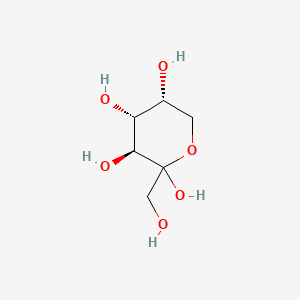
Identifiers
Functions
Where is manuka honey used, and what role does it play in each application?
Manuka honey functions primarily as a skin-conditioning emollient, humectant, and moisturizing agent in cosmetic applications, as reflected in its INCI status. It is also used in a serum formulation as a skin compatibility booster, where it is combined with royal jelly and a Lactobacillus fermentation extract to improve skin compatibility. Beyond cosmetics, its constituent fructose serves as a sweetening agent, preservative, and intravenous infusion in parenteral feeding, though these uses pertain to fructose generally rather than manuka honey specifically.
Which product or formulation problem does manuka honey address?
Manuka honey addresses skin dryness and textural issues through its humectant and emollient functions, helping to retain moisture and condition the skin. In a specific serum application, it solves skin compatibility problems by reducing the water contact angle on skin to 14 degrees or less, indicating improved wetting and spreadability. This is achieved when manuka honey is blended in a 1:1:1 mass ratio with a royal jelly mixture and a Lactobacillus fermentation extract, suggesting a synergistic effect for enhanced skin feel and compatibility.
What supports the main commercial or clinical uses of manuka honey?
The main commercial use of manuka honey in cosmetics is supported by its listing as an active ingredient with functions of skin conditioning, humectancy, and moisturizing. Clinical evidence for these uses is not provided in the available data. For the specific skin compatibility application, a patent application claims that a composition containing manuka honey, royal jelly, and a fermentation extract reduces skin contact angle to 14 degrees or less, serving as a booster. This is a claimed approach, not proof of efficacy or market adoption.
How is Manuka honey used clinically?
IT IS UTILIZED BY DIABETIC PATIENTS WITH KETOACIDOSIS...MAY BE USEFUL IN EARLY MANAGEMENT OF THIS COMPLICATION OF DIABETES MELLITUS
Which formulation trade-offs should researchers consider for manuka honey?
Formulators should consider manuka honey's humectant and emollient profile, which can influence water activity and texture. In the serum example, it is combined with butylene glycol, pentylene glycol, and a fermentation extract, indicating that its high sugar content may require co-solvents to achieve desired spreadability. Safety data for fructose, a component, show that inhalation of powder can cause cough and eye exposure may cause redness and pain, so handling precautions are needed. No concentration limits or restrictions are specified for cosmetic use, but separation from strong oxidants is advised.
What are the physicochemical properties of Manuka honey?
| Property | Value | Category |
|---|---|---|
| Physical Description | Liquid, White solid; Colorless crystalline solid; [Sigma-Aldrich MSDS], WHITE CRYSTALS OR POWDER | Appearance |
| Color/Form | CLEAR COLORLESS LIQUID IN WATER, COLORLESS CRYSTALS OR AS A WHITE, CRYSTALLINE OR GRANULAR POWDER, White crystals | Appearance |
| Odor | ODORLESS | Appearance |
| Taste | SWEET | Appearance |
| Solubility | Solubility in water at 20 °C: good | Formulation Relevant Properties |
| Autoignition Temperature | 360 °C | Handling Relevant Properties |
| Decomposition | 103-105 °C | Handling Relevant Properties |
| Collision Cross Section | 135 Ų [M+Na]+ [CCS Type: TW; Method: calibrated with polyalanine], 141.5 Ų [M+Na]+ [CCS Type: DT; Method: single field calibrated with ESI Low Concentration Tuning Mix (Agilent)], 141.93 Ų [M+Na]+ [CCS Type: DT; Method: stepped-field], 141.4 Ų [M+Na]+ [CCS Type: DT; Method: single field calibrated with Agilent tune mix (Agilent)] | Analytical Properties |
| Other Experimental Properties | Orthorhombic, bisphenodial prisms from alc, dec 103-105 °C. Sweetest of the sugars. Shows mutarotation. Specific optical rotation: -132 deg to -92 deg (c=2) @ 20 °C/D. Rapid and anomalous mutarotation involve pyranose-furanose interconversion. The final mutarotation value is obtained instantly in the presence of hydroxyl ions. pKa= 12.06 @ 18 °C. Freely sol in water. One gram dissolves in 15 ml alc, in 14 ml methanol. Slightly sol in cold, freely in hot acetone; sol in pyridine, ethylamine, meth, MP: 103 °C (dec); density: 1.60 @ 20 °C/4 °C /beta-levulose/ | Analytical Properties |
| XLogP3 | -2.8 | Computed Molecular Properties |
Which formulation benchmark best contextualizes manuka honey, and what differs?
A relevant formulation benchmark is the serum composition described in the patent, which uses manuka honey at 100% in one component, blended with a royal jelly mixture and a fermentation extract. This benchmark differs from typical humectant systems because it relies on a natural, multi-component ingredient rather than a single synthetic humectant. The target is a skin contact angle of 14 degrees or less, a specific performance metric that is not commonly used in standard moisturizer benchmarks, which typically focus on hydration or barrier function.