Ormocer
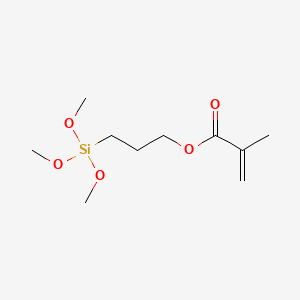
Identifiers
Functions
Hazards

Where is Ormocer used, and what role does it play in each application?
Ormocer, identified as 3-(trimethoxysilyl)propyl methacrylate, is used in dental materials, adhesives, and as a coupling agent. In dental applications, it serves as a primer for porcelain repair, promoting adhesion to ceramic surfaces. It also functions as a coupling agent to enhance resin-glass, resin-metal, and resin-resin bonds, and is used in making organosiloxane copolymers, prosthetics, and contact lenses. Its role is primarily as an adhesion promoter and binder in these formulations.
Which product or formulation problem does Ormocer address?
Ormocer addresses adhesion problems in composite and dental materials by acting as a coupling agent that bridges organic polymers and inorganic surfaces like glass, metal, and dental porcelain. It enables 'built-in' primer systems in adhesives, improving bond strength and durability. In dental porcelain repair, a 4% solution in methacrylate and ethanol is used to achieve reliable adhesion. This solves the challenge of bonding dissimilar materials in demanding applications.
What supports the main commercial or clinical uses of Ormocer?
Commercial and clinical use is supported by its listing as a High Production Volume chemical, with U.S. production between 2.5 and 4 million pounds annually from 2020 to 2023, indicating widespread industrial adoption. It is also an active TSCA substance, confirming ongoing commercial activity. Specific applications in dental materials and adhesives are documented in use descriptions, and its role as a silane coupling agent in unsaturated polymers is well-established. However, no clinical trial or efficacy data are available.
Which formulation trade-offs should researchers consider for Ormocer?
Researchers should consider the trade-off between adhesion promotion and handling safety. Ormocer is a methacrylic-functional silane that effectively modifies organic polymers, but it requires careful handling due to potential hazards. OSHA recommends protective equipment and respiratory protection, indicating possible skin and inhalation risks. Formulators must balance the need for strong adhesion with the need to manage worker exposure during manufacturing and application. Additionally, its use in dental primers involves a specific concentration (4%) in a methacrylate/ethanol solvent, which may affect cure kinetics and shelf life.
What are the physicochemical properties of Ormocer?
| Property | Value | Category |
|---|---|---|
| Physical Description | Dry Powder; Liquid, Liquid; Colorless liquid; [MSDSonline] | Appearance |
| Color/Form | Liquid | Appearance |
| Solubility | Sol in acetone, benzene, ether, methanol, and hydrocarbons | Formulation Relevant Properties |
| Boiling Point | 190 °C, Boiling point = 80 °C at 1 mm Hg, 190 °C @760 [mm Hg] | Handling Relevant Properties |
| Flash Point | 92 °C (198 °F) (closed cup) | Handling Relevant Properties |
| Density | 1.045 at 25 °C, 1.045 @25 °C | Handling Relevant Properties |
| Autoignition Temperature | 265 °C ( 509 °F) | Handling Relevant Properties |
| Decomposition | When heated to decomposition it emits acrid smoke and irrtating fumes, Hazardous decomposition products: carbon monoxide, carbon monoxide, carbon dioxide, silicon dioxide | Handling Relevant Properties |
| Polymerization | In general the methacrylic esters, polymerize much less readily than the corresponding ordinary acrylates. Nonetheless, they are stabilized by adding hydroquinone or pyrogallol, particularly in the presence of metallic copper. /Methacrylates/ | Analytical Properties |
| Refractive Index | Index of refraction: 1.4285 at 25 °C | Analytical Properties |
Which formulation benchmark best contextualizes Ormocer, and what differs?
A relevant benchmark is the use of organofunctional silanes as coupling agents in dental and composite materials. Ormocer is specifically a methacrylic-functional silane, which is particularly effective for modifying organic polymers containing carboxyl groups. Compared to other silanes, its methacrylate group enables copolymerization with resin matrices, providing a distinct advantage in adhesion. This makes it a benchmark for adhesion promotion in resin-based systems, though its specific performance relative to other silanes is not quantified in the available evidence.