Ormocer Environmental Fate & Ecotoxicity
Identifiers
Functions
Hazards

What is known about the environmental fate of Ormocer?
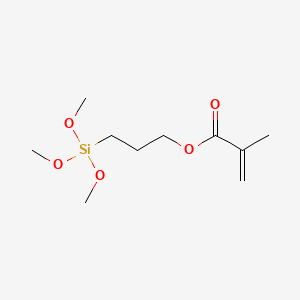
Ormocer's environmental fate is driven by its component trimethoxysilylpropyl methacrylate, which is expected to have low mobility in soil and adsorb to sediment, with minimal volatilization from water or soil. In air, it exists as a vapor and degrades via hydroxyl radicals (half-life ~15 hours) and ozone (half-life ~24 hours), but not by direct photolysis. In water, rapid hydrolysis occurs under low pH, while base-catalyzed hydrolysis is slow (half-lives of 81 years at pH 7 and 8.1 years at pH 8). Biodegradation data are unavailable, so persistence in environmental compartments remains uncertain.
What do biodegradation, bioaccumulation, and ecotoxicity findings indicate for Ormocer?
Biodegradation and ecotoxicity data for Ormocer are not reported, so no definitive hazard classification can be made. Bioaccumulation potential is low, based on an estimated BCF of 3.2 for trimethoxysilylpropyl methacrylate, indicating limited bioconcentration in aquatic organisms. The lack of biodegradation and ecotoxicity evidence means that persistence and toxicological effects on ecosystems cannot be assessed. This gap is critical for regulatory submissions and environmental risk assessments, as hazard conclusions cannot be drawn without empirical data.
Which environmental exposure pathways or concentrations are reported for Ormocer?
Reported exposure pathways for Ormocer are primarily occupational and consumer-related. Occupational exposure may occur via inhalation and dermal contact during production or use. The general population may be exposed through ingestion or dermal contact during porcelain dental repair work, as trimethoxysilylpropyl methacrylate is used as an adhesion or coupling agent. No quantitative environmental concentrations in air, water, or soil are reported. Release to the environment is expected through waste streams, but specific levels are not quantified, limiting exposure assessment.
How might use context or formulation affect the environmental profile of Ormocer?
Use context significantly influences Ormocer's environmental profile. As an adhesion or coupling agent for dental porcelain, ceramic, or glass, its release is likely localized to dental practices and manufacturing sites, with potential entry into wastewater. In low-pH environments, rapid hydrolysis of the methacrylate component occurs, potentially reducing persistence, while at neutral or alkaline pH, hydrolysis is slow, increasing environmental residence time. Formulation and application methods (e.g., curing, disposal) will determine whether the compound reaches soil, water, or air, but specific use-phase release data are not provided.
Which evidence gaps must be resolved before making sustainability claims about Ormocer?
Before any sustainability claim can be made for Ormocer, several evidence gaps must be resolved: empirical biodegradation data under relevant environmental conditions, ecotoxicity endpoints for aquatic and terrestrial organisms, and measured environmental concentrations in air, water, soil, and biota. Additionally, the fate of hydrolysis products and their environmental behavior are unknown. Without these data, persistence, bioaccumulation, and toxicity cannot be characterized, and any sustainability assertion would lack scientific support. These gaps are essential for regulatory compliance and credible environmental communication.