Ph Indicator Dyes
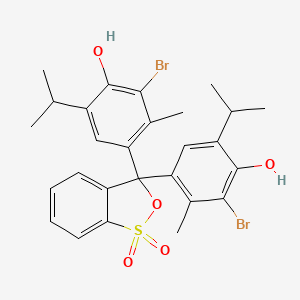
Identifiers
Functions
Hazards

Where is Ph Indicator Dyes used, and what role does it play in each application?
Bromothymol blue, a representative pH indicator dye, is used as a dye, an acid-base indicator, and a two-colour indicator. It functions as a pH-sensitive dye in laboratory reactions and is also listed as a cosmetic colorant. In practical terms, it is yellow in acidic solutions, blue in basic solutions, and green in neutral solutions, enabling visual pH determination across a range of applications. Its role is primarily analytical and colorimetric, providing a visual signal of acidity or alkalinity in both research and cosmetic formulations.
Which product or formulation problem does Ph Indicator Dyes address?
pH indicator dyes solve the problem of visually determining the acidity or basicity of a solution without requiring complex instrumentation. Bromothymol blue, for example, acts as a weak acid that changes color based on the pH of the solution—yellow in acidic, blue in basic, and green in neutral conditions. This property makes it valuable for monitoring pH in laboratory reactions and potentially in cosmetic products where color change indicates pH shifts. The dye provides a simple, real-time visual cue for formulation stability or reaction progress.
What supports the main commercial or clinical uses of Ph Indicator Dyes?
The main uses of pH indicator dyes are supported by their documented chemical properties and regulatory listings. Bromothymol blue is described as a pH-sensitive dye used as an indicator in many laboratory reactions, and it is specifically cited for use as a pH indicator in the pH ranges of 5.8–7.6 and 10.2–11.8. Additionally, it is listed as a cosmetic colorant, and its commercial activity status is active under the US TSCA, indicating ongoing industrial use. These sources collectively substantiate its role in analytical chemistry and cosmetics.
Which formulation trade-offs should researchers consider for Ph Indicator Dyes?
Researchers should consider that pH indicator dyes like bromothymol blue are weak acids, meaning their color response is pH-dependent and limited to specific pH ranges (e.g., 5.8–7.6 and 10.2–11.8). This restricts their use to formulations where the pH remains within the indicator's transition range. Additionally, as a cosmetic colorant, the dye must comply with regional regulations; for instance, in New Zealand it lacks individual approval but may be used under a group standard, while in the US it is active under TSCA. These regulatory nuances affect formulation approval pathways.
What are the physicochemical properties of Ph indicator dyes?
| Property | Value | Category |
|---|---|---|
| Physical Description | Odorless white to cream-colored solid; Available as pure compound, monosodium salt, and dilute solutions; [CHEMINFO] | Appearance |
| XLogP3 | 7.6 | Computed Molecular Properties |
| Exact Mass | 624.00037 | Computed Molecular Properties |
| Monoisotopic Mass | 622.00242 | Computed Molecular Properties |
| Topological Polar Surface Area | 92.2 | Computed Molecular Properties |
| Complexity | 818.0 | Computed Molecular Properties |
| Hydrogen Bond Donor Count | 2 | Computed Molecular Properties |
| Hydrogen Bond Acceptor Count | 5 | Computed Molecular Properties |
| Rotatable Bond Count | 4 | Computed Molecular Properties |
| Heavy Atom Count | 35 | Computed Molecular Properties |
Which formulation benchmark best contextualizes Ph Indicator Dyes, and what differs?
A relevant formulation benchmark is the use of bromothymol blue as a cosmetic colorant, given its active status in commercial activity. However, unlike typical cosmetic dyes that are selected solely for color, pH indicator dyes add a functional pH-sensing capability. This dual role means formulators must balance color stability with pH responsiveness, which is not a consideration for standard colorants. The benchmark differs in that the dye's color is not fixed but varies with the formulation's pH, potentially limiting its use in products where pH fluctuates.