Ph Indicator Dyes Suppliers & Manufacturers
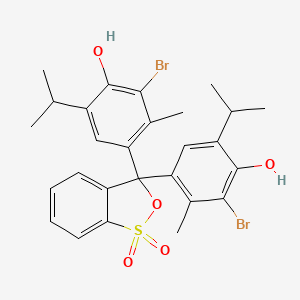
Identifiers
Functions
Hazards

What does available trade activity indicate for Ph indicator dyes?
Ph indicator dyes is classified under HS Code 3204.19. This falls under Chapter 32: Tanning or dyeing extracts; tannins and their derivatives; dyes, pigments and other colouring matter; paints, varnishes; putty, other mastics; inks, specifically Heading 3204 (Synthetic organic colouring matter and preparations based thereon; synthetic organic products used as fluorescent brightening agents or as luminophores; whether or not chemically defined), under subheading: Dyes; n.e.c., including mixtures of colouring matter of two or more of those from item no. 3204.11 to 3204.19.
* The data below is specific to the HS code, not the ingredient.
Suppliers
1,973
Across 93 countries
Shipments
9,479
from 2015 to 2026
Total weight
823.4M kg
20,564 TEU · standard 20-foot container units
Last shipment
8 months ago
Last updated at Feb 25, 2026
Growth
↑ 44%
Trade under 3204.19 has increased by 44% over the past 6 months
What does trade activity suggest about the Ph Indicator Dyes supply chain?
Trade activity under HS 3204.19 shows a large, active supply chain with 1,973 suppliers and 9,479 shipments, but it is not ingredient-specific. The data reflects broad synthetic organic coloring matter trade, including dyes and pigments, not exclusively pH indicator dyes. Business implication: this signals a robust sourcing market for colorants, but formulation teams must verify that suppliers actually produce pH indicator-grade materials. The high shipment volume and recent activity (through February 2026) suggest ongoing demand, yet the lack of product-level detail means the true pH indicator dye volume is unknown. Confidence is medium because the classification is broad and end-use is unconfirmed.
What does the HS or HTS classification include, and where are its limits for Ph Indicator Dyes?
HS 3204.19 covers synthetic organic coloring matter not elsewhere specified, including mixtures of coloring matter from subheadings 3204.11 to 3204.19. This scope is broad, encompassing dyes, pigments, and other colorants, not just pH indicator dyes. The limit is that trade data under this code cannot isolate pH indicator dyes from other colorants, so any supply chain analysis is approximate. For regulatory or sourcing decisions, this means you cannot rely on HS data alone to confirm ingredient-specific volumes or suppliers; additional product-level verification is required. The classification is a useful starting point but not a precise filter for pH indicator dyes.
Which suppliers are associated with Ph indicator dyes trade?
| Supplier | Shipments | Top customer | Growth | Last shipment | |
|---|---|---|---|---|---|
No suppliers found. | |||||
How concentrated or diversified does the supplier landscape appear for Ph Indicator Dyes?
The supplier landscape appears fragmented and diversified, with 1,973 suppliers across 93 countries, but a few large players dominate shipment volumes. For example, Sensient Colors De (Mexico) has 289 shipments, and Neelikon Food Dyes (India) has 144, indicating some concentration. However, many suppliers have fewer than 20 shipments, suggesting a long tail of smaller players. This diversification offers multiple sourcing options but also implies variability in quality and reliability. For procurement, this means you can leverage competition but must conduct thorough supplier qualification to ensure pH indicator dye specifications are met. The presence of major chemical firms like BASF and Merck adds credibility but their broad portfolios mean pH indicator dyes may be a minor product line.
Which supply risks or dependencies around Ph Indicator Dyes require further diligence?
Key supply risks include the lack of ingredient-specific shipment data, which obscures true pH indicator dye volumes and supplier specialization. Many suppliers are broad colorant manufacturers, so there is a risk of receiving non-indicator grades. Additionally, some suppliers show no recent shipments (e.g., BASF Colors & Effects last shipment in 2021), indicating potential supply instability. The concentration of shipments in India and China poses geopolitical and regulatory risks, such as trade policy changes or quality control issues. Further diligence should include direct supplier audits, product specification verification, and stability testing to confirm pH indicator performance. The data does not confirm any UFLPA risk, but that does not eliminate other compliance concerns.
Which sourcing geographies and trade lanes appear most relevant to Ph Indicator Dyes?
India and China are the most prominent sourcing geographies, with India having 265 suppliers and 2,776 shipments, and China 473 suppliers and 1,795 shipments. Germany also appears significant with 94 suppliers and 791 shipments. These lanes suggest a strong Asian supply base, with India as a key node for dye production. For formulation teams, this indicates potential for cost-effective sourcing from India and China, but also requires attention to quality control and regulatory compliance. The presence of European suppliers like Germany offers alternatives for higher-specification needs. However, the data does not confirm that these lanes are specific to pH indicator dyes, only to the broader HS code.
Which countries drive Ph indicator dyes trade activity?
By shipment count
India
2,776 shipments
265 suppliers
74.1M kg total weight
China
1,795 shipments
473 suppliers
18M kg total weight
Germany
791 shipments
94 suppliers
50.5M kg total weight
Mexico
589 shipments
78 suppliers
5.1M kg total weight
United Kingdom
447 shipments
95 suppliers
5.6M kg total weight
Spain
381 shipments
56 suppliers
6.7M kg total weight
Taiwan
283 shipments
68 suppliers
1.5M kg total weight
Thailand
244 shipments
24 suppliers
8.1M kg total weight
Vietnam
200 shipments
55 suppliers
4.6M kg total weight
Belgium
194 shipments
50 suppliers
3.3M kg total weight