Regulations of Polyethylene Furanoate

Polyethylene Furanoate

Identifiers

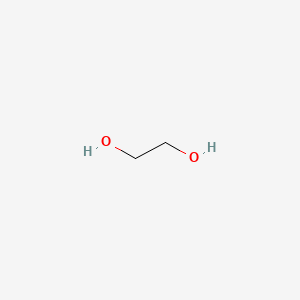
FormulaC2H6O2·CAS107-21-1·EC203-473-3·HS2905.31

Hazards

Irritant

How does the regulatory treatment of Polyethylene Furanoate differ by market or product category?

Regulatory treatment of Polyethylene Furanoate (PEF) is not directly established in the supplied evidence; the data pertain to related substances such as ethylene glycol and polyethylene glycol. In the EU, these related substances have active REACH registrations and ECHA C&L notifications, while in the US they are subject to TSCA Chemical Data Reporting and various FDA food-contact and FIFRA tolerance exemptions. In Australia and New Zealand, they appear on industrial chemical inventories. For PEF itself, no market-specific approvals or restrictions are documented, so a compliance assessment cannot rely on these related-substance entries.

Which United States federal regulations apply to Polyethylene furanoate?

8 regulations

EPA TSCA Regulatory Flag

1,2-Ethanediol is listed on the EPA's Chemical Data Reporting (CDR) system. Manufacturers and importers of 1,2-Ethanediol are required to report information about their production and use of this chemical to the EPA under the Toxic Substances Control Act (TSCA). (40 eCFR Part 711)

FIFRA Requirements

Residues of ethylene glycol are exempted from the requirement of a tolerance when used in accordance with good agricultural practice as inert (or occasionally active) ingredients in pesticide formulations applied to growing crops or to raw agricultural commodities after harvest. Use: Encapsulating agent for pesticides being applied post-harvest as residual, and crack and crevice sprays in and around food and nonfood areas of residential and nonresidential structures, including food handling establishments. Limit: without limitation.

FDA Direct Food Additives

Ethylene glycol is an indirect food additive for use only as a component of adhesives.

FDA Food Contact Notifications

Ethylene glycol is an indirect food additive for use only as a component of adhesives.

DEA Listed Chemicals

Residues of ethylene glycol are exempted from the requirement of a tolerance when used in accordance with good agricultural practice as inert (or occasionally active) ingredients in pesticide formulations applied to growing crops only. Use: Antifreeze, deactivator for all pesticides used before crop emerges from soil and in herbicides before or after crop emerges. Limit: none.

CERCLA Reportable Quantities

Persons in charge of vessels or facilities are required to notify the National Response Center (NRC) immediately, when there is a release of this designated hazardous substance, in an amount equal to or greater than its reportable quantity of 5000 lb or 2270 kg. The toll free number of the NRC is (800) 424-8802. The rule for determining when notification is required is stated in 40 CFR 302.4 (section IV.D.3.b).

Atmospheric Standards

This action promulgates standards of performance for equipment leaks of Volatile Organic Compounds (VOC) in the Synthetic Organic Chemical Manufacturing Industry (SOCMI). The intended effect of these standards is to require all newly constructed, modified, and reconstructed SOCMI process units to use the best demonstrated system of continuous emission reduction for equipment leaks of VOC, considering costs, non air quality health and environmental impact and energy requirements. Ethylene glycol is produced, as an intermediate or a final product, by process units covered under this subpart.

Federal Drinking Water Guidelines

EPA 14,000 ug/L

What EU regulatory requirements apply to Polyethylene furanoate?

3 regulations

REACH Registered Substance

Status: Active Update: 15-05-2023 https://echa.europa.eu/registration-dossier/-/registered-dossier/15973

EFSA Legal Basis

Regulation (EC) No 1935/2004 (amended)

Status Regulation (EC)

Regulation (EC) No 1935/2004 (amended)

What regulations apply to Polyethylene furanoate in Australia?

1 regulation

The Australian Inventory of Industrial Chemicals

Chemical: 1,2-Ethanediol

What regulations apply to Polyethylene furanoate in New Zealand?

1 regulation

New Zealand EPA Inventory of Chemical Status

1,2-Ethanediol (ethylene glycol): HSNO Approval: HSR001534 Approved with controls

Which United States federal regulations apply to Polyethylene furanoate?

6 regulations

California Safe Cosmetics Program (CSCP)

Effective
04 Feb 2014

Regulatory records

EntryRegulationTypeStatusSource
cdph-13591California Safe Cosmetics Act (Health & Safety Code §111791.5)cdph_cosmetics_reportingrestrictedView

Product applications

  • Bath Products
  • Fragrances
  • Hair Care Products (non-coloring)
  • Makeup Products (non-permanent)
  • Skin Care Products
  • Sun-Related Products

Conditions

Manufacturers must report to CDPH when using this chemical in a cosmetic product

Record details

California Safe Cosmetics Act (Health & Safety Code §111791.5)

professional use only
No
reporting count
16

California Proposition 65

Effective
19 Jun 2015

Regulatory records

EntryRegulationTypeStatusSource
prop65-cas-107211California Proposition 65 (Safe Drinking Water and Toxic Enforcement Act)prop65restrictedView

Product applications

Product TypeLimit
general8700µg/day

Conditions

Toxicity: developmental; Listing mechanism: AB; Date listed: 2015-06-19; NSRL/MADL: 8700 (oral)

Record details

California Proposition 65 (Safe Drinking Water and Toxic Enforcement Act)

professional use only
No

Washington CHCC List

Regulatory records

EntryRegulationTypeStatusSource
wa-chcc-107211Washington Children's Safe Products Act - Chemicals of High Concern to Childrenwa_chccrestrictedView

Product applications

  • Children's products

Conditions

Restricted: No; Report required: Yes

Record details

Washington Children's Safe Products Act - Chemicals of High Concern to Children

professional use only
No

Oregon State Regulations

Regulatory records

EntryRegulationTypeStatusSource
or-hpccch-107211Oregon Toxic-Free Kids Act - High Priority Chemicals of Concern for Children's Healthor_hpccchrestrictedView

Product applications

  • Children's products

Conditions

Listed by Oregon as a high-priority chemical for children's products reporting.

Record details

Oregon Toxic-Free Kids Act - High Priority Chemicals of Concern for Children's Health

professional use only
No

New Jersey Worker and Community Right to Know Act

The New Jersey Worker and Community Right to Know Act requires public and private employers to provide information about hazardous substances at their workplaces. (N.J.S.A. 34:5A-1 et. seq.)

State Drinking Water Guidelines

(AZ) ARIZONA 5500 ug/l

Which conditions, limits, and use contexts most affect a compliance assessment for Polyethylene Furanoate?

For PEF, the most relevant conditions and limits would derive from its constituent monomers and potential degradation products, such as ethylene glycol. The evidence shows occupational exposure limits for ethylene glycol, including an OSHA ceiling of 50 ppm (125 mg/m³) and ACGIH TLVs of 25 ppm (vapor) and 50 ppm (aerosol), as well as a drinking water guideline of 14,000 µg/L. However, these limits apply to ethylene glycol, not PEF itself. For PEF, no specific use conditions, concentration limits, or exposure limits are provided, so a compliance assessment must consider potential monomer release and applicable downstream regulations.

What should be in place before a product containing Polyethylene Furanoate is assessed for launch?

Before launching a product containing PEF, a company should have a clear regulatory profile for the polymer itself, including its chemical identity, molecular weight, and any applicable exemptions (e.g., polymer exemption under TSCA). The evidence indicates that related polymers like polyethylene glycol may be exempt from certain reporting if they meet low-risk polymer criteria, but this is not confirmed for PEF. Additionally, documentation of potential monomer residues (e.g., ethylene glycol) and their compliance with relevant food-contact, occupational, and environmental limits would be necessary. Without PEF-specific regulatory data, a full compliance assessment cannot be completed.

Where does the available regulatory position stop short of supporting a decision on Polyethylene Furanoate?

The available regulatory position stops short of supporting a decision on PEF because all evidence pertains to related substances—ethylene glycol and polyethylene glycol—not PEF itself. While these related substances have established regulatory statuses (e.g., REACH registrations, TSCA reporting, FDA food-contact approvals), none of these can be extrapolated to PEF without additional data. The absence of PEF-specific GHS classifications, exposure limits, or use restrictions means that any compliance decision would be based on assumptions, not evidence. Therefore, a decision on PEF cannot be supported by the current evidence.

Which recent regulatory changes or effective dates are material for Polyethylene Furanoate?

No recent regulatory changes or effective dates specific to PEF are documented in the supplied evidence. The only dated updates are for related substances: REACH registrations for ethylene glycol and polyethylene glycol were updated in 2022 and 2023, and ACGIH TLVs for ethylene glycol were revised in 2016. These updates do not apply to PEF. Therefore, there are no material regulatory changes to track for PEF based on the current evidence.