Polyethylene Furanoate Suppliers & Manufacturers
Identifiers
Functions
Hazards

What does available trade activity indicate for Polyethylene furanoate?
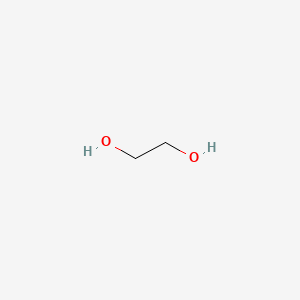
Polyethylene furanoate is classified under HS Code 2905.31. This falls under Chapter 29: Organic chemicals, specifically Heading 2905 (Acyclic alcohols and their halogenated, sulphonated, nitrated or nitrosated derivatives), under subheading: Alcohols; acyclic, diols; ethylene glycol (ethanediol).
* The data below is specific to the HS code, not the ingredient.
Suppliers
128
Across 33 countries
Shipments
1,010
from 2016 to 2026
Total weight
43.1B kg
6,463 TEU · standard 20-foot container units
Last shipment
8 months ago
Last updated at Feb 25, 2026
Growth
↑ 33%
Trade under 2905.31 has increased by 33% over the past 6 months
What does trade activity suggest about the Polyethylene Furanoate supply chain?
Trade activity under HS 2905.31 indicates a large, active supply chain for ethylene glycol, a key precursor to polyethylene furanoate (PEF), but it does not confirm PEF-specific shipments. The data show 1,010 shipments from 128 suppliers across 33 countries, with notable volumes from Saudi Arabia, Germany, Canada, and Laos. This suggests robust global availability of the glycol feedstock, which is relevant for PEF production planning. However, because the classification covers ethylene glycol broadly, the activity likely includes general glycol trade unrelated to PEF. Therefore, this signal supports feedstock sourcing but not direct PEF supply chain mapping.
What does the HS or HTS classification include, and where are its limits for Polyethylene Furanoate?
HS code 2905.31 covers ethylene glycol (ethanediol), a diol used in PEF synthesis, but it does not classify the polymer itself. The HTS code 2905.31.00.00 extends this to U.S. imports, yet the scope remains limited to the monomer, not PEF. Consequently, all supplier and shipment activity under this code reflects trade in ethylene glycol or related goods, not PEF. This boundary is critical: using this data to infer PEF supply chain would be misleading. For PEF-specific trade, a different classification or direct supplier identification is required.
Which suppliers are associated with Polyethylene furanoate trade?
| Supplier | Shipments | Top customer | Growth | Last shipment | |
|---|---|---|---|---|---|
No suppliers found. | |||||
How concentrated or diversified does the supplier landscape appear for Polyethylene Furanoate?
The supplier landscape for ethylene glycol appears moderately concentrated, with a few large players dominating shipment counts. India Glycols (188 shipments) and Saudi Basic Industries (135) account for a significant share, while the remaining 126 suppliers have fewer shipments. This suggests a mix of major producers and smaller traders, indicating a diversified but not fragmented market. For PEF, this implies that feedstock supply is relatively stable but may depend on a few key suppliers. However, since none of these suppliers are confirmed PEF manufacturers, the concentration applies to glycol, not PEF itself.
Which supply risks or dependencies around Polyethylene Furanoate require further diligence?
A key supply risk is the lack of confirmed PEF manufacturers among the listed suppliers, as all activity is tied to ethylene glycol. This creates a dependency on indirect sourcing assumptions. Additionally, the presence of logistics intermediaries and diverse chemical traders suggests potential supply chain opacity, requiring further diligence to identify actual PEF producers. The recent growth score of 36.2 indicates moderate momentum, but this is not PEF-specific. To mitigate risks, verify supplier capabilities directly and seek PEF-specific trade data or certifications.
Which sourcing geographies and trade lanes appear most relevant to Polyethylene Furanoate?
The most relevant sourcing geographies for ethylene glycol, a PEF precursor, are India, Saudi Arabia, Canada, and Germany, based on shipment counts and volumes. India leads with 275 shipments, followed by Saudi Arabia (150) and Canada (68). High-volume lanes include Saudi Arabia to the U.S. (Sabic Americas) and Canada to Asia (Dow Chemical Pacific). These lanes suggest established feedstock trade routes that could support PEF production. However, since the data are not PEF-specific, these geographies indicate where glycol is sourced, not necessarily where PEF is manufactured. Further verification is needed to link these lanes to PEF.
Which countries drive Polyethylene furanoate trade activity?
By shipment count
India
275 shipments
15 suppliers
79.4M kg total weight
Singapore
157 shipments
2 suppliers
4.2M kg total weight
Saudi Arabia
150 shipments
3 suppliers
4.1B kg total weight
France
73 shipments
2 suppliers
1.4M kg total weight
Canada
68 shipments
9 suppliers
291.9M kg total weight
Japan
41 shipments
5 suppliers
279.2K kg total weight
China
32 shipments
23 suppliers
387K kg total weight
South Korea
29 shipments
6 suppliers
360K kg total weight
Belgium
26 shipments
7 suppliers
15.6M kg total weight
Netherlands
23 shipments
8 suppliers
386.1K kg total weight