“Oxman’s designs, made from bacterial materials like polyhydroxyalkanoates (PHAs), are more than just sustainable—they’re revolutionary. Her creations... break down completely in nature, leaving no trace behind.”
Polyhydroxyalkanoates Consumer Sentiment
CtrlK
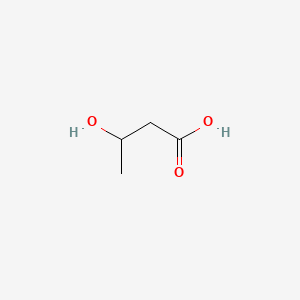
Identifiers
FormulaC4H8O3·CAS300-85-6·EC206-099-9
Functions
AbrasiveSKIN Conditioning
Hazards

How do consumers feel about products containing Polyhydroxyalkanoates?
Positive
Mixed
Negative
Consumers and industry observers view Polyhydroxyalkanoates (PHA) as a revolutionary, truly biodegradable alternative to conventional plastics with significant environmental benefits.
Which consumer needs, benefits, and objections are associated with polyhydroxyalkanoates?
Consumers associate polyhydroxyalkanoates with complete biodegradability, often describing them as revolutionary materials that break down fully in nature or marine environments without leaving toxic residues. This benefit is linked to circular economy applications, such as fashion items made from bacterial materials and converting industrial wastewater into biodegradable packaging. No explicit consumer objections were observed in the available evidence, though the absence of negative sentiment may reflect limited public discussion rather than a lack of concerns. The implication is that PHAs are positioned as a premium sustainability solution, but formulators should anticipate potential objections around cost, performance, or end-of-life conditions that are not yet visible in public discourse.
What do consumers discuss about Polyhydroxyalkanoates?
True Biodegradability
Users emphasize that PHA is a 'true bioplastic' made by microorganisms that breaks down completely in nature, including marine environments, unlike other bioplastics.
facebook
youtube
Sustainable Fashion and Packaging
PHA is highlighted for its application in creating circular fashion items like shoes and bags, as well as eco-friendly packaging materials.
facebook
3D Printing Utility
Enthusiasts note the practical advantages of PHA for 3D printing, such as hydrophobicity and lack of need for drying, despite it being less common than PLA.
youtube
How are current products and patent claims responding to consumer concerns about polyhydroxyalkanoates?
Current commercial products, such as PHA-based straws, are marketed for marine biodegradability, directly addressing ocean plastic waste concerns. Patent claims in the provided list do not mention polyhydroxyalkanoates; the only patent relates to construction coatings with no PHA relevance. This indicates that while consumer-facing products are leveraging PHA's environmental benefits, recent patent activity in the reviewed set does not reflect PHA innovation. The implication is that the market response is currently driven by brand storytelling and product positioning rather than a robust patent landscape, suggesting an opportunity for formulators to establish proprietary claims in consumer applications.
Where is the gap between consumer expectations and the current polyhydroxyalkanoates offering?
The gap lies between consumer expectations of complete, universal biodegradability and the likely real-world performance of PHAs, which depends on specific environmental conditions and product design. Consumers expect PHAs to leave no trace in nature, but the evidence does not confirm performance across all disposal scenarios, such as home composting or soil. Additionally, while consumers see PHAs as revolutionary, the patent landscape shows no recent PHA-specific innovation, suggesting a mismatch between public enthusiasm and technical advancement. The implication is that brands must communicate clear disposal instructions and avoid overgeneralized claims to prevent consumer disappointment and potential regulatory scrutiny.
Which formulation approaches are being used to address those concerns around polyhydroxyalkanoates?
Formulation approaches in the evidence focus on using PHAs as a base material for biodegradable products, such as straws, and on converting industrial by-products like fermentation wastewater into PHA-based packaging. These approaches aim to deliver complete biodegradability while supporting circular economy narratives. However, no specific formulation techniques—such as blending, plasticization, or processing aids—are disclosed in the available evidence. The implication is that current formulation strategies are at a conceptual stage, emphasizing material sourcing and end-of-life performance rather than optimizing mechanical properties or cost. Researchers should explore formulation innovations to improve processability and functionality without compromising biodegradability.
What consumer-led opportunity or risk should researchers consider for polyhydroxyalkanoates?
A consumer-led opportunity exists in leveraging PHA's circular economy appeal for high-value applications like fashion and packaging, as seen in the evidence. However, the risk is that consumer enthusiasm may outpace technical and regulatory substantiation, leading to greenwashing accusations if products do not meet biodegradability claims in real-world conditions. Researchers should prioritize developing PHA formulations with verified end-of-life performance and transparent labeling to build trust. The absence of patent activity in the reviewed set suggests a white space for proprietary innovations that align with consumer values, but only if backed by robust scientific evidence.