Scutellaria Alpina Extract
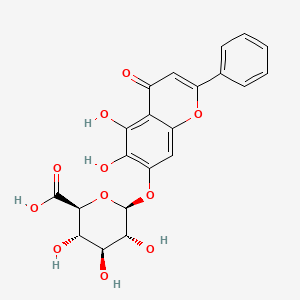
Identifiers
Functions
Hazards

Where is scutellaria alpina extract used, and what role does it play in each application?
Scutellaria alpina extract is used in cosmetics as a skin-conditioning agent, per its INCI listing. In a patent application, it is claimed as an anti-inflammatory active in cosmetic compositions for keratinous tissue, where it is combined with spent grain wax to reduce IL-1α, IL-8, and VEGF protein activity. The extract is also noted to contain baicalin, a compound with antioxidant, antibacterial, anti-inflammatory, and neuroprotective roles in other Scutellaria species, though this evidence is not specific to Scutellaria alpina. No other application areas are supported by the supplied evidence.
Which product or formulation problem does scutellaria alpina extract address?
Scutellaria alpina extract addresses skin inflammation and sensitive-skin symptoms in cosmetic formulations. A patent application claims a method using the extract to treat or prevent keratinous tissue inflammation, reduce IL-1α, IL-8, and VEGF activity, soothe sensitive skin symptoms like redness, stinging, and itching, and reduce transepidermal water loss. This positions the extract as a solution for formulations targeting inflammatory skin conditions and barrier function. However, this is a claimed approach, not proof of commercial adoption. The extract's skin-conditioning function also implies general skin feel or moisturization benefits, but specific problems solved are not detailed.
What supports the main commercial or clinical uses of scutellaria alpina extract?
The main evidence for Scutellaria alpina extract's uses is its regulatory listing as a skin-conditioning agent and a patent application claiming anti-inflammatory activity in cosmetics. The patent specifies a combination with spent grain wax to reduce IL-1α, IL-8, and VEGF proteins, with a concentration range of 0.1% to 1.0%. Broader evidence from other Scutellaria species shows baicalin, a related compound, has anti-inflammatory, antioxidant, and antimicrobial effects via pathways like NF-κB and Nrf2, but this is not direct evidence for Scutellaria alpina. No clinical or commercial use data is available.
Which formulation trade-offs should researchers consider for scutellaria alpina extract?
Researchers should consider the extract's low water solubility and limited membrane permeability, as noted for baicalin, which may affect bioavailability in formulations. The patent suggests an effective concentration of 0.1% to 1.0% by weight, providing a starting range for efficacy. The extract is intended for combination with spent grain wax, argan oil, and shea butter, indicating a lipid-rich formulation may be beneficial. No restrictions or maximum concentrations are listed in cosmetic regulations, but the extract is not approved as a standalone chemical in New Zealand, only as a component in group standards. These factors should guide vehicle selection and concentration optimization.
What are the physicochemical properties of Scutellaria alpina extract?
| Property | Value | Category |
|---|---|---|
| XLogP3 | 1.1 | Computed Molecular Properties |
| Exact Mass | 446.08491139 | Computed Molecular Properties |
| Monoisotopic Mass | 446.08491139 | Computed Molecular Properties |
| Topological Polar Surface Area | 183.0 | Computed Molecular Properties |
| Complexity | 748.0 | Computed Molecular Properties |
| Hydrogen Bond Donor Count | 6 | Computed Molecular Properties |
| Hydrogen Bond Acceptor Count | 11 | Computed Molecular Properties |
| Rotatable Bond Count | 4 | Computed Molecular Properties |
| Heavy Atom Count | 32 | Computed Molecular Properties |
| Formal Charge | 0 | Computed Molecular Properties |
Which formulation benchmark best contextualizes scutellaria alpina extract, and what differs?
The most relevant formulation benchmark is the patent's combination of Scutellaria extract with spent grain wax, argan oil, and shea butter, targeting anti-inflammatory and skin-barrier benefits. This differs from typical use of Scutellaria baicalensis extracts, which are often used alone for antioxidant or anti-inflammatory purposes. The patent claims a synergistic approach where the extract reduces inflammatory mediators while the wax mixture supports barrier function, addressing both inflammation and TEWL. This benchmark suggests a two-pronged strategy: combining the extract with barrier-repairing lipids to enhance efficacy in sensitive-skin products. No other formulation benchmarks are available.