Scutellaria Alpina Extract Consumer Sentiment
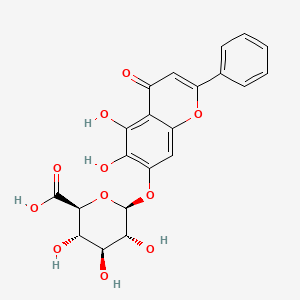
Identifiers
Functions
Hazards

How do consumers feel about products containing Scutellaria alpina extract?
Consumer conversations about Scutellaria Alpina Extract are virtually non-existent in the provided dataset, with only incidental mentions of related species or brand names containing 'Alpina' that do not discuss the specific extract.
Which consumer needs, benefits, and objections are associated with scutellaria alpina extract?
Direct consumer needs, benefits, and objections for Scutellaria Alpina Extract cannot be established from the available evidence. Consumer conversations about this specific ingredient are virtually non-existent, with only one post referencing a different species (Scutellaria baicalensis). No positive, mixed, or negative sentiment was recorded, and no themes, trends, or objections were identified. This absence of direct consumer data means any claimed benefit or concern must be inferred from adjacent evidence, such as patent filings, rather than observed market feedback. The business implication is that consumer demand for this extract is unproven, making any product launch reliant on ingredient-led rather than demand-led positioning.
How are current products and patent claims responding to consumer concerns about scutellaria alpina extract?
The only identified response is a single patent application (WO2026107698A1) by DSM IP Assets, which claims a cosmetic method using Scutellaria extract with spent grain wax to reduce IL-1α, IL-8, and VEGF protein activity in keratinous tissue. This targets inflammation and sensitive skin symptoms like redness, stinging, and itching. The patent is evidence of a claimed approach, not product adoption. No commercial products containing Scutellaria Alpina Extract were found in the available data. The implication is that the market response is nascent and research-driven, focusing on specific cytokine pathways rather than broad soothing claims, but actual consumer-facing products remain unverified.
Where is the gap between consumer expectations and the current scutellaria alpina extract offering?
The gap is fundamental: there is no evidence of consumer expectations for Scutellaria Alpina Extract, and no commercial products are available to meet them. The only offering is a patent claim targeting inflammation and sensitive skin, which implies a potential benefit but does not confirm consumer demand or product availability. The business implication is that any brand entering this space would be creating demand rather than satisfying it, carrying higher market-education risk. The gap is not about unmet formulation needs but about the absence of a validated consumer proposition and proven product form, making the ingredient's commercial viability uncertain.
Which formulation approaches are being used to address those concerns around scutellaria alpina extract?
The formulation approach in the identified patent combines Scutellaria extract at 0.1% to 1.0% with spent grain wax, argan oil, and shea butter. This combination is claimed to reduce transepidermal water loss (TEWL) and inhibit IL-1α, IL-8, and VEGF protein activity, addressing inflammation and sensitive skin symptoms. The approach pairs the extract's anti-inflammatory function with skin-barrier actives, suggesting a strategy to enhance efficacy through synergistic ingredients rather than relying on the extract alone. This is a claimed approach, not evidence of market adoption. The formulation implication is that barrier-supporting co-ingredients may be critical to delivering the extract's anti-inflammatory benefits in a cosmetic vehicle.
What consumer-led opportunity or risk should researchers consider for scutellaria alpina extract?
The primary opportunity is to position Scutellaria Alpina Extract as a targeted anti-inflammatory active for sensitive skin, leveraging the patent's claimed mechanism of reducing IL-1α, IL-8, and VEGF proteins. However, the risk is that consumer awareness is essentially zero, and the only related conversation references a different species (Scutellaria baicalensis), which could cause confusion or misattribution. Researchers should consider whether the extract can be differentiated from better-known Scutellaria species in consumer messaging. The decision-relevant conclusion is that the ingredient's success depends on education and clear species-specific communication, not on meeting existing demand.