Silica Gel
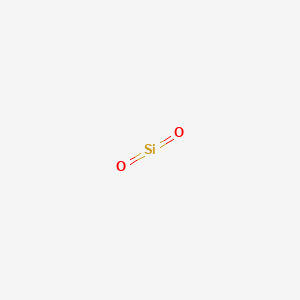
Identifiers
Functions
Where is silica gel used, and what role does it play in each application?
Silica gel functions primarily as a desiccant and adsorbent, with roles extending to anti-caking, bulking, viscosity control, and abrasion. In food and pharmaceuticals, it prevents caking and acts as an excipient. In cosmetics, it serves as an abrasive, absorbent, and opacifying agent. Industrial applications include use as a filler in rubber, paints, and plastics, a matting agent in coatings, and a moisture regulator in films and packaging. It is also used as a carrier in animal feed and agrochemicals, and in specialized applications like anti-glare films and cable insulation.
Which product or formulation problem does silica gel address?
Silica gel solves moisture-related formulation and product stability problems. It acts as a desiccant to absorb water, preventing caking in powders and protecting packaged goods. In liquid coating compositions, it reversibly adsorbs and desorbs water to regulate humidity. It also addresses surface finish issues as a matting agent to control gloss and as an anti-glare particle. In polymer composites, it is used as an adsorbent to reduce emissions and as a filler to modify physical properties.
What supports the main commercial or clinical uses of silica gel?
Evidence for silica gel's main uses comes from regulatory approvals, safety assessments, and patent filings. Regulatory bodies have approved it as a food additive and for use in food-contact packaging. A safety assessment concluded that synthetically-manufactured amorphous silica is safe in current cosmetic practices when formulated to be non-irritating. Patent applications demonstrate claimed approaches for using silica gel as a moisture regulator in coatings, a desiccant in packaging films, and an adsorbent in composites. These sources support its roles as an anti-caking agent, desiccant, and functional filler.
Which formulation trade-offs should researchers consider for silica gel?
Researchers must balance silica gel's benefits against its potential to cause mechanical irritation. While it is generally safe for use in cosmetics when formulated to be non-irritating, inhalation of fine particles can cause respiratory tract irritation. Formulations should be designed to minimize dust generation. In coatings, the particle size and pore volume are critical for achieving desired moisture regulation or matting effects. The concentration must be optimized, as pharmaceutical uses typically require 0.1-3.0%, while other applications may use higher loadings.
What are the physicochemical properties of Silica gel?
| Property | Value | Category |
|---|---|---|
| Physical Description | Transparent to gray, odorless powder. Irritating to the skin and eyes on contact. Inhalation will cause irritation in the respiratory tract. [Note: Amorphous silica is the non-crystalline form of SiO2.], Dry Powder; Other Solid; Large Crystals; CBI, Dry Powder; Wet Solid; Other Solid; Large Crystals; CBI; Liquid, Dry Powder; Large Crystals; Dry Powder; Large Crystals; Wet Solid; Dry Powder; Liquid; Liquid; Large Crystals; Liquid; Liquid; Other Solid; Dry Powder; Other Solid; Dry Powder; Large Crystals; Liquid; Other Solid; Dry Powder; Large Crystals; Liquid; Wet Solid; Other Solid; Other Solid; Wet Solid; Large Crystals; Dry Powder; Wet Solid; Other Solid; Dry Powder; Wet Solid; Large Crystals; Other Solid; CBI, Liquid; Other Solid; Dry Powder, White, fluffy powder or granules. Hygroscopic, Transparent to gray, odorless powder. [Note: Amorphous silica is the non-crystalline form of SiO2.]; [NIOSH], Solid, COLOURLESS OR WHITE CRYSTALS, Transparent to gray, odorless powder. [Note: Amorphous silica is the non-crystalline form of SiO2.] | Appearance |
| Color/Form | Amorphous powder, Transparent to gray powder (Note: Amorphous silica is the non-crystalline form of O2Si). ... solid, Silica gel is a coherent, rigid, continuous three-dimensional network of spherical particles of colloidal microporous silica, Transparent crystals | Appearance |
| Odor | Odorless | Appearance |
| Taste | Tasteless | Appearance |
| Solubility | Insoluble (NIOSH, 2024), The solubility of the various phases of silicas is very complex and depends upon several factors. Solubility increases with temperature and pH and is affected by the presence of trace metals. Particle size influences the rate of solubility. /Silica/, Insoluble, Silica is rather poorly soluble in water although solubility is higher for the amorphous than for the crystalline morphologies. ... The external amorphous layer in quartz is more soluble than the crystalline underlying core, AMORPHOUS IS SOL IN ALKALIES, ESP WHEN FINELY DIVIDED, Practically insoluble in water or acids. Dissolves readily in HF, forming silicon tetrafluoride, Very slightly sol in alkali, Soluble in hot potassium hydroxide and hot sodium hydroxide solutions. Insoluble in ethanol, Silica is rather poorly soluble in water and solubility is lower for the crystalline than for the amorphous morphologies. ...Solubility increases with temperature and pH and is affected by the presence of trace metals. Particle size influences the rate of solubility, The external amorphous layer in quartz (the Beilby layer) is more soluble than the crystalline underlying core, Solubility in water: none | Formulation Relevant Properties |
| Boiling Point | 4046 °F at 760 mmHg (NIOSH, 2024), 4046 °F, 2230 °C, 2950 °C @760 [mm Hg] | Handling Relevant Properties |
| Melting Point | 3110 °F (NIOSH, 2024), 3110 °F, 1710 °C, 1716 - 1736 °C, 1713 °C, 1722 °C | Handling Relevant Properties |
| Density | 2.2 (NIOSH, 2024) - Denser than water; will sink, 2.2 @ 25 °C, 2.6, Colorless crystals or white powder; odorless and tasteless; density: 2.2-2.6; soluble in molten alkai when finely divided and amorphous /Silicon dioxide/, Density = 2.20 g/cm; Refractive index = 1.459; Surface tension = 5.200 @ 298 K (calc); Thermal conductivity = 1.37 W/m-deg K at 298 deg K ; Heat of Formation = -903.2 kJ/mol at 298 deg K; Heat Capacity = 37.94 J/mol-deg K at 298 deg K; Dielectric Constant = 3.8 /Corning 7940 fused silica/, Density = 2.648 /alpha-Quartz/ /from table/, Density = 2.269 /alpha-Tridymite/ /from table/, Density = 2.318 /alpha-Cristobalite/ /from table/, Density = 2.909 /Coesite/ /from table/, Density = 4.287 /Stishovite/ /from table/, 2.3 g/cm³, 2.334 @25 °C, 2.2 @25 °C, 2.20 | Handling Relevant Properties |
| Vapor Pressure | 0 mmHg (approx) (NIOSH, 2024), approx 0 mm Hg, 10 mm Hg @ 1732 °C, 0 mmHg (approx) | Handling Relevant Properties |
| Corrosivity | Non-corrosive | Handling Relevant Properties |
Which formulation benchmark best contextualizes silica gel, and what differs?
A relevant formulation benchmark is its use as a desiccant in polymer films for packaging, where it is incorporated at high loadings (e.g., 30-80%) alongside molecular sieves. This contrasts with its role as a minor additive in cosmetics and food, where it is used at lower concentrations (e.g., up to 2% as an anti-caking agent). The key difference is the performance requirement: high-loading desiccant films prioritize maximum moisture absorption capacity, while low-loading applications prioritize flow and texture modification without compromising product integrity.