Spermidine Environmental Fate & Ecotoxicity
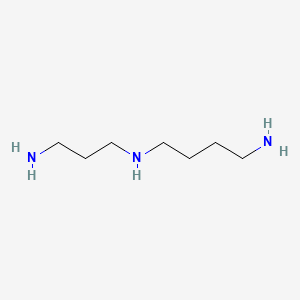
Identifiers
Functions
Hazards

Where is Spermidine used, and what role does it play in each application?
Spermidine is used across cosmetics, dietary supplements, pharmaceuticals, and food applications. In cosmetics, it functions as an antioxidant and hair-conditioning agent, and is claimed in topical hair-loss treatments as an autophagy promoter. In supplements and pharmaceuticals, it is positioned as an autophagy/mitophagy inducer for anti-aging, mitochondrial regulation, and metabolic support, with patent claims covering hematopoietic stem cell maintenance, neurodevelopment in infant formula, body-fat reduction, and semen-quality improvement. It is also a fragrance ingredient. Its role is primarily as a bioactive polyamine that supports cellular homeostasis and aging-related pathways.
Which product or formulation problem does Spermidine address?
Spermidine addresses formulation problems related to oxidative stress, hair conditioning, and cellular aging. As an antioxidant, it helps protect formulations from oxidative degradation. In hair-care products, it provides conditioning benefits. In anti-aging and nutraceutical formulations, it is included to induce autophagy and mitophagy, targeting mitochondrial dysfunction and protein homeostasis. Patent claims also suggest it solves specific clinical problems such as hematopoietic stem cell depletion, poor semen quality, and age-related functional decline. However, these are claimed uses, not confirmed product outcomes.
What supports the main commercial or clinical uses of Spermidine?
Evidence for spermidine's main uses comes from its regulatory status and patent filings. It is listed as an active cosmetic ingredient with antioxidant and hair-conditioning functions, and is noted as a fragrance ingredient. Its biological roles as an autophagy inducer and geroprotector are documented in chemical descriptions. Patent applications claim uses in anti-aging compositions, hair-loss treatments, infant formula for neurodevelopment, body-fat reduction, and semen-quality improvement. These patents provide evidence of claimed approaches, but not clinical proof or market adoption.
Which formulation trade-offs should researchers consider for Spermidine?
Formulation trade-offs for spermidine include stability and solubility considerations, as patent claims use salts like spermidine trichloride to improve these properties. In topical applications, concentrations range from 0.0005% to 0.1% for hair-loss treatments, while oral supplements may use 1-5% or specific mg amounts. The ingredient is a cation at all pH values, which may affect compatibility with other charged ingredients. Its role as a uremic toxin at high levels suggests dosage must be carefully controlled. No specific restrictions or maximum concentrations are listed in cosmetic regulations.
What are the physicochemical properties of Spermidine?
| Property | Value | Category |
|---|---|---|
| Physical Description | Solid | Appearance |
| Boiling Point | 129 °C at 1.40E+01 mm Hg | Handling Relevant Properties |
| Melting Point | < 25 °C | Handling Relevant Properties |
| Collision Cross Section | 136.5 Ų [M+Na]+ [CCS Type: DT; Method: single field calibrated with ESI Low Concentration Tuning Mix (Agilent)], 131.4 Ų [M+H]+ [CCS Type: DT; Method: single field calibrated with ESI Low Concentration Tuning Mix (Agilent)], 131.6 Ų [M+H]+ [CCS Type: DT; Method: single field calibrated with ESI Low Concentration Tuning Mix (Agilent)], 136.1 Ų [M+Na]+ [CCS Type: DT; Method: single field calibrated with ESI Low Concentration Tuning Mix (Agilent)], 131.9 Ų [M+H]+ [CCS Type: DT; Method: single field calibrated with Agilent tune mix (Agilent)], 131.3 Ų [M+H]+, 136.2 Ų [M+Na]+ | Analytical Properties |
| XLogP3 | -1.0 | Computed Molecular Properties |
| Exact Mass | 145.157897619 | Computed Molecular Properties |
| Monoisotopic Mass | 145.157897619 | Computed Molecular Properties |
| Topological Polar Surface Area | 64.1 | Computed Molecular Properties |
| Complexity | 56.8 | Computed Molecular Properties |
| Hydrogen Bond Donor Count | 3 | Computed Molecular Properties |
Which formulation benchmark best contextualizes Spermidine, and what differs?
A relevant formulation benchmark is the anti-aging composition combining spermidine with urolithin A and other mitophagy inducers, as seen in patent claims. These compositions typically use spermidine at 2-20 parts by weight alongside urolithin A and nicotinamide ribose, with liposomal encapsulation for delivery. This benchmark differs from simpler topical hair-loss formulations where spermidine is used at much lower concentrations (0.0005-0.1%) and combined with plant extracts. The contrast highlights the need for different delivery systems and dose ranges depending on the target application.