Spermidine Suppliers & Manufacturers
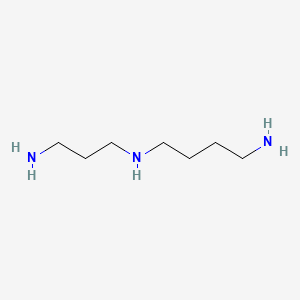
Identifiers
Functions
Hazards

What does available trade activity indicate for Spermidine?
Spermidine is classified under HS Code 2921.29. This falls under Chapter 29: Organic chemicals, specifically Heading 2921 (Amine-function compounds), under subheading: Amine-function compounds; acyclic polyamines and their derivatives, and salts thereof, n.e.c. in item no. 2921.2.
* The data below is specific to the HS code, not the ingredient.
Suppliers
254
Across 33 countries
Shipments
5,906
from 2015 to 2026
Total weight
133.3M kg
9,586 TEU · standard 20-foot container units
Last shipment
8 months ago
Last updated at Feb 25, 2026
Growth
↑ 42%
Trade under 2921.29 has increased by 42% over the past 6 months
What does trade activity suggest about the Spermidine supply chain?
Trade activity under HS 2921.29 shows a large, active supply chain with 254 suppliers, 5,906 shipments, and over 133 million kg moved between 2015 and 2026. Japan dominates with 2,696 shipments, followed by Belgium, the Netherlands, and Germany. However, this evidence is not ingredient-specific; the HS code covers a broad category of acyclic polyamines and derivatives. The presence of logistics providers and diverse industrial customers indicates the data reflects general amine trade, not confirmed spermidine flows. For formulation planning, treat this as directional supply-chain context, not proof of spermidine availability or volume.
What does the HS or HTS classification include, and where are its limits for Spermidine?
HS code 2921.29 falls under Chapter 29 (Organic chemicals), heading 2921 (Amine-function compounds), subheading for acyclic polyamines and their derivatives and salts not elsewhere classified. The classification scope is broad, covering many amine compounds beyond spermidine, including other polyamines, alkylamines, and derivatives. This means trade activity under this code includes industrial chemicals for coatings, adhesives, pharmaceuticals, and other applications. The limits are significant: without explicit product descriptions, shipments cannot be attributed to spermidine specifically. Regulatory or sourcing decisions should not assume that volume or supplier counts under this HS code reflect spermidine market size.
Which suppliers are associated with Spermidine trade?
| Supplier | Shipments | Top customer | Growth | Last shipment | |
|---|---|---|---|---|---|
No suppliers found. | |||||
How concentrated or diversified does the supplier landscape appear for Spermidine?
The supplier landscape appears fragmented and diversified rather than concentrated. The top supplier, Tosoh (Japan), accounts for about 18% of shipments, but the remaining 253 suppliers each contribute small shares, with most having fewer than 10 shipments. The list includes specialized amine producers like Indo Amines and Alkyl Amines Chemicals, specialty chemical firms like Sigma Aldrich and Lonza, but also many logistics providers and distributors. This mix suggests a mature, multi-tier market where no single entity dominates spermidine production. For procurement, this fragmentation offers multiple potential sources but requires careful vetting to distinguish actual manufacturers from intermediaries.
Which supply risks or dependencies around Spermidine require further diligence?
Key supply risks requiring further diligence include: (1) Ingredient specificity—most HS 2921.29 shipments likely involve other amines, so confirming actual spermidine production requires direct supplier verification; (2) Affiliate-dominated flows—Tosoh's top customer is its own US subsidiary, suggesting internal transfers rather than open-market supply; (3) Logistics intermediaries—many listed entities are freight forwarders, not manufacturers, complicating source identification; (4) Geographic concentration—Japan and Western Europe dominate, creating potential regional disruption exposure. These risks are material for formulation continuity planning. Direct supplier audits and product specification confirmations are necessary before relying on any trade-derived source.
Which sourcing geographies and trade lanes appear most relevant to Spermidine?
Japan is the most prominent sourcing geography with 18 suppliers and 2,696 shipments, led by Tosoh with over 1,000 shipments, though many are internal affiliate transfers. Belgium, the Netherlands, and Germany form a strong European cluster with combined 1,884 shipments, indicating established transatlantic lanes. China and India show 37 and 31 suppliers respectively but with fewer shipments each, suggesting emerging or fragmented sources. The US appears with only one shipment, likely reflecting import data limitations rather than actual demand. For sourcing strategy, Japan and Western Europe appear as primary active lanes, while Asia-Pacific sources like China and India offer supplier diversity but lower shipment frequency.
Which countries drive Spermidine trade activity?
By shipment count
Japan
2,696 shipments
18 suppliers
56.2M kg total weight
Belgium
749 shipments
27 suppliers
20.3M kg total weight
Netherlands
706 shipments
21 suppliers
17.4M kg total weight
Germany
429 shipments
17 suppliers
9.7M kg total weight
Canada
232 shipments
2 suppliers
6.7M kg total weight
Sweden
207 shipments
10 suppliers
6.8M kg total weight
China
198 shipments
37 suppliers
2.9M kg total weight
Mexico
177 shipments
7 suppliers
3.1M kg total weight
India
148 shipments
31 suppliers
2.9M kg total weight
France
129 shipments
11 suppliers
2.4M kg total weight