Starch
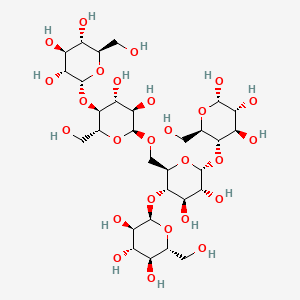
Identifiers
Where is Starch used, and what role does it play in each application?
Starch functions as a multifunctional ingredient across personal care, household, food, and industrial applications. In personal care, it acts as an absorbent in baby powders and dry shampoos, a texturizer in foundations and eye shadows, a conditioning agent in hair conditioners, and a filler in color cosmetics. In household products, it serves as a stiffening agent in laundry starch and a cleaning agent in surface cleaners. In food, it is used as a sweetener, thickener, and film-forming agent. In industrial applications, it is a primary structural base for bioplastics, adhesives, and barrier coatings in packaging.
Which product or formulation problem does Starch address?
Starch addresses formulation problems related to moisture management, texture, structure, and biodegradability. In powders and dry shampoos, it solves oil and moisture absorption. In color cosmetics, it provides structure and texture. In packaging, it solves the need for biodegradable, compostable, or water-soluble materials, often replacing synthetic polymers. It also addresses grease and oil resistance in paper products and acts as a binder in adhesives and coatings, solving adhesion and barrier performance challenges.
What supports the main commercial or clinical uses of Starch?
Evidence for starch's main uses comes from its presence in over 1,500 commercial products across 136 brands, spanning categories like lotions, foundations, eye shadows, baby powders, and dry shampoos. Patent applications further support its use as a primary structural component in bioplastics, adhesives, and barrier films, and as a functional ingredient in cosmetics for oil control and conditioning. This combination of market presence and claimed technical approaches substantiates its versatility, though patent applications represent claimed approaches rather than confirmed product adoption.
Which formulation trade-offs should researchers consider for Starch?
Researchers must balance starch's biodegradability and renewability against its inherent water sensitivity and weaker mechanical properties compared to synthetic polymers. In bioplastics, this requires blending with polyesters like PLA or PBAT and adding plasticizers to achieve processability and performance. In water-soluble films, starch is blended with polyvinyl alcohol and salts to manage solubility and compatibility. In cosmetics, particle size and morphology are critical for texture and oil control, requiring modification to achieve desired aesthetics without compromising stability.
What are the physicochemical properties of Starch?
| Property | Value | Category |
|---|---|---|
| Physical Description | Solid | Appearance |
| XLogP3 | -10.6 | Computed Molecular Properties |
| Exact Mass | 828.27468176 | Computed Molecular Properties |
| Monoisotopic Mass | 828.27468176 | Computed Molecular Properties |
| Topological Polar Surface Area | 427.0 | Computed Molecular Properties |
| Complexity | 1210.0 | Computed Molecular Properties |
| Hydrogen Bond Donor Count | 17 | Computed Molecular Properties |
| Hydrogen Bond Acceptor Count | 26 | Computed Molecular Properties |
| Rotatable Bond Count | 13 | Computed Molecular Properties |
| Heavy Atom Count | 56 | Computed Molecular Properties |
Which formulation benchmark best contextualizes Starch, and what differs?
A relevant formulation benchmark is starch's role as a substitute for talc or synthetic polymers in powder-based personal care products. In baby powders and dry shampoos, starch provides comparable absorbency and friction-reducing properties. In color cosmetics, it can replace microplastics and synthetic fillers, with patents claiming optimized particle shapes for aesthetic and textural benefits. This benchmark highlights starch's ability to deliver functional performance while meeting clean-label and sustainability goals, differing from traditional fillers in its biodegradability and natural origin.