Tranexamic Acid
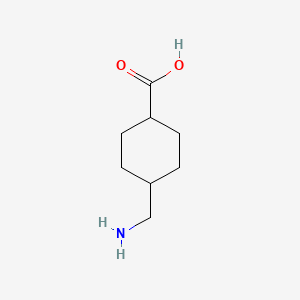
Identifiers
Functions
Hazards

Where is Tranexamic acid used, and what role does it play in each application?
Tranexamic acid functions as an antifibrinolytic drug and hematologic agent in pharmaceuticals, and as an astringent and skin-conditioning agent in cosmetics. In topical products, it is primarily used as a skin-brightening active for hyperpigmentation and melasma, often combined with other actives like retinol, niacinamide, or glutathione. It also appears in pharmaceutical applications as an antifibrinolytic agent for mitigating fibrinolytic activity, such as after concussive impact. Market data show its use in face masks and hand/body lotions, indicating application beyond facial skincare.
Which product or formulation problem does Tranexamic acid address?
Tranexamic acid addresses hyperpigmentation and uneven skin tone in cosmetics, functioning as a skin-brightening and whitening agent. It is also used to mitigate fibrinolytic activity in pharmaceutical contexts, such as reducing bleeding or inflammation after injury. In formulations, it solves the problem of delivering a hydrophilic active through the skin barrier, often requiring encapsulation or complexation to improve penetration and stability. Additionally, it can be combined with other actives to target multiple pigmentation pathways, enhancing overall efficacy.
What supports the main commercial or clinical uses of Tranexamic acid?
Evidence for tranexamic acid's main uses comes from its regulatory classification as an antifibrinolytic drug and its listing in cosmetics as an astringent and skin-conditioning agent. Patent applications describe its use in skin-brightening compositions, often with delivery systems like liposomes or ethosomes, and in combinations with other actives for melasma and whitening. Market data show its presence in commercial products such as face masks and lotions from brands like Shiseido. However, no clinical trial data or efficacy studies were provided to substantiate these uses.
How is Tranexamic acid used clinically?
Taken orally, tranexamic acid is indicated for the treatment of hereditary angioedema, cyclic heavy menstrual bleeding in premenopausal females, and other instances of significant bleeding in the context of hyperfibrinolysis. Given intravenously, tranexamic acid is indicated for short-term use (2-8 days) in patients with hemophilia to prevent or reduce bleeding following tooth extraction
Which formulation trade-offs should researchers consider for Tranexamic acid?
Key formulation trade-offs for tranexamic acid include its hydrophilicity, which limits skin penetration, and its potential to cause discoloration in compositions containing other actives like adenosine monophosphate. Encapsulation in liposomes or ethosomes can improve stability and delivery but adds complexity and cost. Patent claims suggest using chelating agents or pH adjusters to prevent discoloration, and combining with penetration enhancers like laurocapram for epidermal targeting. Concentration ranges vary widely (0.1% to 20%), indicating that efficacy and stability must be balanced with formulation aesthetics.
What are the physicochemical properties of Tranexamic acid?
| Property | Value | Category |
|---|---|---|
| LogP | 0.3 | Formulation Relevant Properties |
| Melting Point | >300 °C | Handling Relevant Properties |
| XLogP3 | -2.0 | Computed Molecular Properties |
| Exact Mass | 157.110278721 | Computed Molecular Properties |
| Monoisotopic Mass | 157.110278721 | Computed Molecular Properties |
| Topological Polar Surface Area | 63.3 | Computed Molecular Properties |
| Complexity | 139.0 | Computed Molecular Properties |
| Hydrogen Bond Donor Count | 2 | Computed Molecular Properties |
| Hydrogen Bond Acceptor Count | 3 | Computed Molecular Properties |
| Rotatable Bond Count | 2 | Computed Molecular Properties |
Which formulation benchmark best contextualizes Tranexamic acid, and what differs?
A relevant formulation benchmark is the liposome-encapsulated tranexamic acid system, as described in multiple patents. These systems typically use phospholipids, cholesterol, and sometimes hydrogenated lecithin to create nanoparticles (80-250 nm) that improve stability and skin penetration. Compared to simple aqueous solutions, liposomal encapsulation allows higher tranexamic acid concentrations (3-20%) and may enhance skin-brightening effects. However, this benchmark requires specialized manufacturing processes like high-pressure homogenization, which may not be feasible for all formulators.