Tranexamic Acid Patent Landscape
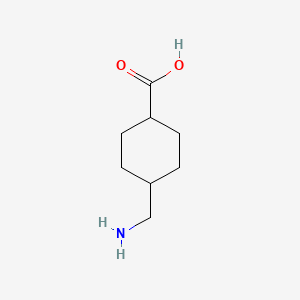
Identifiers
Functions
Hazards

Which organizations and claims shape current development around Tranexamic acid?
Key organizations include Shiseido (WO2026126831A1), Otsuka (EP3747424B1, KR102856654B1), and various Chinese biotech firms like Guangdong Fuyun (CN122351033A) and Chengdu Qinghe (CN122399045A). Claims focus on specific concentration ranges (e.g., 0.1-2% in Shiseido's composition), particle sizes (e.g., 80-250 nm liposomes), and synergistic ratios with co-actives. These claims aim to establish technical differentiation and potentially influence formulation standards, with implications for competitive positioning and intellectual property strategy.
How is Tranexamic acid innovation changing in Cosmetics?
Monthly patent filings by domain
Which technical problems do recent patents address with Tranexamic acid?
Recent patents primarily address tranexamic acid's poor skin penetration and formulation instability. Encapsulation in liposomes (CN122351033A, KR20260070629A, CN120392564B) and complexation with tetrahedral framework nucleic acids (CN122399045A) or silanol (CN118852229B) are claimed to improve delivery and stability. Discoloration in compositions with adenosine monophosphate is tackled via chelating agents or pH adjusters (KR102856654B1, EP3747424B1). These approaches aim to enhance efficacy and shelf-life, with implications for product development and regulatory stability testing.
How do recent patents change the role or application of Tranexamic acid?
Tranexamic acid's role is expanding from a standalone skin-brightening active to a multifunctional agent in synergistic combinations and specialized delivery systems. It is now paired with anti-aging actives like retinol (WO2026126831A1) and bakuchiol (KR20260091636A), and with cellular modulators like exosomes to enhance melanocyte autophagy (CN119548448A). It is also positioned for post-procedure care to minimize swelling and inflammation (JP7675501B1). This broadens its application from cosmetic whitening to dermatological support, impacting product positioning and claims substantiation.
How is Tranexamic acid used in Cosmetics patents?
Which Cosmetics product categories feature Tranexamic acid in recent patents?
Which product categories and formulation strategies emerge in recent work on Tranexamic acid?
Emerging product categories include serums, creams, and whitening compositions, with a strong focus on encapsulation technologies. Liposomes are a dominant strategy, with claims for improved stability and penetration (CN122351033A, KR20260070629A, CN120392564B). Novel carriers like tetrahedral framework nucleic acids (CN122399045A) and silanol complexes (CN118852229B) are also explored. Multi-target combinations with niacinamide, glutathione, and bakuchiol address hyperpigmentation and aging simultaneously. These strategies aim to enhance efficacy and differentiate products, with implications for formulation complexity and cost.
Where is the evidence-backed white space for further development of Tranexamic acid?
Evidence-backed white space exists in combining tranexamic acid with emerging delivery systems and synergistic actives beyond current claims. For example, the use of tetrahedral framework nucleic acids (CN122399045A) and exosomes (CN119548448A) suggests untapped potential for targeted delivery and cellular-level mechanisms. Additionally, addressing formulation stability in novel combinations, as seen with discoloration issues (KR102856654B1), indicates room for innovation in stabilizing tranexamic acid with other actives. These areas could lead to differentiated products with enhanced efficacy and stability.