“Let’s talk about tranexamic acid (TXA)... included TXA along with vitamin C to help both prevent and reduce the look of dark spots”
Tranexamic Acid Consumer Sentiment
CtrlK
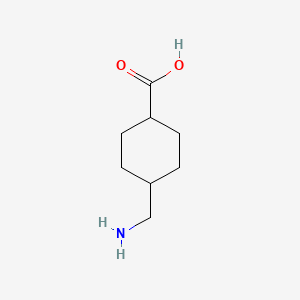
Identifiers
FormulaC8H15NO2·CAS701-54-2·EC622-133-9
Functions
AstringentSKIN Conditioning
Hazards

How do consumers feel about products containing Tranexamic acid?
Positive
Mixed
Negative
Consumers and experts view Tranexamic Acid as a highly effective, gentle, and essential ingredient for treating hyperpigmentation, melasma, and dark spots, often praising its ability to work without the irritation associated with other brightening agents.
Which consumer needs, benefits, and objections are associated with Tranexamic acid?
Consumers primarily seek tranexamic acid for treating hyperpigmentation, melasma, dark spots, and uneven skin tone, valuing its ability to inhibit melanin production. It is perceived as a gentle, non-exfoliating brightening alternative suitable for sensitive skin, often paired with niacinamide or alpha arbutin for stubborn spots. The main objection is the risk of blood clots with oral use, which is acknowledged as more potent but requiring medical supervision. A secondary concern is that topical formulations may vary in quality or cause irritation when combined with harsh actives, though no negative sentiment was recorded in the evidence.
What do consumers discuss about Tranexamic acid?
Hyperpigmentation and Melasma Treatment
Tranexamic Acid is overwhelmingly cited as a primary solution for fading dark spots, melasma, post-inflammatory hyperpigmentation (PIH), and uneven skin tone.
instagram
facebook
lemon8-app
tiktok
Gentleness and Safety Profile
Users frequently highlight Tranexamic Acid as a safe alternative to harsher bleaching agents or strong acids, noting it is suitable for sensitive skin and does not cause significant irritation.
instagram
facebook
lemon8-app
tiktok
youtube
Synergy with Other Ingredients
Tranexamic Acid is widely praised when paired with Niacinamide, Vitamin C, Arbutin, and Retinol, with consumers believing these combinations enhance overall brightening results.
instagram
facebook
lemon8-app
tiktok
Under-Eye Dark Circle Reduction
Specific products containing Tranexamic Acid are marketed and reviewed for their ability to fade under-eye circles and brighten the eye area.
instagram
facebook
tiktok
Mechanism of Action (Melanin Inhibition)
Educational posts explain that Tranexamic Acid works by inhibiting melanin production and blocking the transfer of pigment between cells, offering a scientific basis for its efficacy.
instagram
facebook
lemon8-app
youtube
How are current products and patent claims responding to consumer concerns about Tranexamic acid?
Commercial products and patent claims are responding by pairing tranexamic acid with complementary actives and advanced delivery systems. Patent applications show combinations with niacinamide, vitamin C derivatives, azelaic acid, bakuchiol, and madecassoside to enhance whitening and address multiple pigmentation pathways. Encapsulation in liposomes, ethosomes, and tetrahedral framework nucleic acids is claimed to improve stability and skin penetration, directly addressing concerns about topical efficacy. A patent also claims a soluble microneedle array for freckle removal, targeting enhanced delivery through the skin barrier. These are claimed approaches, not evidence of market adoption.
What concerns do consumers raise about Tranexamic acid?
Confusion regarding oral vs. topical safety and mechanism
instagram
youtube
Potential for irritation if combined with strong exfoliants
lemon8-app
Texture issues (tackiness) in some formulations
tiktok
Where is the gap between consumer expectations and the current Tranexamic acid offering?
The primary gap is between consumer expectations of topical efficacy and the acknowledged superior potency of oral tranexamic acid, which carries blood clot risks. While consumers seek a gentle, effective topical solution for stubborn melasma and dark spots, the evidence shows marketed products are limited to face masks and hand/body lotions from 2016-2017, with no concentration data. Patent claims propose advanced delivery systems and higher concentrations, but these are not confirmed in commercial products. This suggests a lag between claimed formulation innovations and available consumer offerings, particularly for high-potency topical treatments.
Which formulation approaches are being used to address those concerns around Tranexamic acid?
Formulation approaches focus on advanced encapsulation and synergistic combinations. Liposome encapsulation is a dominant strategy, with patents claiming tranexamic acid at 3-15% in liposomes for improved stability and penetration, and nanoliposomes (10-50 nm) for enhanced bioavailability. Ethosome systems combine tranexamic acid with bakuchiol and madecassoside or vitamin C derivatives and azelaic acid. Other approaches include complexing with tetrahedral framework nucleic acids, forming silanol complexes for transdermal delivery, and using soluble microneedle arrays. Stability is addressed through chelating agents and pH adjusters to prevent discoloration in compositions containing adenosine monophosphate.
What consumer-led opportunity or risk should researchers consider for Tranexamic acid?
A clear opportunity exists in developing topical formulations that bridge the efficacy gap with oral tranexamic acid, addressing consumer desire for potent yet safe hyperpigmentation treatment. Patent claims for high-load liposomes (up to 20%) and targeted epidermal delivery suggest a direction toward more effective topicals. The risk is the blood clot concern associated with oral use, which could create consumer confusion or safety issues if formulations are perceived as equivalent to oral potency. Researchers should prioritize clear communication on topical versus oral safety profiles and focus on delivery systems that maximize local efficacy without systemic exposure.