
Two 2026 academic studies gave the cosmeceutical industry the proof it had been waiting on for years: PDRN can cross the stratum corneum.
One study showed that PLGA nanoparticle-encapsulated PDRN could reach dermis-level penetration in skin models. Another found that exosome-encapsulated PDRN could move across the skin barrier through endocytosis. Within six months, patent activity picked up across four competing delivery approaches.
For R&D teams, this shifts the focus. Topical PDRN is no longer held back by the old question of whether it can penetrate the skin. The bigger question now is which delivery system can make it work best. In this market, the carrier is becoming just as important as the active ingredient itself.
Why the 20-Year Penetration Problem Existed and Why It Mattered
PDRN molecules are large, ranging from 50 to 1,500 kDa in molecular weight. At that size, they cannot cross the stratum corneum passively. This physical barrier confined PDRN largely in injectable aesthetic treatments, where its clinical efficacy was already validated and reimbursable. Products such as Rejuran and clinical skin boosters could command $500 to $2,000 per session in aesthetic clinics.
Topical PDRN formulations existed in K-beauty serums, but the clinical results were much weaker than injectables. Published studies repeatedly showed that topical products struggled to deliver the same outcomes. The issue wasn’t a small formulation gap. It was a basic penetration problem that stopped PDRN from moving into mainstream retail cosmeceutical products. Injectables stayed in clinics, while topical PDRN remained limited to niche products with weaker clinical claims.
That created a clear commercial ceiling. PDRN couldn’t compete in the premium retail segment where hyaluronic acid, retinoids, and peptides were winning margin through at-home use. Its addressable market stayed tied to medical spas and dermatology clinics with injection infrastructure.
That’s why the recent filing activity matters. Over the last 12 months, 17 innovations targeted lipid nanoparticles and liposomes for PDRN delivery. Another 9 focused on microneedle patches. Eight addressed exosome-loaded systems, while five covered chitosan and biopolymer carriers. This concentration around delivery systems shows a clear strategic shift: the industry is no longer treating ingredient purity or sourcing as the main differentiator. Penetration has become the primary variable.
Breakthrough 1: Lipid Nanoparticles and Liposome Encapsulation (The Pharmaceutical-Grade Solution)
The 2026 PLGA nanoparticle study gave the industry its first peer-reviewed proof that encapsulated PDRN can reach dermis-level bioavailability. This wasn’t a small formulation improvement. It showed that the molecular weight barrier could be crossed when PDRN is protected and delivered through biochemical encapsulation.
H&A PharmaChem has patents around sodium dilauramidoglutamide lysine-based lipid nanoparticle systems. The structure is based on amphiphilic surfactants, which are closely related to the carrier systems used in pharmaceutical RNA delivery. In simple terms, this is not standard cosmetic formulation work. It is pharmaceutical-grade carrier engineering being adapted from nucleic acid therapeutic development.
Syoung Cosmetics is also active in this area, with four filings focused on amphiphilic block copolymer nanomicelles and enzyme-responsive liposomes. These systems are designed to release PDRN when they encounter specific enzymatic triggers in the dermis. That gives formulators a controlled-release mechanism that passive diffusion simply cannot offer.
Merck GmbH (JP2025525153A, US2026041634A1) has filed two innovations around viscosity-reducing excipients for high-concentration nucleic acid injectables. These cover arginine, phenylalanine, ornithine, and meglumine-based formulations that keep PDRN injectable at concentrations that were previously too viscous for clinical use. Merck’s presence is important because it shows that Western pharmaceutical companies are looking at PDRN as a regulated therapeutic ingredient, not just a cosmeceutical active.
For R&D teams aiming for medical device classification under EU MDR or OTC drug status under the US FDA, lipid nanoparticle delivery stands out because it has the strongest foundation for characterization, reproducibility, and regulatory documentation. Exosome and microneedle systems do not yet have the same infrastructure. LNP systems may offer the best penetration, but they also bring the highest manufacturing, quality control, and regulatory documentation. That creates a clear advantage for established pharmaceutical players over traditional cosmetic formulators.
Breakthrough 2: Microneedle Patches (The Physical Bypass Route)
Microneedles solve the penetration problem through mechanical disruption, not biochemical encapsulation. Daewoong Therapeutics (KR20250071685A) holds a patent claiming microneedle compositions requiring at least 6 wt% PDRN. This concentration is significantly higher than typical injectable PDRN formulations, which range from 1 to 4 wt%.
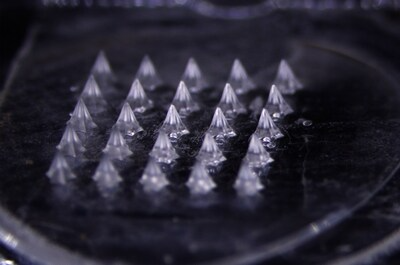
The higher concentration requirement has direct formulation cost implications. If PDRN raw material costs $500 to $2,000 per kilogram at pharmaceutical grade, a 6 wt% patch formulation will cost 3 to 5 times more per unit than initially modeled. This forces premium retail positioning at $50 to $120 per patch to maintain margin.
Juvic Inc. (KR20260003561A) and Catholic University of Korea (KR20260019361A) have also filed patents around graphene nanoparticle-reinforced, star-structured microneedles. In these systems, graphene nanoparticles strengthen the microneedle matrix. They may also act as electroconductive carriers that support PDRN uptake through electroporation-like cellular mechanisms. No commercial PDRN product currently uses graphene, which makes these patents an early IP move in a new delivery space.
The microneedle format enables intradermal PDRN delivery in a home-use format without clinical supervision. This unlocks a direct-to-consumer channel that injectables cannot access. However, microneedles may be classified as medical devices rather than cosmetics in the EU and US. This adds 2 to 4 years and significant compliance cost to commercialization compared to topical serums.
That regulatory issue cannot be left until the end. Microneedles physically disrupt the stratum corneum, and in many markets, that alone can trigger device classification regardless of the active ingredient. For product development teams, this means the commercial channel decision needs to come before formulation development, not after it.

Breakthrough 3: Exosome and Stem Cell Vesicle Encapsulation (The Biological Trojan Horse)
Exosome delivery is one of the most advanced routes in the PDRN dataset. A 2026 study confirmed that exosome-encapsulated PDRN can cross the stratum corneum through endocytosis pathways. That matters because exosomes carry surface proteins such as tetraspanins and integrins, which help cells take them up through receptor-mediated endocytosis. In simple terms, exosomes can help PDRN bypass the size barrier that blocks naked PDRN from entering the skin.
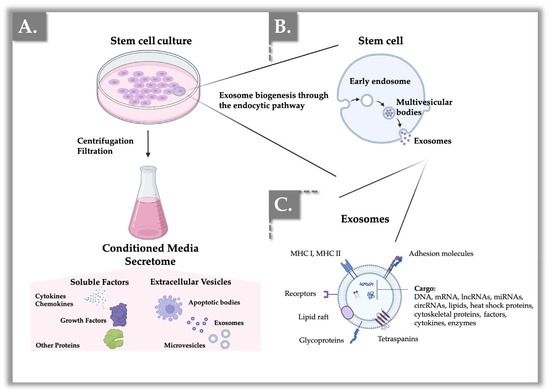
Stemon Inc.(EP4621045A1) holds a patent on PDRN-containing exosomes derived directly from salmon testis tissue via ultrasonication. The extraction process simultaneously produces PDRN and PDRN-enriched exosomes. This means the exosomes carry PDRN in their natural biological context, not as a co-loaded payload added post-extraction.
A second exosome approach uses umbilical cord mesenchymal stem cell-derived nanovesicles loaded with PDRN through freeze-thaw cycling. Here, the stem cell-derived vesicles act as carriers while also bringing their own regenerative signaling potential alongside PDRN delivery.
Bueno Bio (KR20250031137A) has filed a patent on combinations of milk exosomes and PDRN. Milk fat globule membrane exosomes already have known endocytic trafficking pathways for topical delivery. Since they come from a food-derived source, they may also face less regulatory resistance than cell-derived materials.
What makes exosomes different is that they use the skin’s own endocytic machinery for uptake. In theory, this could allow them to carry PDRN along with other large biomolecules that nanoparticles and microneedles may struggle to deliver efficiently. Growth factors, mRNA, and peptides could all be co-loaded into the same vesicle. That makes exosomes a strong platform for high-value, multi-active formulations.
The challenge is regulation. Cell-derived materials trigger advanced therapy medicinal product classification in the EU. In the US, they may require biologics licensing. Commercialization timelines may extend 5 to 7 years, far longer than synthetic LNP systems. For innovation strategists, this is a calculated risk: highest technical elegance, longest path to market.
Breakthrough 4: HA-PDRN Covalent Crosslinked Gels (The Injectable Platform Play)
HA-PDRN covalent crosslinking takes a different path from topical delivery systems. Instead of helping PDRN cross the skin barrier, it strengthens the injectable platform itself. In this approach, PDRN’s phosphate backbone is bonded to oxidized hyaluronic acid through carboxyl-amino coupling. One patent also describes alginate-PDRN covalent grafting with divalent metal coordination. These are not simple mixtures where PDRN and HA are placed together in the same syringe. They are chemically bonded composite biomaterials with distinct rheological and release properties.
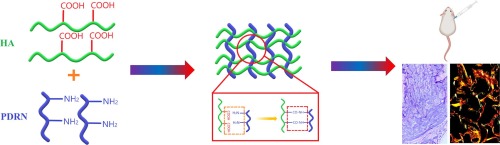
A 2025 ScienceDirect study showed that HA-PDRN crosslinked hydrogels produced more collagen than HA alone. This gave the field its first peer-reviewed comparative clinical support for the crosslinked combination over single-ingredient injectables.
The commercial signal became stronger in August 2025, when PharmaResearch partnered with Laboratoires VIVACY to co-develop HA-PDRN combination injectables. VIVACY is a major European HA filler manufacturer, making this the first clear move by a large HA filler company into the PDRN space. PharmaResearch brings Korean PDRN clinical credibility, while VIVACY brings European aesthetic clinic distribution and practitioner training infrastructure.
The reason this platform is attractive is tissue residence time. Covalently crosslinked HA-PDRN systems can stay in tissue longer than simple HA and PDRN mixtures. Their sustained-release kinetics could extend treatment intervals from 4 to 8 weeks to 12 to 16 weeks. For aesthetic practitioners, that means fewer patient visits while maintaining outcomes. For patients, it could reduce total annual treatment cost even if each session is priced higher.
Regulation is still a key hurdle. HA-PDRN crosslinked systems will likely need separate approval from HA or PDRN alone. In the EU, they may fall under combination biologic device classification under MDR. In the US, they may require 510(k) clearance or PMA approval, depending on the mechanism claims. Still, once approved, these products can build on HA’s existing clinic infrastructure, reimbursement pathways, and practitioner training base. That makes commercialization faster and cheaper than creating a new PDRN-only injectable category from scratch.
Breakthrough 5: Chitosan and Biopolymer Carrier Systems (The Dual-Use Scaffold)
Chitosan plays a dual role in PDRN delivery: its positive charge facilitates mucoadhesion and transient tight junction opening, enhancing penetration. It also functions as a structural scaffold for wound healing applications. This makes chitosan the only carrier system that works in both cosmetic retail products and medical wound care products.
Catholic University of Korea has filed a patent on carboxymethyl chitosan, PDRN, and calcium formulations for hemostatic wound dressings. Regenix AES (KR20250155680A) has filed on alginate-nanocellulose and PDRN hydrogel burn dressings. These are not cosmetic serums. They are hospital-grade wound care products where PDRN supports tissue regeneration signaling, while the biopolymer scaffold provides mechanical support.
This overlap between cosmetic topical delivery and medical wound care gives chitosan-PDRN systems commercial flexibility. A chitosan-PDRN serum could be positioned in medical spas for post-procedure barrier restoration. With regulatory adjustments, the same base formulation could also be adapted for hospital burn care.
Chitosan carriers are also the easiest entry point for topical PDRN formulation. They don’t require nanoparticle synthesis or exosome isolation, and standard cosmetic manufacturing infrastructure can produce chitosan-PDRN emulsions. The trade-off is penetration. Chitosan systems do not reach the dermis as effectively as LNPs or exosomes. That makes them better suited for barrier repair and surface-level anti-inflammatory applications, rather than deep dermal collagen stimulation or volumization claims.
The commercial positioning challenge is clear. Chitosan systems are more complex than mass-market cosmetic emulsions, which need simple stability and scale. But they may not deliver enough penetration for premium clinical claims that depend on dermis-level bioavailability. That places them in a narrower but defensible space: medical spa products and post-procedure care.

What This Means for Your Team
Audit your current PDRN formulation’s delivery mechanism against the five validated 2026 systems. If you are using naked PDRN or simple emulsion systems, your product will not achieve dermis-level bioavailability. Competitors using validated carriers will clinically outperform your formulation within 18 to 24 months.
Prioritize delivery platform IP over PDRN source material IP. Companies that control the delivery mechanism will be better positioned to shape co-loading partnerships for next-generation multi-active formulations. In other words, the delivery architecture is becoming more valuable than any single PDRN ingredient innovation.
Evaluate regulatory classification early in development. LNP and chitosan systems may remain cosmetic-grade in many jurisdictions. Exosome-loaded products could risk ATMP classification in the EU. Microneedles may fall into medical device pathways. The right delivery route should depend on your regulatory capacity, not only on efficacy data.
Monitor the PharmaResearch-VIVACY HA-PDRN partnership closely. If their covalently crosslinked combination injectable reaches the EU market by late 2026, it could become the clinical reference standard for PDRN skin boosters. That would push non-crosslinked PDRN-HA admixtures into a lower-tier position, even when ingredient quality is strong.
Pressure-test your topical PDRN claims against the 2026 penetration validation studies. If your product does not use one of the validated carrier systems, keep the claims focused on surface barrier repair and anti-inflammatory effects. Deep dermal collagen stimulation claims will need stronger delivery support, most likely through LNP, exosome, or microneedle systems.
The Unresolved Competitive Question
The delivery breakthrough is now scientifically validated, but the commercial winner is still unclear. Five distinct delivery mechanisms have peer-reviewed penetration data, yet none has taken clear market control. For R&D teams, the challenge is deciding which platform best fits their product category, claims strategy, and regulatory pathway.
The real tension is between delivery system IP and PDRN ingredient commoditization. Over the last 12 months, 73 innovations have claimed non-marine PDRN sources, including plant extraction, fermentation, and recombinant synthesis. Industry projections suggest these alternative production routes could reduce raw material pricing by 60 to 80 percent within 3 to 5 years. Once PDRN becomes a commodity ingredient, the strongest competitive moat will sit in delivery platform IP.
Most PDRN brands are still competing on ingredient purity and sourcing story. They highlight salmon origin, molecular weight fractionation, and GMP certification. These factors matter for baseline quality, but they won’t be enough to separate products once competitors start using validated delivery systems. The brands that recognize this shift early will be better positioned to shape the next decade of cosmeceutical and injectable aesthetic products.
For teams developing PDRN formulations now, the decision is no longer whether to invest in delivery. It is which platform to build on, how to protect the IP position, and whether to develop the carrier system internally or license existing technology. The penetration problem has moved from a scientific barrier to a platform competition.
Want to track delivery system innovations in real time? Slate’s AI-powered R&D Intelligence Platform monitors patent filings, clinical studies, and competitive positioning across cosmeceutical and pharmaceutical ingredient development. Explore validated delivery architectures, assess IP landscapes, and identify licensing opportunities before your competitors do. Get started with SLATE to make faster, evidence-backed formulation decisions.