Alkyl Polyglucosides
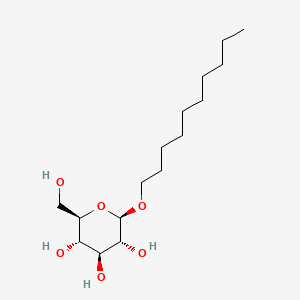
Identifiers
Where is Alkyl polyglucosides used, and what role does it play in each application?
Alkyl polyglucosides, specifically decyl glucoside, function as non-ionic surfactants and emulsion stabilizers in cosmetics. They are used in rinse-off personal care products and appear across consumer categories including auto products, commercial/institutional cleaners, home care, personal care, and pet care. The EPA classifies them under surfactant functional use classes, confirming their role in reducing surface tension and stabilizing formulations. Their presence in fragrance ingredients also indicates a role in scent delivery systems, though the evidence does not specify the exact mechanism in that context.
Which product or formulation problem does Alkyl polyglucosides address?
Alkyl polyglucosides address the need for effective cleansing and formulation stability in rinse-off products. As non-ionic surfactants, they help solubilize oils and dirt, enabling removal during washing. Their emulsion-stabilizing function prevents separation of oil and water phases, which is critical for maintaining product consistency and performance. The EPA's Safer Chemical verification indicates they solve the problem of finding low-concern surfactants for formulations requiring mildness, though the evidence does not detail specific performance metrics like foam quality or skin compatibility.
What supports the main commercial or clinical uses of Alkyl polyglucosides?
The main commercial uses are supported by regulatory and safety assessments. The CIR Expert Panel concluded that 19 alkyl glucosides, including decyl glucoside, are safe in current practices of use and concentrations when formulated to be nonirritating. This safety determination underpins their use in cosmetics and personal care. Additionally, the EPA's Safer Chemical 'Green Circle' verification confirms low concern, supporting their adoption in institutional and household products. Consumer product listings across multiple categories provide direct evidence of commercial presence, though the evidence does not quantify market share or clinical efficacy.
Which formulation trade-offs should researchers consider for Alkyl polyglucosides?
The primary formulation trade-off is the need to balance surfactant efficacy with irritation potential. The CIR Expert Panel's safety conclusion is conditional on formulations being nonirritating, meaning formulators must adjust concentrations or combine with other ingredients to avoid skin irritation. This is particularly relevant for rinse-off products where contact time is short but repeated use may occur. The EPA's low-concern classification supports environmental and health safety, but it does not address performance trade-offs like cleaning power versus mildness. Formulators must also consider that the ingredient is not approved as a standalone chemical in New Zealand, only as a component in group-standard products, which may affect regulatory strategy in that market.
What are the physicochemical properties of Alkyl polyglucosides?
| Property | Value | Category |
|---|---|---|
| Collision Cross Section | 192.6 Ų [M-H]- [CCS Type: DT; Buffer gas: N2; Ionization: ESI-; Dataset: TOXCAST; ], 187.7 Ų [M+Na]+ [CCS Type: DT; Buffer gas: N2; Ionization: ESI+; Dataset: TOXCAST; ] | Analytical Properties |
| XLogP3 | 2.4 | Computed Molecular Properties |
| Exact Mass | 320.21988874 | Computed Molecular Properties |
| Monoisotopic Mass | 320.21988874 | Computed Molecular Properties |
| Topological Polar Surface Area | 99.4 | Computed Molecular Properties |
| Complexity | 275.0 | Computed Molecular Properties |
| Hydrogen Bond Donor Count | 4 | Computed Molecular Properties |
| Hydrogen Bond Acceptor Count | 6 | Computed Molecular Properties |
| Rotatable Bond Count | 11 | Computed Molecular Properties |
| Heavy Atom Count | 22 | Computed Molecular Properties |
Which formulation benchmark best contextualizes Alkyl polyglucosides, and what differs?
The most relevant benchmark is the CIR Expert Panel's safety assessment of 19 alkyl glucosides, which establishes a class-level safety precedent. This benchmark differs from individual ingredient evaluations because it covers multiple alkyl glucosides, allowing formulators to extrapolate safety data across similar compounds. However, the benchmark is conditional on nonirritating formulation, so it does not guarantee safety for all use levels. Compared to other surfactants, the EPA's 'Green Circle' verification positions alkyl polyglucosides as a lower-concern option, but this does not imply superior performance. Formulators should use this benchmark to guide ingredient selection while validating irritation profiles for their specific formulations.