Alkyl Polyglucosides Suppliers & Manufacturers
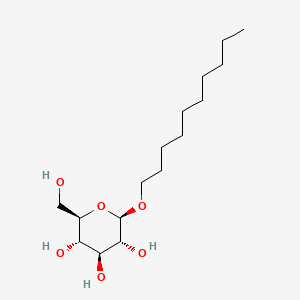
Identifiers
What does available trade activity indicate for Alkyl polyglucosides?
Alkyl polyglucosides is classified under HS Code 3402.42. This falls under Chapter 34: Soap, organic surface-active agents; washing, lubricating, polishing or scouring preparations; artificial or prepared waxes, candles and similar articles, modelling pastes, dental waxes and dental preparations with a basis of plaster, specifically Heading 3402 (Organic surface-active agents (not soap); surface-active, washing (including auxiliary washing) and cleaning preparations, containing soap or not, excluding those of heading no. 3401), under subheading: Organic surface-active agents; non-ionic (other than soap), whether or not put up for retail sale.
* The data below is specific to the HS code, not the ingredient.
Suppliers
625
Across 48 countries
Shipments
6,513
from 2022 to 2026
Total weight
129.3M kg
9,804 TEU · standard 20-foot container units
Last shipment
8 months ago
Last updated at Feb 25, 2026
Growth
↑ 48%
Trade under 3402.42 has increased by 48% over the past 6 months
What does trade activity suggest about the Alkyl polyglucosides supply chain?
Trade activity under HS 3402.42 indicates a robust, multi-regional supply chain for non-ionic surfactants, with 625 suppliers and over 6,500 shipments totaling roughly 129 million kg. The presence of major chemical producers like Clariant, Croda, Oxiteno, and Dyna Glycols suggests active manufacturing and distribution nodes. However, this data is not ingredient-specific; it includes logistics providers and traders, so it reflects broad surfactant movement rather than confirmed alkyl polyglucosides volumes. The growth score of 52.8 suggests moderate recent expansion, but this is a category-level signal, not a product-specific trend.
What does the HS or HTS classification include, and where are its limits for Alkyl polyglucosides?
HS code 3402.42 covers non-ionic organic surface-active agents, excluding soap, whether or not put up for retail sale. This classification includes a broad range of non-ionic surfactants, such as fatty alcohol ethoxylates, amine oxides, and other non-ionic chemistries, not just alkyl polyglucosides. The match to alkyl polyglucosides is inferred from the canonical names (decyl glucoside, coco-glucoside, lauryl glucoside) but is not confirmed by shipment-level composition data. Therefore, trade volumes and supplier counts overstate the specific APG market; they represent the entire non-ionic surfactant category.
Which suppliers are associated with Alkyl polyglucosides trade?
| Supplier | Shipments | Top customer | Growth | Last shipment | |
|---|---|---|---|---|---|
No suppliers found. | |||||
How concentrated or diversified does the supplier landscape appear for Alkyl polyglucosides?
The supplier landscape appears moderately concentrated, with a few large players dominating shipment volumes. Clariant Mexico (466 shipments), Noble Shipping (453), and Dyna Glycols (287) are top shippers, but Noble Shipping is likely a logistics provider, not a manufacturer. Recognized chemical producers like Croda Europe (265), Oxiteno Mexico (168), and Seppic (19) are present, but their APG-specific production is unverified. The presence of 625 suppliers indicates a diversified market, yet the top 10 account for a significant share of shipments, suggesting potential supply concentration among key manufacturers.
Which supply risks or dependencies around Alkyl polyglucosides require further diligence?
Key supply risks include reliance on a few large producers for actual APG manufacturing, as many top shippers are logistics providers or general traders. The broad HS classification means that supply disruptions in other non-ionic surfactants could be misinterpreted as APG-specific. Additionally, the presence of bio-based surfactant suppliers like Cargill and Circle Ingredients suggests potential feedstock dependencies, but their APG production is unconfirmed. Further diligence is needed to verify which suppliers actually manufacture alkyl polyglucosides, their production capacities, and any regional concentration risks, especially in India and Mexico.
Which sourcing geographies and trade lanes appear most relevant to Alkyl polyglucosides?
India, Mexico, South Korea, and Germany are the most prominent sourcing geographies, together accounting for over 60% of total weight. India leads with 78 suppliers and 1,737 shipments, followed by Mexico (61 suppliers, 932 shipments) and South Korea (50 suppliers, 550 shipments). European countries like Germany, UK, Netherlands, Belgium, and France also show significant activity, indicating a strong transatlantic and intra-European trade network. The presence of major producers in these regions suggests established lanes for surfactant distribution, but the data does not specify whether these are APG-specific or general non-ionic surfactant flows.
Which countries drive Alkyl polyglucosides trade activity?
By shipment count
India
1,737 shipments
78 suppliers
34.8M kg total weight
Mexico
932 shipments
61 suppliers
20.8M kg total weight
South Korea
550 shipments
50 suppliers
13.6M kg total weight
Germany
526 shipments
62 suppliers
7.6M kg total weight
United Kingdom
411 shipments
30 suppliers
6M kg total weight
Netherlands
369 shipments
33 suppliers
6.8M kg total weight
Belgium
356 shipments
44 suppliers
6.8M kg total weight
France
322 shipments
26 suppliers
7.3M kg total weight
Japan
272 shipments
36 suppliers
3.8M kg total weight
Italy
235 shipments
37 suppliers
5.8M kg total weight