Bakuchiol Environmental Fate & Ecotoxicity
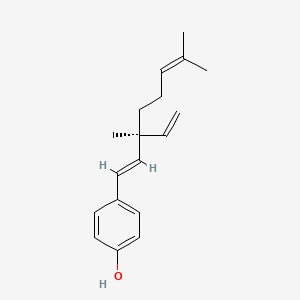
Identifiers
Functions
Hazards

Where is BAKUCHIOL used, and what role does it play in each application?
Bakuchiol is used in cosmetics as an antimicrobial, antioxidant, and skin-conditioning agent, including emollient functions. In commercial products, it appears primarily in face creams and moisturizers, with one face wash, often positioned as a phyto-retinol serum. Patent filings show broader roles: as an anti-aging active in lip balms, anhydrous compositions, and serums; as a retinol alternative for skin improvement; and as a skin-conditioning agent in acne treatments. It is also claimed to activate retinoic acid receptors and promote collagen synthesis, supporting its role as a retinol-like active in anti-aging and skin-repair applications.
Which product or formulation problem does BAKUCHIOL address?
Bakuchiol addresses the need for a retinol-like active with reduced irritation, particularly for sensitive skin and pregnancy-related skin damage. It is formulated to improve wrinkles, elasticity, and aging while minimizing skin irritation, as seen in anhydrous compositions with sphingolipids. It also solves stability and delivery problems: encapsulation in nanostructured lipid carriers or microemulsions prevents degradation and enhances skin penetration. In acne treatments, it reduces sebum production and erythema. Additionally, it provides antimicrobial and antioxidant benefits, supporting product preservation and skin protection.
What supports the main commercial or clinical uses of BAKUCHIOL?
Evidence for bakuchiol's main uses comes from a clinical trial comparing its cosmetic effects to retinol, indicating investigation for anti-aging. Patent filings claim it activates retinoic acid receptors, increases collagen synthesis, and improves wrinkles and elasticity. Commercial products from 2017-2019 show its use in face creams and serums, with one explicitly labeled 'Phyto-Retinol.' Regulatory status is active in the EU with no restrictions, and it is classified as non-hazardous in New Zealand. However, no published clinical efficacy data or concentration limits are provided in the evidence.
Which formulation trade-offs should researchers consider for BAKUCHIOL?
Key formulation trade-offs for bakuchiol include managing its stability and skin irritation. Patents describe using anhydrous systems with sphingolipids to reduce irritation, and encapsulation in nanostructured lipid carriers or microemulsions to prevent degradation and enhance penetration. Concentration ranges vary widely (0.0001% to 40%), indicating flexibility but also the need for optimization. Co-ingredients like ceramides, plant extracts, and antioxidants are often added to improve soothing and stability. No regulatory concentration limits are set, but formulators must balance efficacy with irritation potential, especially for sensitive populations.
What are the physicochemical properties of Bakuchiol?
| Property | Value | Category |
|---|---|---|
| XLogP3 | 6.1 | Computed Molecular Properties |
| Exact Mass | 256.182715385 | Computed Molecular Properties |
| Monoisotopic Mass | 256.182715385 | Computed Molecular Properties |
| Topological Polar Surface Area | 20.2 | Computed Molecular Properties |
| Complexity | 328.0 | Computed Molecular Properties |
| Hydrogen Bond Donor Count | 1 | Computed Molecular Properties |
| Hydrogen Bond Acceptor Count | 1 | Computed Molecular Properties |
| Rotatable Bond Count | 6 | Computed Molecular Properties |
| Heavy Atom Count | 19 | Computed Molecular Properties |
| Formal Charge | 0 | Computed Molecular Properties |
Which formulation benchmark best contextualizes BAKUCHIOL, and what differs?
Retinol is the primary formulation benchmark for bakuchiol, as it is positioned as a natural alternative with similar anti-aging effects. A clinical trial directly compares the two, and patents claim bakuchiol induces retinol-like effects such as strengthening the skin basal layer and promoting keratinocyte proliferation. Unlike retinol, bakuchiol is often formulated with soothing agents like sphingolipids to reduce irritation, and it is used in anhydrous or encapsulated systems to improve stability. This makes it suitable for sensitive skin and pregnancy, where retinol is often avoided.