Bakuchiol Suppliers & Manufacturers
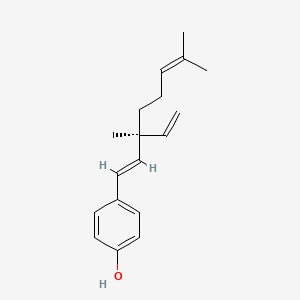
Identifiers
Functions
Hazards

What does available trade activity indicate for Bakuchiol?
Bakuchiol is classified under HS Code 2907.19. This falls under Chapter 29: Organic chemicals, specifically Heading 2907 (Phenols; monophenols, polyphenols, and phenol-alcohols), under subheading: Monophenols; n.e.c. in item no. 2907.1.
* The data below is specific to the HS code, not the ingredient.
Suppliers
21,312
Across 146 countries
Shipments
70,971
from 2015 to 2026
Total weight
34.9B kg
175,282 TEU · standard 20-foot container units
Last shipment
8 months ago
Last updated at Feb 25, 2026
Growth
↑ 56%
Trade under 2907.19 has increased by 56% over the past 6 months
What does trade activity suggest about the BAKUCHIOL supply chain?
Trade activity under HS code 2907.19 shows a very large, broad flow of phenolic chemical shipments, but it is not ingredient-specific for bakuchiol. The data spans 21,312 suppliers and 70,971 shipments across 146 countries, with a growth score of 61, indicating moderate recent expansion. However, the supplier list is dominated by electronics, automotive, and other unrelated industries, so the signal for bakuchiol specifically is weak. For research purposes, this suggests bakuchiol likely moves within a much larger phenolic chemicals trade stream, but confirming actual bakuchiol volumes would require supplier-level verification or ingredient-specific documentation.
What does the HS or HTS classification include, and where are its limits for BAKUCHIOL?
HS code 2907.19 covers monophenols not elsewhere classified under heading 2907, which includes phenols, monophenols, polyphenols, and phenol-alcohols. This is a broad industrial chemical category that captures many phenolic compounds beyond bakuchiol, including intermediates for plastics, resins, pharmaceuticals, and agrochemicals. The classification scope is therefore a major limitation: trade volumes and supplier counts reflect all monophenol activity, not bakuchiol alone. The data explicitly notes that most suppliers are electronics or automotive parts manufacturers, confirming the code's low specificity for cosmetic ingredients. Researchers should treat any volume or supplier count as upper-bound context, not bakuchiol-specific evidence.
Which suppliers are associated with Bakuchiol trade?
| Supplier | Shipments | Top customer | Growth | Last shipment | |
|---|---|---|---|---|---|
No suppliers found. | |||||
How concentrated or diversified does the supplier landscape appear for BAKUCHIOL?
The supplier landscape appears highly fragmented and diversified, with 21,312 suppliers across 146 countries, but this reflects the broad HS code rather than bakuchiol-specific concentration. The top three named suppliers—Shanghai Fujia Fine Chemical (CN), Levaco Chemicals (BE), and Solvay Solutions Italia (IT)—are the only entities with chemical industry indicators, yet none are confirmed bakuchiol producers. The data shows no dominant bakuchiol supplier, and the vast majority of listed entities operate in unrelated sectors. This suggests that if bakuchiol is traded under this code, it is likely a minor component within a diversified chemical supply base, requiring direct supplier outreach to identify actual producers.
Which supply risks or dependencies around BAKUCHIOL require further diligence?
The primary supply risk is the inability to confirm bakuchiol-specific sourcing from HS 2907.19 trade data, given the code's broad monophenol scope and the dominance of unrelated industries in the supplier pool. Further diligence is required to verify whether named chemical entities—Shanghai Fujia Fine Chemical, Levaco Chemicals, and Solvay Solutions Italia—actually handle bakuchiol, as their shipments may involve other phenolic products. Additionally, the absence of ingredient-specific shipment evidence means volume, pricing, and supplier reliability cannot be assessed from this data alone. Researchers should pursue direct supplier certifications, product specifications, or customs documentation that names bakuchiol to mitigate the risk of relying on misattributed trade flows.
Which sourcing geographies and trade lanes appear most relevant to BAKUCHIOL?
China dominates the trade activity with 5,455 suppliers and 21,360 shipments, followed by Belgium (4,972 suppliers, 6,451 shipments) and South Korea (707 suppliers, 7,525 shipments). Other notable origins include Taiwan, Vietnam, India, and Germany. However, these geographies reflect general monophenol trade, not bakuchiol-specific sourcing lanes. The presence of Belgium and Germany suggests European chemical distribution hubs, while China's large supplier base aligns with broad chemical manufacturing capacity. For bakuchiol specifically, no confirmed origin or destination lane emerges from this data, so geographic conclusions remain speculative until ingredient-level trade documentation is obtained.
Which countries drive Bakuchiol trade activity?
By shipment count
China
21,360 shipments
5,455 suppliers
374.4M kg total weight
South Korea
7,525 shipments
707 suppliers
272.8M kg total weight
Belgium
6,451 shipments
4,972 suppliers
2.2B kg total weight
Taiwan
3,971 shipments
977 suppliers
51.9M kg total weight
Vietnam
2,927 shipments
628 suppliers
74.8M kg total weight
India
2,822 shipments
648 suppliers
52.2M kg total weight
Germany
2,238 shipments
1,189 suppliers
261M kg total weight
Indonesia
1,734 shipments
286 suppliers
45.5M kg total weight
Japan
1,503 shipments
423 suppliers
46.9M kg total weight
Brazil
1,472 shipments
471 suppliers
135.7M kg total weight