REACH Registered Substance
Status: Active Update: 05-06-2020 https://echa.europa.eu/registration-dossier/-/registered-dossier/17106
Identifiers
Functions
Hazards

Regulatory treatment of bakuchiol varies by market. In the EU, it is an active REACH-registered substance and has GHS notifications under ECHA, indicating hazard communication obligations. In New Zealand, it is listed on the EPA Inventory as non-hazardous. The US entry is mislabeled as an EPA regulation but actually references the New Zealand EPA Inventory, so no US-specific federal regulatory status is evidenced. For cosmetics, bakuchiol is listed in the EU/EC inventory with no restrictions, conditions, or concentration limits, and is not flagged as a perfume ingredient. This suggests a permissive cosmetic regulatory position in the EU, but other markets may have different requirements.
1 regulation
Status: Active Update: 05-06-2020 https://echa.europa.eu/registration-dossier/-/registered-dossier/17106
1 regulation
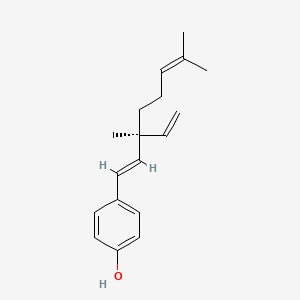
Phenol, 4-[(1E,3S)-3-ethenyl-3,7-dimethyl-1,6-octadien-1-yl]-: Non hazardous
The most material conditions are hazard communication and environmental classification. Bakuchiol is classified under GHS as very toxic to aquatic life (H400) and very toxic with long-lasting effects (H410), based on 69.9% of ECHA notifications. This triggers labeling and safety data sheet requirements for environmental hazards. No occupational exposure limits are provided. In cosmetics, no restrictions, conditions, or maximum concentration limits are listed, and no body-part restrictions apply. Therefore, the primary compliance driver is environmental hazard communication, not concentration-based limits. Formulators should prioritize aquatic toxicity labeling and consider downstream environmental risk assessments.
Before launch assessment, a company should confirm the substance's regulatory status in each target market. In the EU, verify that bakuchiol is covered by an active REACH registration and that GHS classification and labeling are aligned with ECHA notifications. For cosmetics, confirm that the ingredient is listed in the EU/EC inventory with no restrictions, which is currently the case. Also prepare environmental hazard communication materials, including H400 and H410 statements, for safety data sheets and labels. For New Zealand, ensure the non-hazardous classification is reflected in any local notifications. No evidence of required documentation beyond these points is available.
The available regulatory position is insufficient to support a full launch decision because it lacks quantitative limits, exposure thresholds, and market-specific approvals. While the EU REACH registration is active and the cosmetic inventory shows no restrictions, there is no evidence of US federal regulatory status, no occupational exposure limits, and no safety data from toxicity tests. The GHS classification is based on aggregated notifications, not a definitive regulatory determination. Therefore, a company cannot conclude that bakuchiol is universally compliant or safe without additional market-specific regulatory review and safety assessments.
No recent regulatory changes or effective dates are evidenced for bakuchiol. The EU REACH registration was last updated on 05-06-2020, but that is not a change in status. The cosmetic inventory lists bakuchiol as active with no restrictions, but no effective dates for any new regulations are provided. Therefore, there is no material regulatory change to track at this time. Companies should monitor for future updates to REACH registrations or cosmetic restrictions, but the current evidence does not indicate any pending or recent changes that would affect compliance.