Cholecalciferol
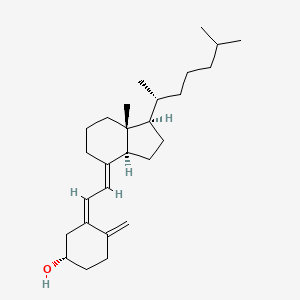
Identifiers
Functions
Hazards


Where is Cholecalciferol used, and what role does it play in each application?
Cholecalciferol is used as a vitamin D3 supplement in oral and veterinary medicines, as a nutritional additive in foods and dietary supplements, and as an active ingredient in rodenticides. In cosmetics, it functions as an oral care and skin-conditioning agent. It is also being explored in agricultural applications, such as foliar fertilizers to enhance plant calcium absorption. Its primary role is as a precursor to the active hormone calcitriol, which regulates calcium and phosphorus metabolism, bone mineralization, and gene expression. It is also used therapeutically for conditions like rickets, hypoparathyroidism, and familial hypophosphatemia.
Which product or formulation problem does Cholecalciferol address?
Cholecalciferol addresses vitamin D deficiency and insufficiency, which are linked to rickets, osteomalacia, osteoporosis, and chronic kidney disease. It solves the formulation problem of delivering a fat-soluble vitamin that is water-insoluble and requires bile for absorption. It also helps maintain calcium and phosphorus balance, supports bone health, and is used to manage hypocalcemia and renal osteodystrophy. In agriculture, it is proposed to enhance calcium absorption in plants. In cosmetics, it serves as a skin-conditioning and oral care ingredient, though specific benefits are not detailed.
What supports the main commercial or clinical uses of Cholecalciferol?
Clinical and pharmacological evidence supports cholecalciferol's use in treating vitamin D deficiency, refractory rickets, hypoparathyroidism, and familial hypophosphatemia. It is listed on the WHO Essential Medicines list for oral liquid and solid forms. Its mechanism involves hepatic and renal hydroxylation to calcitriol, which enhances intestinal calcium and phosphorus absorption and bone mineralization. Patent applications propose uses in celiac disease, autoimmune modulation, and plant fertilizers, but these are not evidence of clinical adoption. The evidence for cosmetic uses is limited to regulatory listing without efficacy data.
How is Cholecalciferol used clinically?
Cholecalciferol use is indicated for the treatment of specific medical conditions like refractory rickets (or vitamin D resistant rickets), hypoparathyroidism, and familial hypophosphatemia. Concurrently, as one of the most commonly utilized forms of vitamin D, cholecalciferol is also very frequently used as a supplement in individuals to maintain sufficient vitamin d levels in the body or to treat vitamin D deficiency, as well as various medical conditions that can be associated directly or indirectly with vitamin d insufficiency like osteoporosis and chronic kidney disease, among others
Which formulation trade-offs should researchers consider for Cholecalciferol?
Cholecalciferol is water-insoluble and fat-soluble, requiring formulation in oil solutions, emulsions, or beadlets, often stabilized with antioxidants. Its absorption depends on normal fat absorption and bile; therefore, formulations must consider fat content and delivery systems. It has a long half-life (about 50 days) and is stored in fat and muscle, which can lead to accumulation and toxicity if overdosed. In tablet formulations, it is included in cores with other nutrients, but its stability and compatibility with excipients must be managed. For agricultural use, emulsion concentrates with oils and emulsifiers are proposed.
What are the physicochemical properties of Cholecalciferol?
| Property | Value | Category |
|---|---|---|
| Physical Description | Vitamin d3 appears as fine colorless crystals. Water insoluble, Colorless or white odorless solid; White crystals; [Sigma-Aldrich MSDS], Solid | Appearance |
| Color/Form | Fine needles from dilute acetone, WHITE CRYSTALS, Colorless crystals | Appearance |
| Odor | ODORLESS | Appearance |
| Solubility | Insoluble, Sol in the usual org solvents; slightly sol in vegetable oils | Formulation Relevant Properties |
| LogP | 7.5, 10.24 | Formulation Relevant Properties |
| Melting Point | 183 to 185 °F, 84.5 °C, 84-85 °C | Handling Relevant Properties |
| Stability/Shelf Life | Oxidized and inactivated by moist air within few days, Affected by light and air, In dry propylene glycol, therapeutic concentrations are stored in amber screw cap bottles at 38 °C no change after 36 mo, Deterioration of pure crystal vitamin D3 is negligible after storage of 1 yr in amber evacuated ampuls at refrigerator temperatures | Handling Relevant Properties |
| Optical Rotation | Specific optical rotation (1.6% in acetone): +84.8 deg at 20 °C/D; (1.6% in chloroform): +51.9 deg at 20 °C/D | Analytical Properties |
| Other Experimental Properties | Oxidized and inactivated by moist air within a few days | Analytical Properties |
| XLogP3 | 7.9 | Computed Molecular Properties |
Which formulation benchmark best contextualizes Cholecalciferol, and what differs?
A relevant formulation benchmark is the WHO Essential Medicines listing, which specifies oral liquid (400 IU/mL) and solid (400 IU and 1000 IU) forms for calcium and vitamin D deficiency. This benchmark indicates standard dosing and delivery formats. Differences include the need for fat-soluble delivery systems, such as oil solutions or emulsions, and the use of antioxidants for stabilization. In contrast, agricultural formulations use emulsion concentrates with oil and emulsifiers, and cosmetic applications may use different carriers. The benchmark highlights the importance of ensuring bioavailability through appropriate lipid-based formulations.