Defatted Rapeseed Powder
Identifiers
Hazards

Where is defatted rapeseed powder used, and what role does it play in each application?
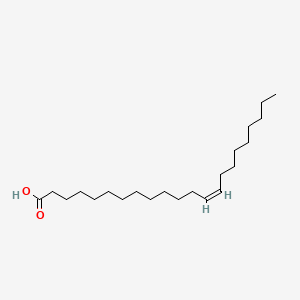
Defatted rapeseed powder is not directly documented in the supplied evidence; the data concerns erucic acid, a fatty acid found in rapeseed oil. Erucic acid is used as a lubricant additive, chemical intermediate, and in the production of polyethylene film additives and water-resistant nylon. It is also used in paints, lacquers, varnishes, and textile processing. In a clinical context, erucic acid is a component of Lorenzo's oil, a 4:1 mixture of glyceryl trioleate and glyceryl trierucate, used experimentally for adrenoleukodystrophy. The powder form itself is not described.
Which product or formulation problem does defatted rapeseed powder address?
Based on the erucic acid evidence, the ingredient addresses formulation needs for industrial lubricity, chemical synthesis, and polymer modification. As a lubricant additive, it reduces friction; as a chemical intermediate, it enables production of erucamide, stearyl erucamide, and dibasic acids. In polyethylene film and nylon, it improves water resistance. In clinical nutrition, erucic acid in Lorenzo's oil is used to lower very long-chain fatty acid levels in adrenoleukodystrophy patients, potentially slowing disease progression. However, these roles apply to erucic acid, not specifically to defatted rapeseed powder.
What supports the main commercial or clinical uses of defatted rapeseed powder?
Evidence for erucic acid's uses includes its listing as a High Production Volume chemical, with U.S. production between 1 million and 10 million pounds in recent years, indicating commercial relevance. Clinical studies show dietary erucic acid reduced serum very long-chain fatty acids in adrenoleukodystrophy patients, with some neurological stabilization, though a two-year trial in adrenomyeloneuropathy found no clear benefit. Industrial uses are supported by its role as a lubricant additive and chemical intermediate. However, this evidence does not directly support defatted rapeseed powder as a product ingredient.
How is Defatted rapeseed powder used clinically?
/EXPTL THER/ A 5-year-old boy with adrenoleukodystrophy, with clinical symptoms of visual, mental and motor disturbances which progressed rapidly, was treated with Lorenzo's oil consisting 1 volume of glyceryl trierucate and 4 volumes of glyceryl trioleate. Five months after initiation of this therapy, ability to swallow was enhanced and T2-weighted magnetic resonance imaging of the brain revealed regression of high intensity area of the parieto-occipital white matter. /Lorenzo's oi/
Which formulation trade-offs should researchers consider for defatted rapeseed powder?
For erucic acid, formulation trade-offs include safety concerns: it caused asymptomatic thrombocytopenia in Lorenzo's oil patients, reversible upon discontinuation, and animal studies with rapeseed oil showed myocardial fibrosis, hepatic cirrhosis, and elevated cholesterol. It is also an irritant targeting the liver and heart. These risks require careful dose control and monitoring. In industrial applications, its use as a lubricant additive or polymer modifier may affect material properties like water resistance, but specific trade-offs are not detailed. For defatted rapeseed powder, no formulation data is available.
What are the physicochemical properties of Defatted rapeseed powder?
| Property | Value | Category |
|---|---|---|
| Physical Description | Large Crystals; Other Solid; Liquid, Solid; mp = 33.8 deg C; [Merck Index] Fine white crystals; [MSDSonline], Liquid | Appearance |
| Color/Form | Needles from alcohol | Appearance |
| Solubility | Soluble in ethanol, carbon tetrachloride; very soluble in ethyl ether, methanol, Insol in water; about 175 g dissolve in 100 ml ethanol; about 160 g dissolve in 100 ml methanol; very sol in ether | Formulation Relevant Properties |
| Boiling Point | 265 °C at 15 mm Hg, Iodine value 74.98; neutralization value 165.72; bp: 381.5 °C (decomp) at 760 mm hg; 358.8 °C at 400 mm Hg; 314.4 °C at 100 mm Hg; 206.7 °C at 1.0 mm Hg | Handling Relevant Properties |
| Melting Point | 33.8 °C, 33.5 °C | Handling Relevant Properties |
| Density | 0.860 at 55 °C/4 °C | Handling Relevant Properties |
| Vapor Pressure | 0.00000115 [mmHg] | Handling Relevant Properties |
| Refractive Index | Index of refraction: 1.4534 at 45 °C/D; 1.44794 at 65 °C/D | Analytical Properties |
| Collision Cross Section | 190.3 Ų [M-H]- [CCS Type: DT; Buffer gas: N2; Sample Type: Human bronchoalveolar lavage fluid (BALF); Dataset: Unambiguous Lipids], 188.5 Ų [M-H]- [CCS Type: DT; Method: single field calibrated with Agilent tune mix (Agilent)] | Analytical Properties |
| Semi-standard non-polar | 2546.7 | Analytical Properties |
Which formulation benchmark best contextualizes defatted rapeseed powder, and what differs?
A relevant benchmark is Lorenzo's oil, a 4:1 mixture of glyceryl trioleate and glyceryl trierucate, used in experimental therapy for adrenoleukodystrophy. This formulation demonstrates a clinical application of erucic acid, but it is an oil, not a defatted powder. The key difference is that defatted rapeseed powder would lack the oil's lipid content, potentially altering bioavailability and functional properties. No direct comparison is possible from the evidence.