Defatted Rapeseed Powder Environmental Fate & Ecotoxicity
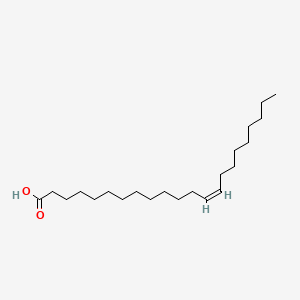
Identifiers
Hazards

What is known about the environmental fate of defatted rapeseed powder?
Defatted rapeseed powder's environmental fate is inferred from its constituent erucic acid. In soil, the free acid is immobile (Koc 135,000), but at environmental pH it exists as an anion, reducing adsorption and preventing volatilization. In water, it adsorbs to sediment and does not volatilize. In air, it partitions between vapor and particulate phases, with vapor-phase degradation by hydroxyl radicals and ozone having half-lives of 1.4–4.7 hours. Biodegradation in soil and water is suggested by 4.2–11% of theoretical BOD in Warburg tests. These fate characteristics imply persistence in soil and sediment but relatively rapid atmospheric breakdown.
What do biodegradation, bioaccumulation, and ecotoxicity findings indicate for defatted rapeseed powder?
Biodegradation of erucic acid, a component of defatted rapeseed powder, is slow but measurable: 4.2–11% of theoretical BOD over one day in activated sludge, indicating partial degradation. Bioaccumulation potential is low, with an estimated BCF of 3. No direct ecotoxicity data were supplied for erucic acid or the powder. The low BCF suggests limited food-chain accumulation, but the slow biodegradation indicates potential persistence in sediment. These findings imply moderate environmental persistence with low bioaccumulation risk, but ecotoxicity remains uncharacterized, so hazard classification cannot be completed.
Which environmental exposure pathways or concentrations are reported for defatted rapeseed powder?
No measured environmental concentrations for defatted rapeseed powder or erucic acid were reported. Exposure pathways are inferred from erucic acid's natural occurrence in rapeseed and its use as a chemical intermediate, suggesting release via waste streams. General population exposure may occur through ingestion of oils containing erucic acid, and occupational dermal exposure is possible during production. However, quantitative environmental concentrations in air, water, or soil are absent. This lack of data prevents estimation of actual environmental exposure levels or risk characterization for the powder.
How might use context or formulation affect the environmental profile of defatted rapeseed powder?
Use context affects environmental profile primarily through release pathways. As a food ingredient, erucic acid may enter wastewater via processing, where its slow biodegradation could lead to accumulation in sludge or sediment. In agricultural applications, soil immobility of the free acid suggests low leaching, but anion formation may increase mobility. Formulation as a powder could influence particle-phase atmospheric transport and deposition. However, no direct studies on the powder's environmental behavior were provided, so the impact of specific uses remains speculative. The natural occurrence of erucic acid in rapeseed suggests background environmental presence, but this does not quantify powder-specific contributions.
Which evidence gaps must be resolved before making sustainability claims about defatted rapeseed powder?
Before making sustainability claims, critical evidence gaps must be filled: direct environmental fate studies on defatted rapeseed powder (not just erucic acid), measured biodegradation rates under realistic conditions, ecotoxicity data for aquatic and terrestrial organisms, and actual environmental concentrations from production and use. Additionally, the powder's formulation and processing effects on erucic acid release and bioavailability are unknown. Without these data, any claim of environmental safety or sustainability would be unsupported. The current evidence only covers erucic acid's basic fate and low bioaccumulation potential, which is insufficient for holistic sustainability assertions.