Ergothioneine Environmental Fate & Ecotoxicity
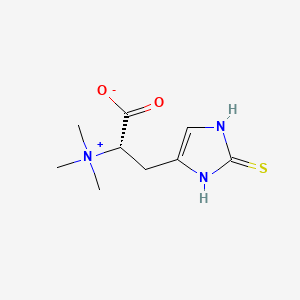
Identifiers
Functions
Hazards

Where is Ergothioneine used, and what role does it play in each application?
Ergothioneine is used as an antioxidant and skin-conditioning agent in cosmetics, and as an antioxidant in food and pharmaceutical applications. In cosmetics, it appears in moisturizers, foundations, eye creams, toners, and serums, often paired with anti-aging actives. In food, it is claimed to reduce off-flavors like bitterness and enhance umami or saltiness. In pharmaceuticals and supplements, it is explored for roles in mitochondrial function, neuroprotection, and fertility. Its primary role across these applications is antioxidant protection, with secondary roles as a chelator and metabolite.
Which product or formulation problem does Ergothioneine address?
Ergothioneine addresses oxidative degradation and sensory issues in formulations. As an antioxidant, it protects products and skin from oxidative damage. In food, it solves off-flavor problems by reducing bitterness and beany smells, and enhances umami or saltiness. In cosmetics, it is used to mitigate formulation instability, such as degradation and off-odor, often requiring encapsulation or stabilization systems. It also addresses specific biological problems like muscle loss, oocyte quality, and collagen degradation from UVA exposure, per patent claims.
What supports the main commercial or clinical uses of Ergothioneine?
Commercial use is supported by its presence in 92 products across 23 brands, primarily in moisturizers, face creams, and foundations, with a stated function as an antioxidant. Regulatory listings confirm its function as an antioxidant and skin-conditioning agent. Patent filings support a wide range of claimed uses, including anti-wrinkle, anti-inflammatory, anti-glycation, and off-flavor reduction. However, these patents are claims, not proof of efficacy. No clinical trial data or pharmacological evidence was provided to substantiate therapeutic uses.
Which formulation trade-offs should researchers consider for Ergothioneine?
Researchers must manage ergothioneine's stability and sensory profile. Patents describe challenges with degradation and off-odor, addressed through encapsulation in liposomes, complexation with cyclodextrins, or specific crystal forms. It is often formulated with stabilizers like licorice extract or in emulsion systems to maintain efficacy. The trade-off is between using higher concentrations for potential efficacy and managing stability or odor issues, with patent claims showing use levels from 0.005% to 7.5% depending on the application and delivery system.
What are the physicochemical properties of Ergothioneine?
| Property | Value | Category |
|---|---|---|
| Physical Description | Solid | Appearance |
| XLogP3 | 0.3 | Computed Molecular Properties |
| Exact Mass | 229.0884979 | Computed Molecular Properties |
| Monoisotopic Mass | 229.0884979 | Computed Molecular Properties |
| Topological Polar Surface Area | 96.3 | Computed Molecular Properties |
| Complexity | 314.0 | Computed Molecular Properties |
| Hydrogen Bond Donor Count | 2 | Computed Molecular Properties |
| Hydrogen Bond Acceptor Count | 3 | Computed Molecular Properties |
| Rotatable Bond Count | 3 | Computed Molecular Properties |
| Heavy Atom Count | 15 | Computed Molecular Properties |
Which formulation benchmark best contextualizes Ergothioneine, and what differs?
A relevant benchmark is a standard antioxidant like tocopherol (Vitamin E), which is also used in skin care. Unlike tocopherol, which is oil-soluble, ergothioneine is a water-soluble amino acid derivative, requiring different formulation strategies. Patents show ergothioneine is often combined with tocopherol and niacinamide in skin care, suggesting a complementary rather than directly substitutive role. The key difference is the need for specialized delivery systems, such as liposomes or cocrystals, to address ergothioneine's stability and odor, which are less critical for tocopherol.