Ergothioneine Patent Landscape
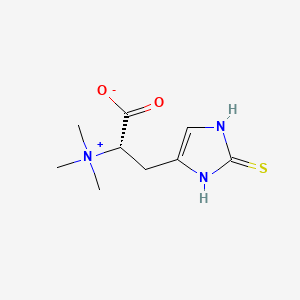
Identifiers
Functions
Hazards

Which organizations and claims shape current development around Ergothioneine?
Key organizations include Huaxi Biotechnology, with multiple patents on mitochondrial function and energy metabolism; Kikkoman, focusing on food taste enhancement; and Nanjing Nutrabuilding, with anti-glycation claims. Shanghai Maijiao Liuyin specializes in collagen-promoting compositions. Claims range from specific mass ratios with co-ingredients (e.g., lactoferrin for Alzheimer's, PQQ for energy) to novel delivery systems like exosome complexes. These organizations are driving ergothioneine's expansion into therapeutic-like applications, such as neuroprotection and fertility, while also refining its use in everyday cosmetics and foods.
How is Ergothioneine innovation changing in Food & Beverage?
Monthly patent filings by domain
Which technical problems do recent patents address with Ergothioneine?
Recent patents primarily address ergothioneine's physicochemical instability and sensory drawbacks, which limit its use in consumer products. Specific problems include degradation and odor formation in cosmetic formulations, addressed via stabilizing compositions (e.g., with licorice extract and cyclodextrin) and liposome encapsulation. In food applications, patents target off-flavor reduction, specifically bitterness from soybean peptides and mycoprotein, and enhancement of umami/saltiness. Other patents tackle oxidative damage in specific tissues, such as UVA-induced collagen degradation, and mitochondrial dysfunction linked to aging. These technical problems are central to enabling broader application of ergothioneine across cosmetics and food.
How do recent patents change the role or application of Ergothioneine?
Ergothioneine's role is shifting from a general antioxidant to a multifunctional active with targeted mechanisms. Patents now claim its use in mitochondrial function regulation, including enhancing ATP content and cellular energy metabolism, often in combination with hyaluronic acid derivatives or PQQ. It is also positioned as an anti-glycation agent, an autophagy promoter, and a fertility enhancer for older females. In food, it functions as a taste modulator, reducing bitterness and enhancing umami/saltiness. This evolution suggests a strategic move toward differentiated, mechanism-based claims that could support premium positioning in anti-aging and functional food markets.
How is Ergothioneine used in Food & Beverage patents?
Which Food & Beverage product categories feature Ergothioneine in recent patents?
Which product categories and formulation strategies emerge in recent work on Ergothioneine?
Emerging product categories include anti-aging cosmetics (serums, creams, toners), oral supplements (hard capsules, jams, teas), and functional foods/beverages. Formulation strategies focus on enhancing stability and delivery: liposome encapsulation (e.g., with ceramides or phospholipids), supramolecular cocrystals with carnosine, and microcapsule structures using mushroom-derived particles. To address odor issues, patents propose suspended oil droplet systems and specific crystal forms. These strategies aim to improve ergothioneine's bioavailability, stability, and sensory profile, enabling its incorporation into diverse formats from face creams to oral anti-aging supplements.
Where is the evidence-backed white space for further development of Ergothioneine?
Evidence-backed white space exists in combining ergothioneine with emerging longevity ingredients like urolithin A, spermidine, and fisetin, as seen in oral anti-aging capsules. Another area is its use in veterinary or agricultural applications, given patents on ovarian function in mammals. Additionally, there is potential in developing ergothioneine-based stabilizers for other sensitive actives, as demonstrated by its use in stabilizing thiopyridinone compounds. These areas are supported by recent patent activity but remain relatively underexplored compared to cosmetics and food, offering opportunities for differentiation.