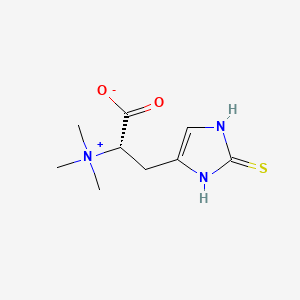
Regulations of Ergothioneine

ERGOTHIONEINE

Identifiers

FormulaC9H15N3O2S·CAS497-30-3·EC207-843-5

Functions

AntioxidantSKIN Conditioning - Miscellaneous

Hazards

Irritant

How does the regulatory treatment of Ergothioneine differ by market or product category?

Regulatory treatment of Ergothioneine varies by market and product category. In the US, it is permitted as a nutrient supplement in specific foods—cakes, cookies, pastries, coffee, tea, fruit drinks, carbonated soft drinks, and chocolate candy—at 5 mg per serving, based on scientific procedures with no FDA objections. In the EU, it falls under general food law (Regulation (EC) No 178/2002) and has a GHS notification for skin/eye/respiratory irritation. In cosmetics, it is an active ingredient with no restrictions or concentration limits in the EU inventory. In New Zealand, it lacks individual approval but may be used in group-standard products.

Which United States federal regulations apply to Ergothioneine?

1 regulation

FDA GRAS Notices

GRAS notices

NoticeNotifierIntended useBasisClosedFDA responseStatus
734
BBlue California
For use as a nutrient supplement in cakes, cookies, pastries (including granola bars); coffee; tea; fruit drinks and ades; carbonated soft drinks; and candy containing chocolate at a levels intended to provide 5 mg/serving ergothionine.Scientific procedures07 May 2018FDA has no questions (in PDF)authorized
1191
SShanghai EGT Synbio Group Co., LTD
Intended for use as an ingredient in cakes, cookies, pastries (including granola bars); coffee; tea; fruit drinks and ades; carbonated soft drinks; and candy containing chocolate at a level of 5 mg per serving.Scientific procedures30 Jan 2025FDA has no questions (in PDF)authorized
1270
GGene III Biotechnology Co., Ltd.
Intended for use as an ingredient at levels up to 150 mg/100 g in coffee, tea, fruit drinks and ades, carbonated soft drinks, sports and energy drinks, nutritional beverages, protein and nutritional powders, nutritional and cereal bars, cakes, cookies, pastries, and candy.Scientific procedures22 Jan 2026FDA has no questions (in PDF)authorized

What EU regulatory requirements apply to Ergothioneine?

2 regulations

EFSA Legal Basis

Regulation (EC) No 178/2002 (amended)

Status Regulation (EC)

Regulation (EC) No 178/2002 (amended)

What regulations apply to Ergothioneine in China?

1 regulation

IECIC Listed Ingredients (List I)

Published
24 Jun 2025
Effective
24 Jun 2025

Regulatory records

EntryRegulationTypeStatus
4576Inventory of Existing Cosmetic Ingredients in China (IECIC) IList Iauthorized

Record details

Inventory of Existing Cosmetic Ingredients in China (IECIC) I

professional use only
No

What regulations apply to Ergothioneine in New Zealand?

1 regulation

New Zealand EPA Inventory of Chemical Status

1H-Imidazole-4-ethanaminium, .alpha.-carboxy-2,3-dihydro-N,N,N-trimethyl-2-thioxo-, inner salt, (.alpha.S)-: Does not have an individual approval but may be used as a component in a product covered by a group standard. It is not approved for use as a chemical in its own right.

Which conditions, limits, and use contexts most affect a compliance assessment for Ergothioneine?

The most decision-relevant conditions are the US food-use limit of 5 mg per serving and the specific permitted food categories; exceeding this or using other categories would require separate assessment. In cosmetics, no restrictions or maximum concentrations are listed, so compliance hinges on general safety and labeling. GHS classifications for skin, eye, and respiratory irritation may trigger hazard communication requirements. The New Zealand group-standard status means use is only allowed as a component, not as a standalone chemical. These factors directly affect formulation and market entry.

What should be in place before a product containing Ergothioneine is assessed for launch?

Before launch, confirm the product category and market-specific authorization. For US foods, verify the intended use matches the listed categories and the 5 mg/serving level, and retain documentation of the scientific procedures basis and FDA no-questions letter. For EU foods, ensure compliance with general food law. For cosmetics, verify the ingredient's active status and absence of restrictions in the EU inventory. For New Zealand, confirm coverage under a relevant group standard. Also prepare GHS-compliant labeling due to irritation classifications.

Where does the available regulatory position stop short of supporting a decision on Ergothioneine?

The available regulatory position does not support decisions for markets or product categories beyond those explicitly listed. For example, there is no evidence for dietary supplements, animal feed, or pharmaceuticals. The New Zealand status is ambiguous—it allows use only as a component under a group standard, but the specific standard is not identified. The EU GHS notification is from a single company, so it may not reflect all hazards. The absence of exposure limits and IARC classification means safety thresholds cannot be inferred. These gaps require additional regulatory research before finalizing a compliance strategy.

Which recent regulatory changes or effective dates are material for Ergothioneine?

No recent regulatory changes or effective dates are available in the evidence. The US food additive listing is current, and the EU cosmetic status is active, but no amendments or upcoming deadlines are documented. The only dated reference is the EU food law (Regulation (EC) No 178/2002, as amended), which is a general framework rather than a specific change. For launch planning, assume the current approvals remain valid unless new information emerges, but monitor for updates to the US food additive listing or EU cosmetic restrictions.