Ergothioneine Suppliers & Manufacturers
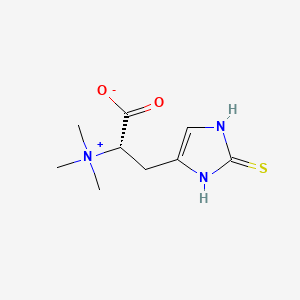
Identifiers
Functions
Hazards

What does available trade activity indicate for Ergothioneine?
Ergothioneine is classified under HS Code 2933.29. This falls under Chapter 29: Organic chemicals, specifically Heading 2933 (Heterocyclic compounds with nitrogen hetero-atom(s) only), under subheading: Heterocyclic compounds; with nitrogen hetero-atom(s) only, containing an unfused imidazole ring (whether or not hydrogenated) in the structure, other than hydantoin and its derivatives.
* The data below is specific to the HS code, not the ingredient.
Suppliers
284
Across 30 countries
Shipments
1,018
from 2015 to 2026
Total weight
14M kg
1,332 TEU · standard 20-foot container units
Last shipment
8 months ago
Last updated at Feb 25, 2026
Growth
↑ 32%
Trade under 2933.29 has increased by 32% over the past 6 months
What does trade activity suggest about the Ergothioneine supply chain?
Trade activity under HS 2933.29 shows a broad, active supply chain with 284 suppliers, 1,018 shipments, and nearly 14,000 metric tons of material moving between 2015 and early 2026. The recent growth score of 35.8 indicates moderate momentum in the last 180 days. However, this evidence is not ingredient-specific; the HS code covers many heterocyclic compounds, so the volume likely includes other chemicals. For formulation planning, this suggests a well-established logistics network exists for the classification, but you cannot assume ergothioneine-specific capacity or pricing from these figures.
What does the HS or HTS classification include, and where are its limits for Ergothioneine?
HS code 2933.29 covers heterocyclic compounds with nitrogen hetero-atom(s) only, specifically those containing an unfused imidazole ring, excluding hydantoin and derivatives. Ergothioneine, a thione derivative, may fall under this subheading or under 2933.39/2933.99 depending on structural classification. The classification scope is therefore broad and not exclusive to ergothioneine. For regulatory or tariff assessment, you cannot treat all 2933.29 activity as ergothioneine trade; the code includes numerous other imidazole-based compounds. This limits the utility of the data for precise ingredient-level market sizing or compliance decisions.
Which suppliers are associated with Ergothioneine trade?
| Supplier | Shipments | Top customer | Growth | Last shipment | |
|---|---|---|---|---|---|
No suppliers found. | |||||
How concentrated or diversified does the supplier landscape appear for Ergothioneine?
The supplier landscape appears highly diversified, with 284 distinct suppliers and no single entity controlling a dominant share. The top suppliers by shipment count include Aarti Drugs (53), Deccan Fine Chemicals (31), Ipca Laboratories (29), Daesang (21), and Shikoku Chemicals (21), but these are spread across India, Korea, and Japan. Major chemical conglomerates like BASF, Clariant, and Sigma Aldrich also appear, indicating a mix of large diversified firms and specialized manufacturers. For procurement, this diversification offers multiple potential sources, but it also means the data cannot confirm which suppliers actually produce ergothioneine versus other imidazole compounds. Direct supplier qualification is necessary.
Which supply risks or dependencies around Ergothioneine require further diligence?
Key risks include the lack of ingredient-specific shipment evidence, as all activity is tied to HS 2933.29, which covers multiple heterocyclic compounds. Several listed suppliers show zero recent growth or stale shipment dates (e.g., Piramal Enterprises last active in 2023, Olon in 2024), suggesting potential supply interruptions. Additionally, the presence of pharmaceutical entities like Janssen and Piramal indicates shipments may be for APIs or intermediates unrelated to ergothioneine. For risk management, you should verify each candidate supplier's actual ergothioneine production capability, request certificates of analysis, and confirm whether they hold relevant regulatory approvals. The data alone cannot support supplier qualification or continuity planning.
Which sourcing geographies and trade lanes appear most relevant to Ergothioneine?
China and India dominate the supplier landscape, with 115 and 49 suppliers respectively, accounting for 297 and 288 shipments. Belgium, Italy, South Korea, and Japan also show meaningful activity, with 10-15 suppliers each. Notable trade lanes include India-to-Mexico (e.g., Aarti Drugs to Helm De Mexico) and Korea/Japan-to-US affiliates (e.g., Daesang to Daesang America, Shikoku to Shikoku International). For sourcing strategy, China and India are the primary manufacturing hubs, while Europe and Northeast Asia serve as secondary nodes. However, these lanes reflect the HS code broadly, not ergothioneine specifically, so verification with suppliers is essential before committing to regional sourcing.
Which countries drive Ergothioneine trade activity?
By shipment count
China
297 shipments
115 suppliers
4.9M kg total weight
India
288 shipments
49 suppliers
2.7M kg total weight
Italy
77 shipments
14 suppliers
598.4K kg total weight
Belgium
68 shipments
15 suppliers
842.6K kg total weight
South Korea
62 shipments
10 suppliers
529.2K kg total weight
Japan
41 shipments
8 suppliers
359.1K kg total weight
Germany
40 shipments
11 suppliers
177.3K kg total weight
Spain
33 shipments
10 suppliers
212.7K kg total weight
Brazil
21 shipments
6 suppliers
457.4K kg total weight
Singapore
17 shipments
4 suppliers
170.8K kg total weight