Exosomes
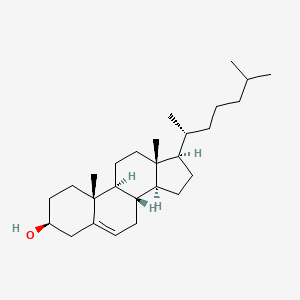
Identifiers
Functions
Where is exosomes used, and what role does it play in each application?
Exosomes are used in pharmaceutical and dermal preparations as emulsifying agents, and in cosmetics for emulsifying, stabilizing, and emollient functions. They also serve as a raw material for syntheses involving microbiological degradation of the side chain. In therapeutic applications, exosomes are used in liposomes to encapsulate and deliver chemotherapeutic drugs to diseased tissues, and as an organ imaging agent when labeled with carbon-14. These roles leverage their amphiphilic sterol structure and membrane-stabilizing properties.
Which product or formulation problem does exosomes address?
Exosomes address formulation problems requiring emulsification, stabilization, and emollience in pharmaceutical, dermal, and cosmetic products. As a pharmaceutic aid, it acts as an emulsifying agent, helping to create stable emulsions for drug delivery. In liposomal formulations, it encapsulates chemotherapeutic drugs, improving targeted delivery to diseased tissues. Its membrane-stabilizing role is essential for maintaining cell membrane integrity, which is critical in formulations that mimic or interact with biological membranes.
What supports the main commercial or clinical uses of exosomes?
Evidence for exosomes' main uses comes from its established roles as a pharmaceutic aid (emulsifying agent), a component in liposomal drug delivery systems, and a clinical organ imaging agent when labeled with carbon-14. Its use in cosmetics as an emulsifying, stabilizing, and emollient agent is documented. Additionally, its presence in 23 consumer products across personal care categories indicates commercial adoption. The compound is also recognized as an active ingredient in regulatory contexts, supporting its safety and efficacy for these applications.
How is Exosomes used clinically?
Cholesterol is used in liposomes to encapsulate and deliver chemotherapeutic drugs to diseased tissues
Which formulation trade-offs should researchers consider for exosomes?
Researchers should consider that exosomes from animal sources always contain cholestanol and other saturated sterols, which may affect purity and consistency. Its low water solubility and hydrophobic nature, especially in esterified form, require careful handling in aqueous formulations. The compound is commercially prepared from bovine spinal cord and wool grease, raising potential concerns about sourcing, allergenicity, and regulatory compliance. Its role as an emulsifying agent may also influence the stability and release characteristics of encapsulated drugs.
What are the physicochemical properties of Exosomes?
| Property | Value | Category |
|---|---|---|
| Physical Description | White or faintly yellow solid; Nearly odorless; Beige solid; [Sigma-Aldrich MSDS], Solid | Appearance |
| Color/Form | White or faintly yellow pearly granules or crystals | Appearance |
| Odor | Almost odorless | Appearance |
| Solubility | 0.095 mg/L (at 30 °C), Moderately soluble in hot alcohol; soluble in benzene, oils, fats and aq solns of bile salts, In water, 0.095 mg/l @ 30 °C, 9.5e-05 mg/mL | Formulation Relevant Properties |
| Boiling Point | 360 °C, 360 °C (decomposes) | Handling Relevant Properties |
| Melting Point | 148.5 °C, MP: 145.5 °C (the melt becomes clear at 180 °C); optical rotation (25 °C/D) = -13.7 deg (c = 0.9 in chloroform) /Benzoate/, 148 °C | Handling Relevant Properties |
| Density | 1.067 @ 20 °C/4 °C, Pearly leaflets or plates from dilute alcohol; becomes anhydrous at 70-80 °C; density 1.03; practically insoluble in water (about 0.2 mg/100 ml H2O); slightly soluble in alcohol (1.29% w/w at 20 °C); more soluble in hot alcohol (100 g of saturated 96% alcoholic solution contains 28 g at 80 °C); one gram dissolves in 2.8 ml ether, in 4.5 ml chloroform, in 1.5 ml pyridine. Also soluble in benzene petroleum, oils, fats. Soluble in aqueous solution of bile salts; optical rotation (20 °C/D) = -31.5 d | Handling Relevant Properties |
| Vapor Pressure | VP: 0.171 mm Hg at 149 °C | Handling Relevant Properties |
| Decomposition | When heated to decomposition it emit acrid smoke and irritating fumes | Handling Relevant Properties |
| Optical Rotation | Specific rotation: -34 to 38 deg @ 25 °C | Analytical Properties |
Which formulation benchmark best contextualizes exosomes, and what differs?
A relevant formulation benchmark is the use of exosomes in liposomal drug delivery systems, where it serves as a membrane component to encapsulate chemotherapeutic agents. This differs from its simpler emulsifying role in dermal and cosmetic products. In liposomes, exosomes contributes to membrane stability and drug retention, whereas in topical formulations, it primarily acts as an emulsifier and emollient. The benchmark highlights the need for different purity and sourcing considerations depending on the application route.