Exosomes Environmental Fate & Ecotoxicity
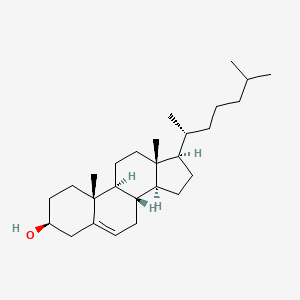
Identifiers
Functions
What is known about the environmental fate of exosomes?
Exosomes themselves have no direct environmental fate data; the available evidence concerns cholesterol, a common membrane component. Cholesterol is expected to adsorb strongly to soil, sediment, and suspended solids (estimated Koc 16,000), limiting mobility. Volatilization from water is possible but attenuated by adsorption; half-lives range from 8.9 hours in a river to 11 days in a lake, extending to 145 years in a pond when adsorption is considered. In air, cholesterol exists solely in the particulate phase and is removed by wet and dry deposition. These behaviors suggest exosome-associated cholesterol may partition to solid phases, but intact exosome fate remains uncharacterized.
What do biodegradation, bioaccumulation, and ecotoxicity findings indicate for exosomes?
Direct biodegradation, bioaccumulation, and ecotoxicity data for exosomes are absent. For cholesterol, a 27% theoretical oxygen demand was observed in seawater with hydrocarbon-oxidizing bacteria, indicating partial aerobic biodegradation potential. An estimated BCF of 270 suggests high bioconcentration potential in aquatic organisms, but this is a modeled value for cholesterol, not exosomes. No ecotoxicity endpoints are reported. These findings imply that exosome components like cholesterol may persist and accumulate, but the intact vesicle's environmental hazard profile cannot be assessed from current evidence.
Which environmental exposure pathways or concentrations are reported for exosomes?
No environmental concentrations or specific exposure pathways are reported for exosomes. Cholesterol, a component, may be released into the environment via wastewater treatment effluents, and the general population is exposed through diet and endogenous production. Occupational exposure to cholesterol can occur via dermal contact at production or use sites. For exosomes, potential release routes (e.g., manufacturing wastewater, consumer disposal) are not documented, and no measured environmental levels exist. This lack of exposure data prevents quantitative risk assessment or environmental monitoring recommendations.
How might use context or formulation affect the environmental profile of exosomes?
Use context and formulation likely influence environmental behavior, but direct evidence is lacking. If exosomes are formulated with cholesterol-rich membranes, their environmental fate may mirror cholesterol's strong adsorption and limited mobility. However, formulation components (e.g., stabilizers, preservatives) could alter degradation or bioavailability. For example, encapsulation or surface modifications might change aggregation, sedimentation, or uptake by organisms. Without specific studies on exosome formulations, any environmental profile remains speculative. Formulators should consider that cholesterol's high bioconcentration potential (BCF 270) could drive bioaccumulation concerns if exosomes release cholesterol in aquatic systems.
Which evidence gaps must be resolved before making sustainability claims about exosomes?
Before any sustainability claim, critical gaps must be filled: direct environmental fate studies for intact exosomes (not just components), measured biodegradation rates under relevant conditions, empirical bioaccumulation factors, and ecotoxicity endpoints for aquatic and terrestrial organisms. Additionally, environmental release scenarios and concentrations from manufacturing, use, and disposal are unknown. Without these data, no credible biodegradability, persistence, or eco-safety statements can be made. The current evidence only supports cholesterol's behavior, which is insufficient to characterize exosome environmental impact.