Exosomes Toxicity
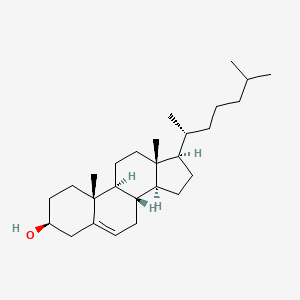
Identifiers
Functions
What are the material safety considerations for exosomes?
The available safety evidence for exosomes is limited and indirect. No GHS hazard classification or exposure limits are documented. The only toxicology finding is a Cosmetic Ingredient Review conclusion that the ingredient is safe in present practices of use and concentration, based on rat data. A related reference to cholesterol indicates IARC Group 3 classification (not classifiable as to human carcinogenicity). This suggests no acute or chronic hazard signal is established, but the absence of direct exosome-specific toxicology data means safety cannot be fully characterized beyond the cosmetic use context.
How should hazard classifications and toxicology findings for exosomes be interpreted together?
The hazard and toxicology evidence should be interpreted as indicating a low immediate risk profile, but with significant data gaps. The CIR finding of safety in current cosmetic practices provides a regulatory-relevant benchmark, while the IARC Group 3 classification for cholesterol—a related reference—indicates no established carcinogenic potential. However, these findings are not exosome-specific; they reflect either a general safety review or a component reference. Therefore, formulators should treat exosomes as lacking a formal hazard classification, relying on the CIR conclusion for cosmetic use while acknowledging that broader toxicological characterization is incomplete.
Which exposure routes, dose contexts, or effects are material for exosomes?
Material exposure routes for exosomes are ingestion and endogenous production, as documented in handling data. No occupational exposure limits or dose-response data are provided. The absence of exposure limits means that no threshold for adverse effects is established. For cosmetic applications, dermal exposure is implied by the CIR safety finding, but this route is not explicitly listed. The endogenous production route suggests natural presence in the body, which may reduce concern for systemic toxicity, but quantitative exposure assessment is not possible with current data.
Which handling and risk-management measures are relevant for exosomes?
Given the lack of GHS classification and exposure limits, risk management should rely on general good manufacturing practices and the CIR safety conclusion for cosmetic use. Handling guidance is minimal, listing only ingestion and endogenous production as exposure routes, which suggests that ingestion precautions are relevant. Without specific hazard statements, standard industrial hygiene measures—such as avoiding ingestion and using personal protective equipment for dust or liquid handling—are prudent. However, the absence of formal controls means that risk management must be conservative until more exosome-specific data are generated.
Which safety evidence gaps should be resolved before making decisions about exosomes?
Before making decisions about exosomes, the critical evidence gap is the absence of exosome-specific toxicology data, including GHS classification, exposure limits, and systemic toxicity studies. The only available safety finding is a CIR conclusion for cosmetic use, which is not a comprehensive hazard assessment. Additionally, the IARC classification for cholesterol is a reference, not a direct evaluation of exosomes. Resolving these gaps requires generating exosome-specific data on dermal and systemic toxicity, carcinogenicity, and reproductive effects. Until then, safety conclusions remain provisional and limited to the cosmetic context.