Inulin Propionate Ester Environmental Fate & Ecotoxicity
Identifiers
Functions
Hazards

What is known about the environmental fate of inulin propionate ester?
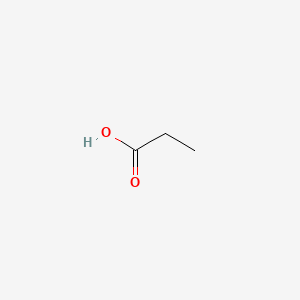
Direct environmental fate data for inulin propionate ester are not available; the evidence describes the fate of its component propionic acid. Propionic acid is expected to be highly mobile in soil (estimated Koc 36), to exist mainly as an anion at typical pH, and to volatilize from dry soil but not from water or moist soil. It is readily biodegradable under aerobic conditions and degrades anaerobically with a half-life of about 21 days. In air, it degrades via hydroxyl radicals with an estimated half-life of 13 days. These findings suggest that if inulin propionate ester releases propionic acid, the acid moiety would be non-persistent and mobile, but the ester's own fate remains uncharacterized.
What do biodegradation, bioaccumulation, and ecotoxicity findings indicate for inulin propionate ester?
Biodegradation, bioaccumulation, and ecotoxicity data are available only for propionic acid, not for inulin propionate ester. Propionic acid is readily biodegradable in aerobic screening tests (5-day theoretical BOD 23–55%) and fully degrades anaerobically within 6–14 days under various conditions. Its estimated BCF of 3.2 indicates low bioconcentration potential. Ecotoxicity values for propionic acid range from an LC50 of 4740 mg/L for fathead minnow to a Daphnia magna EC50 of 22.7 ppm, indicating moderate to low acute toxicity. These data suggest the acid moiety is not persistent, bioaccumulative, or highly toxic, but the ester's own hazard profile is unknown.
Which environmental exposure pathways or concentrations are reported for inulin propionate ester?
No environmental exposure pathways or concentrations are reported for inulin propionate ester. The available evidence concerns propionic acid, which is released through waste streams from its production and use in animal feed, grain preservation, and other applications. Propionic acid has been widely detected in landfill leachates and wastewater from industrial areas, and the general population may be exposed via air, food, drinking water, and dermal contact. However, these data do not establish exposure to inulin propionate ester, and no measured environmental concentrations for the ester are available.
How might use context or formulation affect the environmental profile of inulin propionate ester?
Use context and formulation could influence the environmental profile of inulin propionate ester, but no direct evidence is available. If the ester is used in products that are disposed of down the drain or in landfills, it could enter wastewater or leachate systems, where its component propionic acid is known to be mobile and biodegradable. However, the ester's own degradation rate, hydrolysis potential, and sorption behavior are uncharacterized. Formulation factors such as encapsulation or co-formulants could alter release rates and environmental transport, but these effects cannot be assessed without specific data. Therefore, any environmental profile based on use context remains speculative.
Which evidence gaps must be resolved before making sustainability claims about inulin propionate ester?
Before any sustainability claim can be made for inulin propionate ester, several evidence gaps must be resolved. Direct data are needed on the ester's own biodegradation (aerobic and anaerobic), hydrolysis rate, bioaccumulation potential, ecotoxicity to aquatic and terrestrial organisms, and environmental fate in soil, water, and air. Additionally, measured environmental concentrations and exposure pathways for the ester are absent. Without these data, it is impossible to assess persistence, bioaccumulation, or toxicity, which are core components of sustainability evaluations. The available propionic acid data are not sufficient to infer the ester's environmental profile.