Regulations of Inulin Propionate Ester

INULIN PROPIONATE

Identifiers

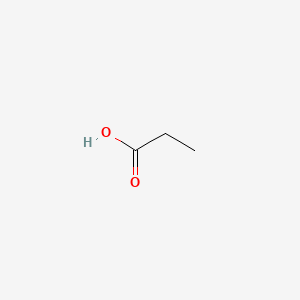
FormulaC3H6O2·CAS79-09-4·EC201-176-3·HS2915.50

Hazards

Corrosive

How does the regulatory treatment of inulin propionate ester differ by market or product category?

Regulatory treatment differs by market and product category. In the US, propionic acid is FDA-affirmed as GRAS for direct addition to human food and as a preservative in animal feed, and EPA has exempted it from tolerance requirements for certain pesticide uses. In the EU, it is a REACH-registered substance with active and ceased-manufacture dossiers, and EFSA has evaluated it as a food additive. In Australia, it appears on the industrial chemicals inventory, while New Zealand allows use only under group standards. However, these references pertain to propionic acid, not the ester, so direct extrapolation to inulin propionate ester is not supported.

Which United States federal regulations apply to Inulin propionate ester?

8 regulations

EPA TSCA Regulatory Flag

Propanoic acid is listed on the EPA's Chemical Data Reporting (CDR) system. Manufacturers and importers of Propanoic acid are required to report information about their production and use of this chemical to the EPA under the Toxic Substances Control Act (TSCA). (40 eCFR Part 711)

FIFRA Requirements

Postharvest application of propanoic acid or a mixture of methylene bispropionate and oxy(bismethylene) bisproprionate when used as a fungicide is exempted from the requirement of a tolerance for residues in or on the following raw agricultural commodities: alfalfa, barley grain, Bermuda grass, bluegrass, brome grass, clover, corn grain, cowpea hay, fescue, lespedeza, lupines, oat grain, orchard grass, peanut hay, peavine hay, rye grass, sorghum grain, soybean hay, sudan grass, timothy, vetch, and wheat grain.

FDA Direct Food Additives

Regulatory records

EntryRegulationTypeStatusSource
178.101021 CFR 178.1010Food AdditiveauthorizedView
184.108121 CFR 184.1081Food AdditiveauthorizedView

FDA GRAS Notices

Postharvest application of propanoic acid or a mixture of methylene bispropionate and oxy(bismethylene) bisproprionate when used as a fungicide is exempted from the requirement of a tolerance for residues in or on the following raw agricultural commodities: alfalfa, barley grain, Bermuda grass, bluegrass, brome grass, clover, corn grain, cowpea hay, fescue, lespedeza, lupines, oat grain, orchard grass, peanut hay, peavine hay, rye grass, sorghum grain, soybean hay, sudan grass, timothy, vetch, and wheat grain.

FDA Technical Effects

Regulatory records

RegulationStatus
FDA Technical Effect: ANTIMICROBIAL AGENTauthorized
FDA Technical Effect: FLAVORING AGENT OR ADJUVANTauthorized
FDA Technical Effect: PH CONTROL AGENTauthorized

Clean Water Act Requirements

Propionic acid is designated as a hazardous substance under section 311(b)(2)(A) of the Federal Water Pollution Control Act and further regulated by the Clean Water Act Amendments of 1977 and 1978. These regulations apply to discharges of this substance. This designation includes any isomers and hydrates, as well as any solutions and mixtures containing this substance.

CERCLA Reportable Quantities

Persons in charge of vessels or facilities are required to notify the National Response Center (NRC) immediately, when there is a release of this designated hazardous substance, in an amount equal to or greater than its reportable quantity of 5000 lb or 2270 kg. The toll free number of the NRC is (800) 424-8802. The rule for determining when notification is required is stated in 40 CFR 302.4 (section IV. D.3.b).

Atmospheric Standards

This action promulgates standards of performance for equipment leaks of Volatile Organic Compounds (VOC) in the Synthetic Organic Chemical Manufacturing Industry (SOCMI). The intended effect of these standards is to require all newly constructed, modified, and reconstructed SOCMI process units to use the best demonstrated system of continuous emission reduction for equipment leaks of VOC, considering costs, non air quality health and environmental impact and energy requirements. Propionic acid is produced, as an intermediate or a final product, by process units covered under this subpart.

What EU regulatory requirements apply to Inulin propionate ester?

3 regulations

REACH Registered Substance

Status: Active Update: 06-12-2021 https://echa.europa.eu/registration-dossier/-/registered-dossier/14128

EFSA Legal Basis

Regulation (EC) No 257/2010

Status Regulation (EC)

2004/129/EC

What regulations apply to Inulin propionate ester in Canada?

1 regulation

DSL / NDSL

Published
04 May 1994
Effective
04 May 1994

Regulatory records

EntryRegulationTypeStatus
79-09-4SOR/94-311DSLauthorized

Conditions

This substance is on the Domestic Substances List (DSL). This substance was added to the DSL as an “Existing Substance” given that it meets the criteria set out in CEPA for substances that were in commerce in Canada between 1984 and 1986.

Record details

SOR/94-311

professional use only
No

What regulations apply to Inulin propionate ester in Australia?

1 regulation

The Australian Inventory of Industrial Chemicals

Chemical: Propanoic acid

What regulations apply to Inulin propionate ester in New Zealand?

1 regulation

New Zealand EPA Inventory of Chemical Status

Propionic acid: Does not have an individual approval but may be used under an appropriate group standard

Which United States federal regulations apply to Inulin propionate ester?

1 regulation

New Jersey Worker and Community Right to Know Act

The New Jersey Worker and Community Right to Know Act requires public and private employers to provide information about hazardous substances at their workplaces. (N.J.S.A. 34:5A-1 et. seq.)

Which conditions, limits, and use contexts most affect a compliance assessment for inulin propionate ester?

Key conditions include FDA GRAS status for propionic acid as a direct food additive and preservative, with no specified limit, and JECFA's 'not limited' ADI for propionic acid and its salts. In the US, EPA has exempted propionic acid from tolerance requirements for certain pesticide applications, and it is subject to TSCA reporting. Occupational exposure limits (e.g., 10 ppm TWA) and GHS hazard classifications (skin corrosion, flammability) affect handling and labeling. For the ester, these conditions do not directly apply; its own safety and use limits are not established in the evidence.

What should be in place before a product containing inulin propionate ester is assessed for launch?

Before launch assessment, confirm the exact identity of inulin propionate ester, as the evidence only covers propionic acid. For propionic acid, US FDA GRAS affirmation and EPA tolerance exemptions are documented, but these do not extend to the ester. In the EU, REACH registration status is active for propionic acid, but the ester would require its own registration. Documentation should include the ester's physicochemical properties, safety data, and intended use category. Without specific regulatory status for the ester, a pre-launch assessment cannot rely on propionic acid's approvals.

Where does the available regulatory position stop short of supporting a decision on inulin propionate ester?

The available regulatory position stops short of supporting a decision on inulin propionate ester because all cited regulations, GRAS affirmations, and exposure limits apply to propionic acid, not the ester. There is no evidence of the ester's approval, registration, or safety evaluation in any market. The ester's distinct chemical structure means its hydrolysis, toxicity, and regulatory classification cannot be inferred from propionic acid data. Therefore, any compliance decision would require new data and regulatory submissions specific to the ester.

Which recent regulatory changes or effective dates are material for inulin propionate ester?

No recent regulatory changes or effective dates are identified for inulin propionate ester. For propionic acid, the evidence includes a 2021 REACH registration update and a 2018 cease-manufacture notice, but these do not affect the ester. The 1991 EPA Reregistration Eligibility Decision for propionic acid is historical, not recent. Without specific regulatory actions for the ester, no material changes can be cited.