Montmorillonite
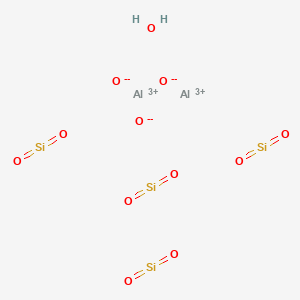
Identifiers
Functions
Hazards

Where is Montmorillonite used, and what role does it play in each application?
Montmorillonite functions as a multifunctional rheology and structure modifier across cosmetics, pharmaceuticals, and industrial materials. In cosmetics, it is an abrasive, absorbent, bulking agent, emulsion stabilizer, light stabilizer, and viscosity controller, appearing in foundations, face masks, eye shadows, and mascaras. In pharmaceuticals, it acts as a suspending agent and is explored as a substrate for cell growth and as an ion-exchange agent in controlled-release tablets. Industrially, it serves as a nano-filler, flame-retardant synergist, barrier enhancer, and stabilizer in polymers, rubber, asphalt, and coatings. Its role is consistently tied to its high surface area, cation exchange capacity, and ability to form thixotropic gels.
Which product or formulation problem does Montmorillonite address?
Montmorillonite solves formulation problems related to stability, texture, and performance. It controls viscosity and stabilizes emulsions, preventing phase separation in creams and lotions. Its absorbent and bulking properties manage oil and moisture, providing mattifying effects in color cosmetics and purifying action in face masks. In industrial applications, it addresses thermal shrinkage, flammability, and barrier permeability by forming layered structures that enhance mechanical strength and heat resistance. It also acts as an adsorbent for toxins and diarrheagenic substances in therapeutic contexts, and as a carrier for active ingredients in drug delivery systems.
What supports the main commercial or clinical uses of Montmorillonite?
Evidence for Montmorillonite's uses comes from regulatory approvals, safety assessments, and product formulation data. It is listed as an active ingredient in cosmetics with defined functions, and a safety panel concluded it is safe in cosmetics at current use levels, except for products that may be incidentally inhaled. It is permitted as an inert ingredient in pesticides and affirmed as GRAS for direct addition to human food. Clinical evidence supports its use as an adsorbent for aflatoxins in animal feed and as an antidote for paraquat ingestion. Product data shows its widespread use in color cosmetics and skincare, while patents demonstrate its role in advanced materials.
How is Montmorillonite used clinically?
Ther (VET): Bentonite was compared with activated charcoal as therapy for lantana poisoning in calves dosed 5 d previously with leaf material of the common pink-edged red taxon of Lantana camara. Both therapies were given by stomach tube as a single dose at 5 g/kg. Five of 6 calves in each of the groups given bentonite and activated charcoal recovered while 5 of 6 calves in the control group died. Calves given bentonite took 3 d longer on average to recover fully than those given activated charcoal but the effects of the 2 therapies on plasma total bilirubin concentrations were statistically indistinguishable. Bentonite was judged to have promise as a cheap alternative to activated charcoal for therapy of lantana poisoning of cattle
Which formulation trade-offs should researchers consider for Montmorillonite?
Researchers must balance Montmorillonite's benefits against its impact on product aesthetics and safety. Its high water absorption and swelling can lead to drying or cracking in formulations unless humectants like glycerin or sorbitol are added. The sequence of mixing determines emulsion type, requiring careful process control. In polymers, achieving full exfoliation of clay layers is critical for barrier and mechanical properties, often necessitating organic modification. Dust generation is a safety concern, as inhalation may cause respiratory irritation. Cosmetic safety is established, but data is insufficient for products where incidental inhalation is possible, limiting its use in powders or sprays.
What are the physicochemical properties of Montmorillonite?
| Property | Value | Category |
|---|---|---|
| Physical Description | Dry Powder; Other Solid; Large Crystals; CBI; Liquid; Liquid; Other Solid; Dry Powder; Large Crystals; Other Solid, A clay (aluminum silicate) that varies in color from yellow-white to almost black; As a powder, it is cream colored to pale brown. It forms gels when water is added. [Merck Index], Off-white powder; [Acros Organics MSDS], GREY TO WHITE POWDER OR LUMPS | Appearance |
| Color/Form | A clay containing appreciable amounts of the clay mineral montmorillonite; light yellow or green, cream, pink, gray to black solid, The color in the massive condition varies from yellowish-white to almost black. The powder is cream colored to pale brown, Light to cream-colored impalpable powder, The Clay Spur benonite usually ranges from 0.5 to 2 meters thick ... generally light yellowish green on the outcrop, becoming bluish green away from the outcrop, Powder | Appearance |
| Odor | Odorless | Appearance |
| Taste | Tasteless | Appearance |
| Solubility | Insoluble in water and common organic solvents, Solubility in water: none | Formulation Relevant Properties |
| pH | In the presence of water, it forms translucent suspension with pH of around 9 | Formulation Relevant Properties |
| Melting Point | >1200 °C | Handling Relevant Properties |
| Density | Relative density (water = 1): 2.5 | Handling Relevant Properties |
| Stability/Shelf Life | Suspensions are most stable at a pH above 7, Stable under recommended storage conditions | Handling Relevant Properties |
| Decomposition | Hazardous decomposition products formed under fire conditions. - Aluminum oxide, silicon oxides | Handling Relevant Properties |
Which formulation benchmark best contextualizes Montmorillonite, and what differs?
Bentonite, which is primarily composed of Montmorillonite, serves as the most relevant formulation benchmark. Both share similar functions as thickeners, stabilizers, and absorbents. However, Montmorillonite is a specific clay mineral, while Bentonite is a rock containing Montmorillonite along with other minerals like feldspar and quartz. This distinction matters for purity and consistency. Montmorillonite's higher purity may offer more predictable performance in advanced applications like nanocomposites, where trace minerals could affect properties. In cosmetics, both are used interchangeably, but Montmorillonite's defined mineralogy may be preferred for claims requiring specific compositional control.