Montmorillonite Suppliers & Manufacturers
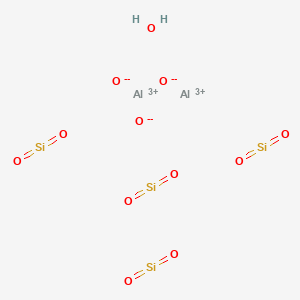
Identifiers
Functions
Hazards

What does available trade activity indicate for Montmorillonite?
Montmorillonite is classified under HS Code 2508.10. This falls under Chapter 25: Salt; sulphur; earths, stone; plastering materials, lime and cement, specifically Heading 2508 (Clays; (not including expanded clays of heading no. 6806), andalusite kyanite and sillimanite, whether or not calcined; mullite; chamotte or dinas earth), under subheading: Clays (excluding expanded clays of heading no. 6806); bentonite, whether or not calcined.
* The data below is specific to the HS code, not the ingredient.
Suppliers
318
Across 39 countries
Shipments
1,577
from 2015 to 2026
Total weight
103.8M kg
5,672 TEU · standard 20-foot container units
Last shipment
8 months ago
Last updated at Feb 25, 2026
Growth
↑ 35%
Trade under 2508.10 has increased by 35% over the past 6 months
What does trade activity suggest about the Montmorillonite supply chain?
Trade activity under HS 2508.10 shows a large, active supply chain with 318 suppliers, 1,577 shipments, and roughly 104 million kg moved between 2015 and 2026. The recent growth score of 38.2 indicates moderate momentum. However, this is not ingredient-specific evidence; the code covers bentonite and other natural clays, so volumes likely include non-montmorillonite materials. For formulation planning, treat this as a proxy for clay availability, not a confirmed montmorillonite supply signal. The presence of named bentonite and montmorillonite suppliers suggests some relevance, but the majority of activity may be broader clay trade.
What does the HS or HTS classification include, and where are its limits for Montmorillonite?
HS 2508.10 covers bentonite, whether or not calcined, under the broader heading for clays (excluding expanded clays). Montmorillonite is a component of bentonite, so this code is the closest classification, but it is not exclusive to montmorillonite. The scope includes various natural clays and industrial applications, meaning trade data under this code aggregates multiple clay types. For regulatory or sourcing decisions, do not assume all shipments are montmorillonite; verify product specifications and mineral composition with suppliers. The classification provides a useful starting point but lacks the granularity to isolate montmorillonite-specific trade flows.
Which suppliers are associated with Montmorillonite trade?
| Supplier | Shipments | Top customer | Growth | Last shipment | |
|---|---|---|---|---|---|
No suppliers found. | |||||
How concentrated or diversified does the supplier landscape appear for Montmorillonite?
The supplier landscape appears fragmented, with 318 suppliers across 39 countries, but a few large players dominate shipment counts. Clariant Mexico accounts for 131 shipments, and Sinoclay Industrial (China) has 75, indicating some concentration at the top. However, most suppliers have fewer than 10 shipments, suggesting a long tail of smaller or intermittent traders. This mix implies moderate concentration risk: key suppliers like Clariant and Sinoclay are critical for volume, but the diversity offers alternatives. For procurement, map dependencies on top suppliers while leveraging the broad base for backup options, but verify each supplier's actual montmorillonite production.
Which supply risks or dependencies around Montmorillonite require further diligence?
Key supply risks include over-reliance on a few high-volume suppliers, potential misclassification of clay types, and dated shipment records for some named montmorillonite suppliers. For example, Inner Mongolia Ningcheng Tianyu Bentonite Hi Tech's last shipment was in 2020, and Ningcheng County Tianyuan Montmoril's in 2017, raising continuity concerns. Also, many entities appear to be logistics providers or traders, not producers, which could affect quality control and traceability. Further diligence should confirm mineral purity, production capacity, and whether suppliers are actual montmorillonite processors. The lack of ingredient-specific shipment data means these risks are not fully quantifiable from trade evidence alone.
Which sourcing geographies and trade lanes appear most relevant to Montmorillonite?
China, Canada, Turkey, Mexico, and Greece are the most prominent sourcing geographies by shipment volume and weight. China leads in supplier count (72) and shipments (352), while Turkey and Greece show high total weights (20.3M kg and 15.0M kg respectively), suggesting bulk export capacity. Canada and Mexico also have substantial shipment counts, indicating active North American lanes. For supply chain strategy, prioritize these countries for clay sourcing, but note that the data does not confirm montmorillonite-specific production. The presence of named bentonite suppliers in China, Turkey, and Mexico strengthens their relevance, though verification is needed.
Which countries drive Montmorillonite trade activity?
By shipment count
China
352 shipments
72 suppliers
14.3M kg total weight
Canada
350 shipments
43 suppliers
20.9M kg total weight
Mexico
226 shipments
26 suppliers
7.7M kg total weight
Netherlands Antilles
105 shipments
4 suppliers
1.9M kg total weight
Türkiye
89 shipments
32 suppliers
20.3M kg total weight
United Kingdom
44 shipments
5 suppliers
1.2M kg total weight
Spain
43 shipments
9 suppliers
6.4M kg total weight
South Korea
43 shipments
12 suppliers
5.3M kg total weight
Uzbekistan
42 shipments
7 suppliers
4M kg total weight
Germany
41 shipments
12 suppliers
334.6K kg total weight