Montmorillonite Environmental Fate & Ecotoxicity
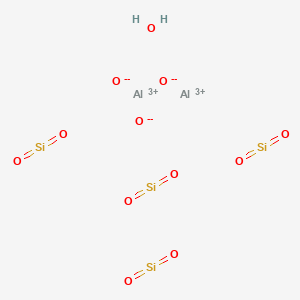
Identifiers
Functions
Hazards

What is known about the environmental fate of Montmorillonite?
Montmorillonite is a naturally occurring mineral whose environmental fate is primarily physical dispersion and deposition rather than chemical transformation. It is released through waste streams from production and use in products like cosmetics, drilling fluids, and pet litter, and directly into soil when used as pesticide carriers or feed binders. Biodegradation is minimal or absent, indicating persistence as an inorganic particulate. Its fate is governed by particle transport, sedimentation, and potential accumulation in soils and sediments. This persistence suggests that environmental monitoring should focus on particulate loading and physical effects rather than degradation products.
What do biodegradation, bioaccumulation, and ecotoxicity findings indicate for Montmorillonite?
Montmorillonite is not biodegradable, indicating environmental persistence. No bioaccumulation data were provided, but as an inorganic clay, biomagnification is unlikely. Ecotoxicity evidence is limited to a single acute study: a 96-hour LC50 of 19,000,000 µg/L for rainbow trout, suggesting very low acute aquatic toxicity. This high threshold implies minimal direct hazard to fish at typical environmental concentrations. However, chronic effects, sediment-dwelling organism impacts, and terrestrial toxicity remain uncharacterized. The lack of degradation and potential for physical smothering of benthic habitats warrant consideration in risk assessments.
Which environmental exposure pathways or concentrations are reported for Montmorillonite?
Reported exposure pathways include release through waste streams from manufacturing and consumer product use, and direct environmental release from agricultural applications as pesticide carriers and animal feed binders. Occupational exposure occurs via inhalation of dust and dermal contact. The general population may be exposed through inhalation, ingestion, and dermal contact with consumer products. No measured environmental concentrations were provided, so quantitative exposure levels in air, water, or soil are unknown. This gap limits the ability to assess real-world risk, though the mineral's natural occurrence suggests background levels exist.
How might use context or formulation affect the environmental profile of Montmorillonite?
Use context significantly influences release pathways. Direct environmental release occurs when montmorillonite is used in drilling muds, agricultural carriers, and feed binders, whereas indirect release via waste streams is typical for consumer products like cosmetics and cat litter. Formulation can alter particle size, surface properties, and associated additives, potentially affecting dispersion and toxicity. For example, the rainbow trout LC50 was determined using a formulation, not pure montmorillonite, so co-formulants may contribute to toxicity. These factors should be considered when evaluating environmental risks for specific applications.
Which evidence gaps must be resolved before making sustainability claims about Montmorillonite?
Before making sustainability claims, critical gaps include: quantitative environmental fate data (transport, transformation, and partitioning), measured environmental concentrations in relevant media, chronic ecotoxicity data for aquatic and terrestrial organisms, and bioaccumulation potential. Additionally, the influence of different formulations and use contexts on environmental behavior is unknown. Without these data, claims of environmental safety or sustainability are unsupported. The mineral's natural origin and low acute toxicity are insufficient to establish a sustainable profile.