Regulations of Montmorillonite

MONTMORILLONITE

Identifiers

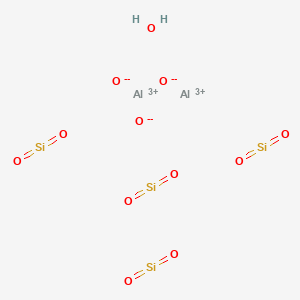
FormulaAl2H2O12Si4·CAS1318-93-0·EC215-108-5

Functions

AbrasiveAbsorbent +4 more

Hazards

Irritant

How does the regulatory treatment of Montmorillonite differ by market or product category?

Regulatory treatment of Montmorillonite varies by market and product category. In the EU, it is listed in the ECHA C&L Inventory with GHS notifications, and under REACH, powdered forms may quickly reach nuisance-causing airborne particle concentrations. In the US, Montmorillonite and Bentonite are on the EPA CDR system under TSCA, with Bentonite also listed as an EPA Safer Chemical and exempt from FIFRA tolerance as an inert pesticide ingredient. In Australia, both are on the AICIS inventory. In New Zealand, neither has individual approval but may be used under group standards. For cosmetics, Montmorillonite is an active INCI ingredient with no EU restrictions or concentration limits.

Which United States federal regulations apply to Montmorillonite?

6 regulations

EPA TSCA Regulatory Flag

Bentonite is listed on the EPA's Chemical Data Reporting (CDR) system. Manufacturers and importers of Bentonite are required to report information about their production and use of this chemical to the EPA under the Toxic Substances Control Act (TSCA). (40 eCFR Part 711)

FIFRA Requirements

Residues of bentonite are exempted from the requirement of a tolerance when used in accordance with good agricultural practice as inert (or occasionally active) ingredients in pesticide formulations applied to growing crops or to raw agricultural commodities after harvest. Use: solid diluent, carrier.

FDA Direct Food Additives

Bentonite is an indirect food additive for use only as a component of adhesives.

FDA GRAS Notices

Substance added directly to human food affirmed as generally recognized as safe (GRAS).

FDA Food Contact Notifications

Food contact notifications

NotificationManufacturer / supplierIntended useLimitationsEffectiveStatus
932
TToyo Seikan Kaisha Limited and Nanocor Incorporated
For use as a gas barrier in monolayer PET bottles.For use at levels not to exceed 5 percent by weight in a blend with nylon MXD6, with the blend to be used at levels not to exceed 5 percent by weight in finished PET bottles. The finished article may contact aqueous, acidic, and low and high alcoholic foods under Conditions of Use C through G, and fatty foods under Conditions of Use E through G, as described in Tables 1 and 2.30 Dec 2009active
1163
PPolyOne Corporation Nanocor® Inc.
As a peelable sealing structure in food-contact films.For use at levels not to exceed 15 wt-% in polymeric films, and the film layers containing the FCS has a thickness not to exceed 2 mils. The finished article may contact all food types under Conditions of Use C through G, as described in Tables 1 and 2.29 May 2012active

FDA Technical Effects

Bentonite used as a general purpose food additive in animal drugs, feeds, and related products is generally recognized as safe when used in accordance with good manufacturing or feeding practice.

What EU regulatory requirements apply to Montmorillonite?

2 regulations

EFSA Legal Basis

Regulation (EC) No 1831/2003 (amended)

Status Regulation (EC)

Regulation (EC) No 1831/2003 (amended)

What regulations apply to Montmorillonite in Canada?

1 regulation

DSL / NDSL

Published
29 Nov 2006
Effective
29 Nov 2006

Regulatory records

EntryRegulationTypeStatus
1318-93-0SOR/94-311DSLauthorized

Conditions

This substance is on the Domestic Substances List (DSL). This substance was added to the DSL as an “Existing Substance” given that it meets the criteria set out in CEPA for substances that were in commerce in Canada between 1984 and 1986.

Record details

SOR/94-311

professional use only
No

What regulations apply to Montmorillonite in China?

1 regulation

IECIC Listed Ingredients (List I)

Published
24 Jun 2025
Effective
24 Jun 2025

Regulatory records

EntryRegulationTypeStatus
4675Inventory of Existing Cosmetic Ingredients in China (IECIC) IList Iauthorized

Record details

Inventory of Existing Cosmetic Ingredients in China (IECIC) I

professional use only
No

What regulations apply to Montmorillonite in Australia?

1 regulation

The Australian Inventory of Industrial Chemicals

Chemical: Bentonite

What regulations apply to Montmorillonite in New Zealand?

1 regulation

New Zealand EPA Inventory of Chemical Status

Bentonite: Does not have an individual approval but may be used under an appropriate group standard

Which conditions, limits, and use contexts most affect a compliance assessment for Montmorillonite?

Key conditions affecting compliance include GHS classifications for skin (H315), eye (H319), and respiratory irritation (H335), which trigger labeling and safety data requirements. In the EU, REACH notes that powdered forms can quickly reach nuisance-causing airborne particle concentrations, implying dust control measures may be needed. In the US, TSCA CDR reporting obligations apply to manufacturers and importers of Montmorillonite and Bentonite. For pesticide use, Bentonite is exempt from tolerance when used as an inert ingredient per good agricultural practice. No specific exposure limits or maximum concentration limits are provided for Montmorillonite in the evidence.

What should be in place before a product containing Montmorillonite is assessed for launch?

Before launch, confirm the product category and jurisdiction-specific status. For the US, verify TSCA CDR reporting obligations for Montmorillonite and Bentonite, and check if the product is a pesticide where Bentonite's FIFRA tolerance exemption applies. For the EU, ensure GHS classification and labeling align with ECHA C&L notifications, and assess dust exposure risks under REACH. For cosmetics, confirm Montmorillonite's INCI status and functions (e.g., abrasive, absorbent) are consistent with its active listing. For Australia and New Zealand, verify inventory listing or group standard coverage. Documentation should include GHS-compliant safety data sheets and evidence of regulatory status per market.

Where does the available regulatory position stop short of supporting a decision on Montmorillonite?

The available regulatory position is insufficient to support a final decision because it lacks specific exposure limits, maximum concentration caps, and detailed product-category conditions. While GHS classifications and inventory listings are provided, they do not translate into clear compliance thresholds. For example, the EU C&L notifications are aggregated from company reports and do not represent an official harmonized classification. Similarly, the New Zealand group standard coverage is not detailed, and the Australian inventory listing does not specify use conditions. Therefore, a compliance assessment cannot be completed without additional jurisdiction-specific and product-specific regulatory details.

Which recent regulatory changes or effective dates are material for Montmorillonite?

No recent regulatory changes or effective dates are provided in the evidence. The available information includes current listings such as the EU ECHA C&L notifications, US TSCA CDR requirements, and Australian AICIS inventory entries, but no amendments or upcoming deadlines are specified. For compliance planning, it is prudent to monitor these inventories for updates, but the evidence does not indicate any imminent regulatory shifts affecting Montmorillonite.