Polylactic Acid
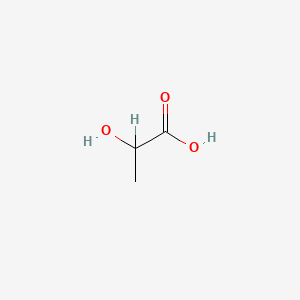
Identifiers
Functions
Hazards


Where is polylactic acid used, and what role does it play in each application?
Polylactic acid (PLA) functions primarily as a biodegradable thermoplastic base polymer across packaging, agriculture, consumer goods, and medical applications. In packaging, it forms films, compostable articles, and tableware, often blended with other biodegradable polyesters. In agriculture, it is used in mulch films and greenhouse films. In consumer goods, it appears in 3D printing filaments, cutlery, and even shoe uppers. In medical and pharmaceutical fields, it serves as a matrix for implants, sutures, drug delivery microspheres, and dermal fillers. It also acts as an abrasive in cosmetics. Its role is consistently that of a structural, biodegradable matrix, with performance adjusted through blending and additives.
Which product or formulation problem does polylactic acid address?
Polylactic acid addresses the need for biodegradable alternatives to conventional plastics, solving waste and environmental persistence issues. It provides a renewable, compostable base for single-use items like packaging, cutlery, and agricultural films. In medical applications, it solves the problem of implant removal by being bioresorbable, and it enables controlled drug release. It also addresses specific formulation challenges, such as improving heat resistance, toughness, and barrier properties when blended with other polymers or additives. However, its inherent brittleness and low heat distortion temperature are problems that must be managed through formulation.
What supports the main commercial or clinical uses of polylactic acid?
Evidence for PLA's main uses comes from two primary sources: regulatory and patent literature. Regulatory information lists therapeutic uses including delayed-action preparations, artificial membranes, dental implants, and drug delivery systems, with specific mention of injectable poly-L-lactic acid for facial lipoatrophy in HIV patients. Patent applications extensively document PLA as a primary component in compostable packaging, films, 3D printing materials, and medical devices like sutures and bone repair scaffolds. These sources collectively support PLA's role as a versatile biodegradable polymer, though patent filings represent claimed approaches rather than proof of market adoption.
How is Polylactic acid used clinically?
For use as an alkalinizing agent
Which formulation trade-offs should researchers consider for polylactic acid?
Researchers must balance PLA's inherent brittleness and low heat resistance against its biodegradability. Formulation trade-offs include blending with tougher polymers like PBAT or PHA to improve flexibility, but this can reduce overall biodegradability or alter degradation rates. Adding plasticizers like PEG improves flexibility but may migrate, requiring compatibilizers. Enhancing heat resistance often involves adding nucleating agents or stereocomplex PLA, which can complicate processing. Fillers like talc or natural fibers increase stiffness but may reduce impact strength. Each additive introduces trade-offs in mechanical properties, processability, and cost, requiring careful optimization.
What are the physicochemical properties of Polylactic acid?
| Property | Value | Category |
|---|---|---|
| Physical Description | Lactic acid appears as a colorless to yellow odorless syrupy liquid. Corrosive to metals and tissue. Used to make cultured dairy products, as a food preservative, and to make chemicals, Dry Powder; Liquid; Liquid; Other Solid, Colourless or yellowish, nearly odourless, syrupy liquid to solid, Thick liquid or crystals, colorless to yellow; mp = 17 deg C, VISCOUS COLOURLESS-TO-YELLOW LIQUID OR COLOURLESS-TO-YELLOW CRYSTALS, colourless to yellow hygroscopic crystals becoming syrupy liquid; odourless | Appearance |
| Color/Form | Crystals (melt at 16.8 °C), Yellow to colorless crystals or syrupy 50% liquid, Viscous, colorless to yellow liquid or colorless to yellow crystals | Appearance |
| Odor | Odorless, Weak unpleasant odor, Available forms have very slightly acrid odor | Appearance |
| Taste | Mild acid taste and does not overpower weaker aromatic flavors, Taste is acrid | Appearance |
| Solubility | 1000000 mg/L, Completely soluble in water, Miscible with water, Completely soluble in ethanol, diethyl ether, and other organic solvents which are miscible with water. It is virtually insoluble in benzene and chloroform, Miscible with glycerol, Soluble in alcohol and furfurol; slightly soluble in ether; insoluble in chloroform, petroleum ether, carbon disulfide. Miscible with alcohol-ether solution, Solubility in water: miscible, miscible with water, glycerol, glycols, oils, miscible at room temperature (in ethanol) | Formulation Relevant Properties |
| LogP | -0.72, log Kow = -0.72, -0.6 | Formulation Relevant Properties |
| pH | The pH of a 10 wt% aqueous solution of lactic acid is 1.75 | Formulation Relevant Properties |
| pKa | 3.86 (at 20 °C) | Formulation Relevant Properties |
| Dissociation Constants | pKa = 3.86 at 20 °C | Formulation Relevant Properties |
| Boiling Point | 122 °C at 1.50E+01 mm Hg, 122 °C at 15 mm Hg, 122 °C (15 mm Hg) | Handling Relevant Properties |
Which formulation benchmark best contextualizes polylactic acid, and what differs?
A relevant benchmark for PLA is its blend with polybutylene adipate terephthalate (PBAT), commonly used to improve flexibility and toughness. Unlike pure PLA, which is brittle, PBAT-blended compositions achieve better impact resistance and processability for films and packaging. However, this blend typically reduces the overall biodegradation rate and may require compatibilizers to maintain performance. This benchmark highlights the central trade-off: balancing mechanical robustness with biodegradability. Other benchmarks include PHA blends for barrier properties and starch blends for cost reduction, each with distinct property profiles.