Polylactic Acid Suppliers & Manufacturers
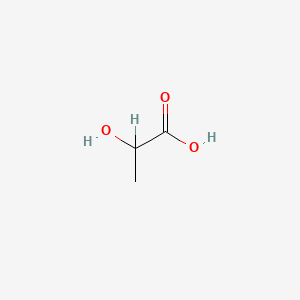
Identifiers
Functions
Hazards


What does available trade activity indicate for Polylactic acid?
Polylactic acid is classified under HS Code 2918.11. This falls under Chapter 29: Organic chemicals, specifically Heading 2918 (Acids; carboxylic acid with additional oxygen function and their anhydrides, halides, peroxides, peroxyacids; their halogenated, sulphonated, nitrated or nitrosated derivatives), under subheading: Acids; carboxylic acids, (with alcohol function but without other oxygen function), lactic acid, its salts and esters.
* The data below is specific to the HS code, not the ingredient.
Suppliers
218
Across 34 countries
Shipments
6,540
from 2015 to 2026
Total weight
143.4M kg
11,237 TEU · standard 20-foot container units
Last shipment
8 months ago
Last updated at Feb 25, 2026
Growth
↑ 42%
Trade under 2918.11 has increased by 42% over the past 6 months
What does trade activity suggest about the polylactic acid supply chain?
Trade activity under HS 3907.70 indicates a supply chain heavily concentrated in Thailand, with 265 of 321 shipments and 25.7 million of 26.7 million kg associated with Thai suppliers, led by Totalenergies Corbion and its affiliate Total Corbion Pla Thailand. This suggests a dominant production hub for poly(lactic acid) in primary forms, with recent shipment activity through early 2026. However, the data is HS-code-associated, not ingredient-specific, so volumes may include PLA-containing products or trading activity. For formulators, this implies a potential reliance on Thai sources for raw material, warranting supply continuity assessments.
What does the HS or HTS classification include, and where are its limits for polylactic acid?
HS code 3907.70 specifically covers poly(lactic acid) in primary forms, under Chapter 39 for plastics. This classification includes raw polymer resins but excludes finished articles or compounded products. The data scope is supplier activity associated with this code, not confirmed ingredient-specific shipments, so downstream processing or trading of PLA-containing materials may be captured. For regulatory and formulation research, this means the trade evidence supports raw material availability but cannot confirm purity, grade, or application suitability. The absence of an HTS code limits U.S.-specific tariff analysis, and the classification match is based on a high-confidence tree classifier, not official customs rulings.
Which suppliers are associated with Polylactic acid trade?
| Supplier | Shipments | Top customer | Growth | Last shipment | |
|---|---|---|---|---|---|
No suppliers found. | |||||
How concentrated or diversified does the supplier landscape appear for polylactic acid?
The supplier landscape appears concentrated, with Totalenergies Corbion and Total Corbion Pla Thailand accounting for 180 of 321 shipments, indicating a dominant player in Thailand. However, 38 total suppliers across 18 countries show a broader network, including Natureworks, Purac Biochem, and Chinese producers like Shenzhen Esun and Zhejiang Hisun, though with lower volumes. This suggests a mix of a few high-volume leaders and many smaller suppliers, offering some diversification but potential dependency on the top Thai entities. For formulators, this implies negotiating with multiple suppliers could ensure supply security, but the top concentration warrants monitoring for price or availability shifts.
Which supply risks or dependencies around polylactic acid require further diligence?
Key supply risks include heavy geographic concentration in Thailand, where two affiliated suppliers dominate shipments, creating potential vulnerability to regional disruptions. Additionally, the data does not confirm ingredient-specific composition, so there is a risk that some shipments under HS 3907.70 are not pure PLA, affecting quality consistency. The presence of Natureworks and Chinese suppliers suggests alternative sources, but their lower volumes may limit scalability. Further diligence should verify supplier production capacity, product grades, and supply contracts, as well as monitor trade policy changes for Thailand and China. The lack of weight data for major suppliers also hinders volume-based risk assessment.
Which sourcing geographies and trade lanes appear most relevant to polylactic acid?
Thailand is the most relevant sourcing geography, with 5 suppliers, 265 shipments, and 25.7 million kg, indicating a major trade lane likely to Europe and the Americas, given top customers like Total Corbion Pla B.V. in the Netherlands. Other notable geographies include the Netherlands (Purac Biochem), China (Shenzhen Esun, Zhejiang Hisun), and the U.S. (Natureworks, though coded as AN), with smaller volumes from Germany, Belgium, and Brazil. This suggests a diversified but Thailand-centric supply base. For procurement, prioritizing Thai suppliers for volume and European/Chinese sources for regional diversification could mitigate single-lane risks, though shipment weights are not fully reported for all suppliers.
Which countries drive Polylactic acid trade activity?
By shipment count
Belgium
2,603 shipments
30 suppliers
55.4M kg total weight
Netherlands
1,436 shipments
14 suppliers
36.6M kg total weight
China
703 shipments
53 suppliers
15.1M kg total weight
Ireland
669 shipments
2 suppliers
13.1M kg total weight
Spain
309 shipments
14 suppliers
8.9M kg total weight
Thailand
240 shipments
1 suppliers
5.4M kg total weight
Japan
167 shipments
11 suppliers
2.6M kg total weight
India
88 shipments
10 suppliers
1.2M kg total weight
Germany
48 shipments
16 suppliers
592.4K kg total weight
United Kingdom
48 shipments
9 suppliers
146.2K kg total weight